
Sharing good practices in green energy
EU and Asean economies can explore trade and investment opportunities in green technology and services, particularly in burgeoning fields.
 Add BT as a preferred source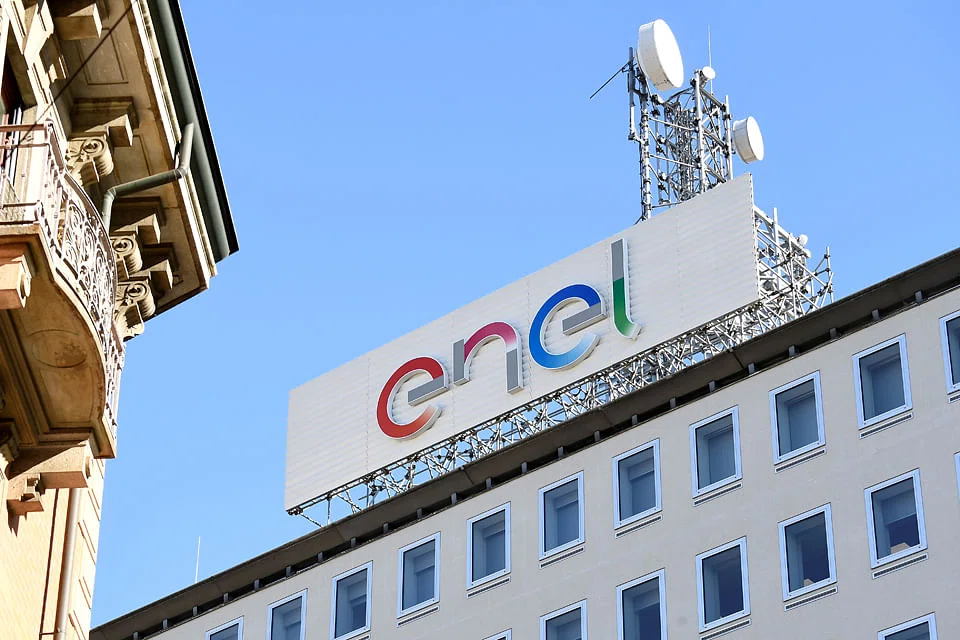
AS THE global economy deals with the dual challenges of recovering from Covid-19 and the need to transition towards low-carbon growth, European and South-east Asian nations will face similar pressures in the coming years. Multilateral cooperation between the European Union (EU) and Asean to achieve global climate goals is needed, but there is also potential for bilateral cooperation between countries such as Italy and Singapore.
EU and Asean economies can share best practices and explore trade and investment opportunities in green technology and services, particularly in burgeoning fields such as green energy.
CLIMATE ACTION AS THE FOUNDATION FOR RECOVERY
In 2021, Italy is partnering the United Kingdom to organise the 26th United Nations Climate Change Conference (COP26), and is serving as the president of the G-20 forum for global economic and financial cooperation. The urgent need for climate action will be the main foundation for the global economy to recover from the consequences of Covid-19 and to accelerate a fair and inclusive green transition.
Alongside the United Nations and G-20 agendas, the European Union has outlined a 1 trillion euro (S$1.6 trillion) European Green Deal, a growth plan and set of policy initiatives aimed at transforming the EU into a climate-neutral economy by 2050. Furthermore, in response to the health crisis and economic damage caused by the Covid-19 pandemic, the EU has agreed on a Next Generation EU recovery plan with some 750 euro billion in loans and grants. Italy and the EU are still in the midst of political negotiations on how to allocate these resources, but there may be opportunities for partnerships and collaboration with Singapore and Asean economies.
At the national level, Italy's public and private sectors have started to identify, design, and adopt strategic and long-term measures in order to align with the need for green, digital, and resilient sustainable development. Under the policy framework provided by the National Integrated Plan for Energy and Climate 2030, Italy has identified pillars for public and private investment, including urban regeneration and green cities, urban mobility, the circular economy, energy, and food systems. These pillars synergise with Singapore's own priorities under the Singapore Green Plan 2030, especially with regards to green energy deployment and energy efficiency targets.
Navigate Asia in
a new global order
Get the insights delivered to your inbox.
OPPORTUNITIES FOR COLLABORATION
Economies in both Europe and Asean will need cleaner sources of energy to power their growth in the coming years. But it is difficult to secure financing for energy projects, given their size, complexity, long duration, and the fact that national budgets and capital markets remain uncertain in the wake of the pandemic. Innovative financing mechanisms will be required, such as the Singapore government's recent move to issue green bonds to fund public infrastructure projects. Italy has also begun to explore new market initiatives to support green energy projects, and is adapting existing strategies to meet green aims.
In 2019, Italy passed a ministerial decree granting incentives for renewable energy sources, applying to both construction of new power plants and revamping of existing ones. The scheme is running until the end of 2021, providing incentives of about one billion euro per year. Italy is also implementing a fiscal incentive scheme to encourage the renovation of existing private buildings in order to improve their energy efficiency, which will also increase job creation in the construction sector. The renovation scheme offers a 110 per cent tax deduction or tax credit, making it of interest to banks, financial institutions, credit funds, or big market players who can either use the tax credits themselves or trade them with other parties.
It is also important to reinforce stakeholder or community engagement. For example, Italy's Municipality of Santorso has involved its citizens in implementing its local sustainable energy action plan, via the creation of a community purchasing group to buy renewable energy technology such as solar-assisted heat pumps.
Italy's leading power companies are also playing a role in supporting the low-carbon transition. A2A Energia has undertaken a bottom-up and top-down process to mainstream sustainability across all its stakeholders, while Enel has also introduced environmental, social, and governance (ESG) sustainability indicators in its value chain. Enel has adopted a "creating shared value" system where sustainability is the new baseline in its strategic approach to designing, constructing, and managing power plants. Attention is given to environmental protection, the rational use of resources, the promotion of health and safety at work, the circular economy, and development opportunities for local communities. The same ESG considerations will be increasingly important in South-east Asia as Asean economies invest in new infrastructure.
Finally, Italy is currently exploring agri-voltaic technology, combining the installation of photovoltaic power generation with agricultural land, placing solar panels alongside crops. Such technology may be of interest to Asean economies such as Indonesia, Malaysia, and Vietnam, where agriculture continues to be a major sector. Italian companies are also working on technology to monitor crops via satellite data, such as the "Pocket Farm" app launched by the Cattolica Assicurazioni Group to let farmers track the condition of their plants and soil, and receive alerts about adverse weather conditions.
Although significant steps have already been taken to develop sustainable solutions, more investment in green technology is needed. The recent European Union-Singapore Free Trade Agreement (EUSFTA), the first of the EU's planned bilateral trade deals with Asean economies, is intended to encourage cooperation on sustainable development. The EUSFTA includes a chapter on promoting trade and investment in green goods and services.
In the years ahead, Italy, Singapore, and their regional neighbours can explore further collaboration in emerging areas such as energy storage for renewable power, reducing industrial carbon emissions, developing substitutes for heavy goods transport on roads, and to produce hydrogen fuel in a green and cost-effective manner. Achieving green recovery will be a long process, but Europe and Asean now have the opportunity to forge stronger partnerships to achieve a low-carbon future.
- The writer is the director of the Centro Studi di Politica Internazionale (CeSPI), an independent and not-for-profit think tank in Rome, Italy.
Decoding Asia newsletter: your guide to navigating Asia in a new global order. Sign up here to get Decoding Asia newsletter. Delivered to your inbox. Free.
Share with us your feedback on BT's products and services

