

Shattering the sharing economy illusion with blockchain
With a blockchain alternative, resources are not only shared, but can be entirely owned in spirit by the community of sharers themselves.
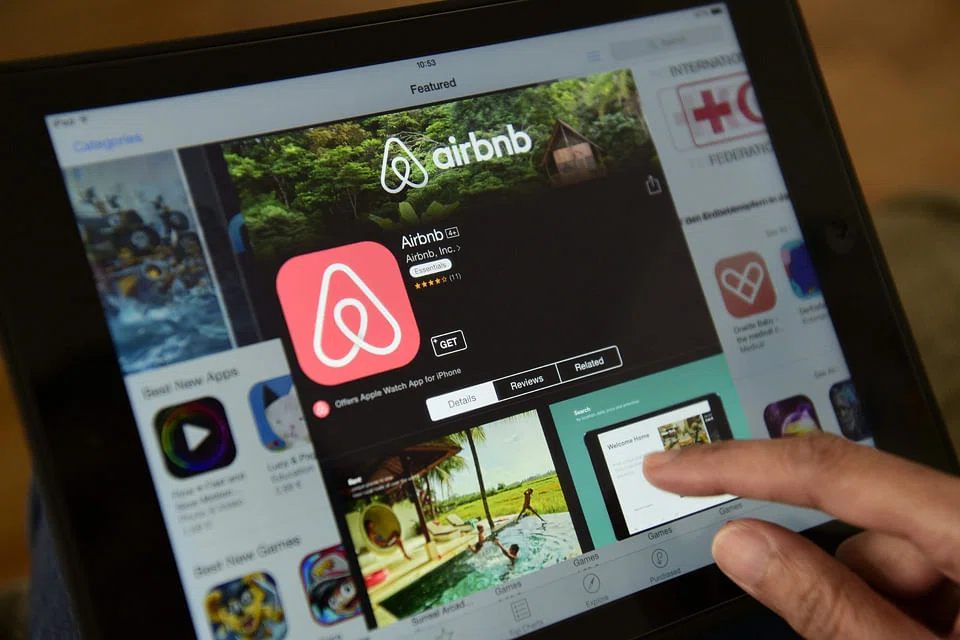
IT is strange to think that many of the world's most accomplished businesses today are built on the philosophy of sharing. But can we take a step back and be real for a second about whether these multi-billion dollar corporations are truly 'sharing'?
Airbnb has become one of the forefathers of this radical new sharing economy, born in a time when the real world economy was failing. This refreshing take on the concept of sharing - digitising resources and making them accessible to a global community - was a needed response to a devastating financial crisis which proved outdated business models and corporate greed would not survive in the Internet age.
Companies like Airbnb and Uber harnessed the power of community and channelled it into productive ventures, inspiring the world to share their homes and cars with each other.
Making billions of dollars through the generosity and spirit of their online communities, the triumphs of these sharing economy giants show us how much we desperately needed them. Airbnb is now worth US$30 billion, and Uber, an incredible US$69 billion. With little alternative, we were at the mercy of a stagnantly traditional ecosystem of commerce.
The 'sharing' illusion
But the sharing economy has now reached a new stalemate. The merging of the digital with the real world has failed to reach its full potential. The illusion of our current sharing economy has played out for too long.
I cannot help but see Airbnb as a glorified online booking system that offers rentals - a global hotel company that doesn't actually own any properties itself.
Similarly, Uber does not own its own fleet of cars. It runs a clever app through which you can rent a car, chauffeured by its owner. They find you a ride, you jump in the car, and Uber takes a cut.
It would be misleading to suggest that these business models are built on a true concept of sharing, rather we should see them as third parties who facilitate renting transactions between people, offering a service that is both provided by and paid for by the community who use them.
Undoubtedly there is an undercurrent of community spirit that is driving the sharing economy forward. But this wonderful force is being channelled in the wrong way.
This is not to say that these companies haven't done immense good for consumers and shaken things up for incumbents who have for too long taken their customers for granted.
True 'sharing' on the blockchain
A blockchain-based platform is the evolution of the traditional share economy model, making the share economy work better for its entire community.
To have a sharing economy that is truly peer-to-peer - that serves its users and not its host platform - resources would have to be shared among the community without an intermediary controlling the transaction process and indiscriminately marking the price up.
Blockchain's decentralised architecture means there is no dependency on a central trust authority to verify frictionless transactions between members of a community.
All parties involved will be on an equal footing. Smart contracts on the blockchain will ensure full transparency and accountability, and in some cases, without any or very minimal fees charged to users.
Furthermore, with a blockchain alternative, resources are not only shared, but can be entirely owned in spirit by the community of sharers themselves.
We can tokenise properties around the world, merging real world assets with blockchain technology to ensure anyone can have a slice of the community's real estate. Communities will be able to own a token, representing a share and forever use all properties available on a blockchain-based platform.
It's certainly an unorthodox idea - booking homes around the world that you co-own with a global community - but this is what a true and honourable sharing economy would look like.
It will also certainly be more sustainable, as a committed sharing community will stay invested in the continuation of their community assets. It is this democratisation of real estate that will shift the paradigm of community sharing for the better.
Keeping to traditions
Community-based asset ownership is not a new idea. There were great traditional examples of it emerging in the late 1800s, as building societies began to form in the United Kingdom.
People would pool their resources together to purchase land to then build houses upon. These societies acted as financial institutions which were mutually owned and run by its members.
The most relevant and successful example today is the Nationwide Building Society company based in England, originally called the Co-operative Permanent Building Society.
Believed by many to be a bank, this building society has over one million members and provides mortgages and loans. It also became the first building society to issues debit cards.
Yet this idea of a "true" sharing economy, which is founded on trust, altruism and egalitarianism, rather than profit-seeking, has been relatively unexplored.
It also throws back to the classical meaning of what is to share, in which one shares a portion of something with another, not the owner-renter dynamics that currently masquerade as "sharing economy".
We have also seen traces of this sharing spirit materialise in the form of community-owned department stores and community-led social housing initiatives.
Saranac Lake in upstate New York, a small town of only 5,000 locals, pooled their funds together to build the new department store they desperately needed.
The town wanted to challenge invasive, conglomerated chains such as Walmart, and instead provide an opportunity for community-run and invested businesses to thrive.
In another case, UK non-profit organisation Locality helps run community asset ownership projects, such as transforming disused land into social housing.
Their mission is to improve the economic, social and environmental standards of local neighbourhoods in need, providing land and buildings for communities to manage and own themselves.
It is clear that the community sharing spirit is present. It is now time to merge the power of blockchain with the strength of our own committed communities.
We can revolutionise the home-sharing model and dissolve the undemocratic concentration of wealth and property ownership worldwide. A genuine global sharing economy can emerge from this, one which does not filter profits into a platform's parent company, but rather back into the family of users itself.
Blockchain will revive the sharing economy, but most importantly, it will help us learn what is most important - the essence and reward of sharing itself.






