SIA Engineering embarks on three-pronged approach to capture growth

Tay Peck Gek
SIA Engineering is looking to three areas for expansion and building capabilities – its core business, joint ventures (JVs) as well as mergers and acquisitions (M&As) – even as it copes with the upcoming full recovery at Changi and captures opportunities from airlines racing to reinstate their flights.
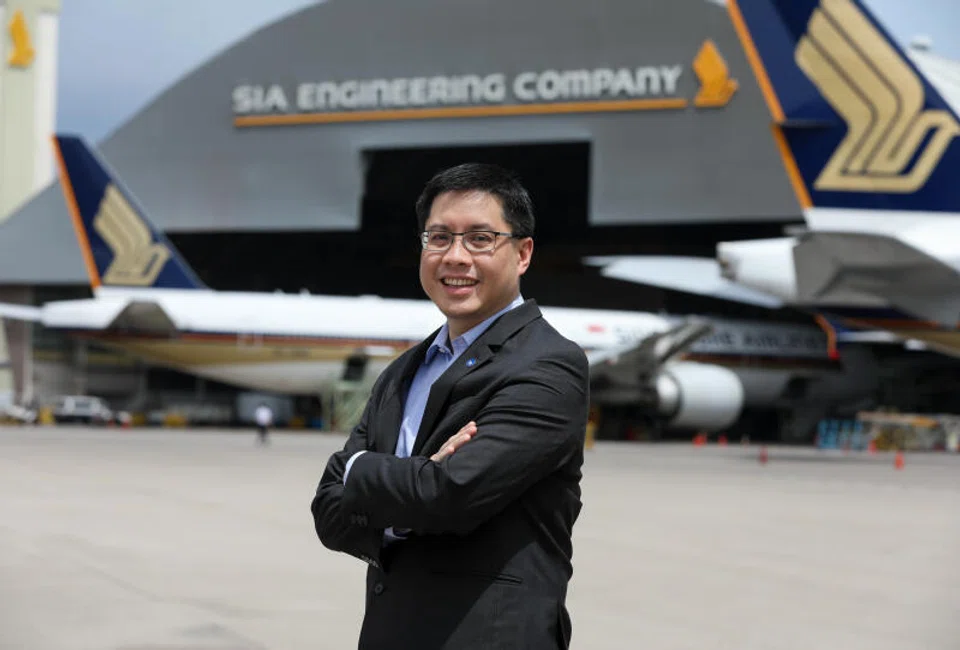
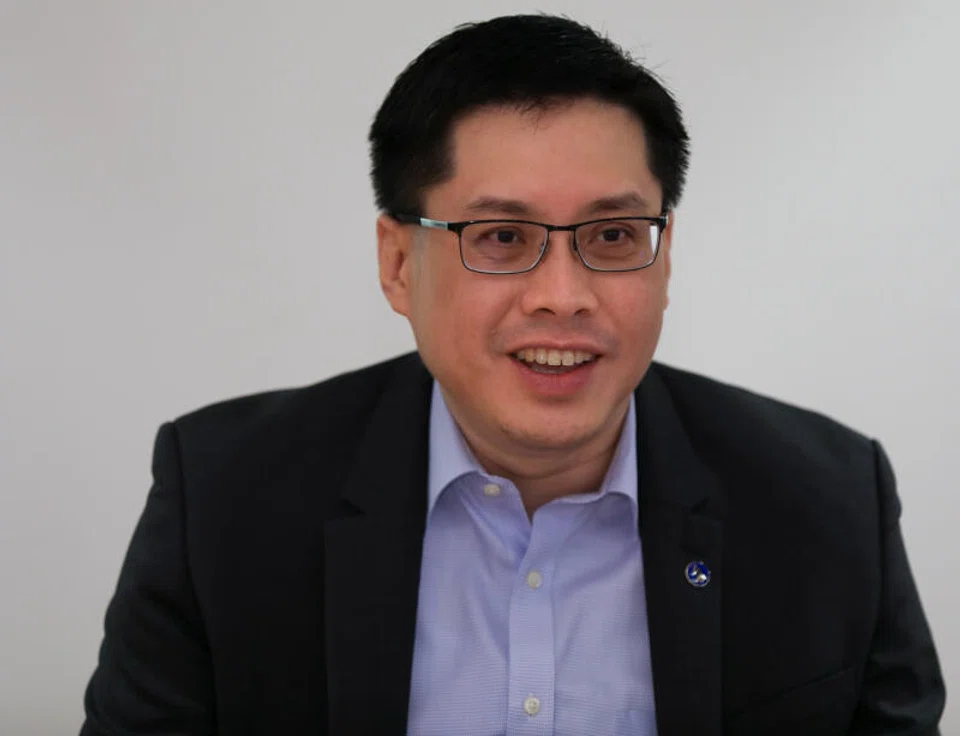
Chin Yau Seng, chief executive officer, said: “Obviously, each of those three components (core business, JVs and M&As) will occupy different degrees of our bandwidth and time on the management side.
“In today’s world, you cannot do things sequentially, there are many things that have to be done in parallel, because the opportunities don’t come knocking twice.”
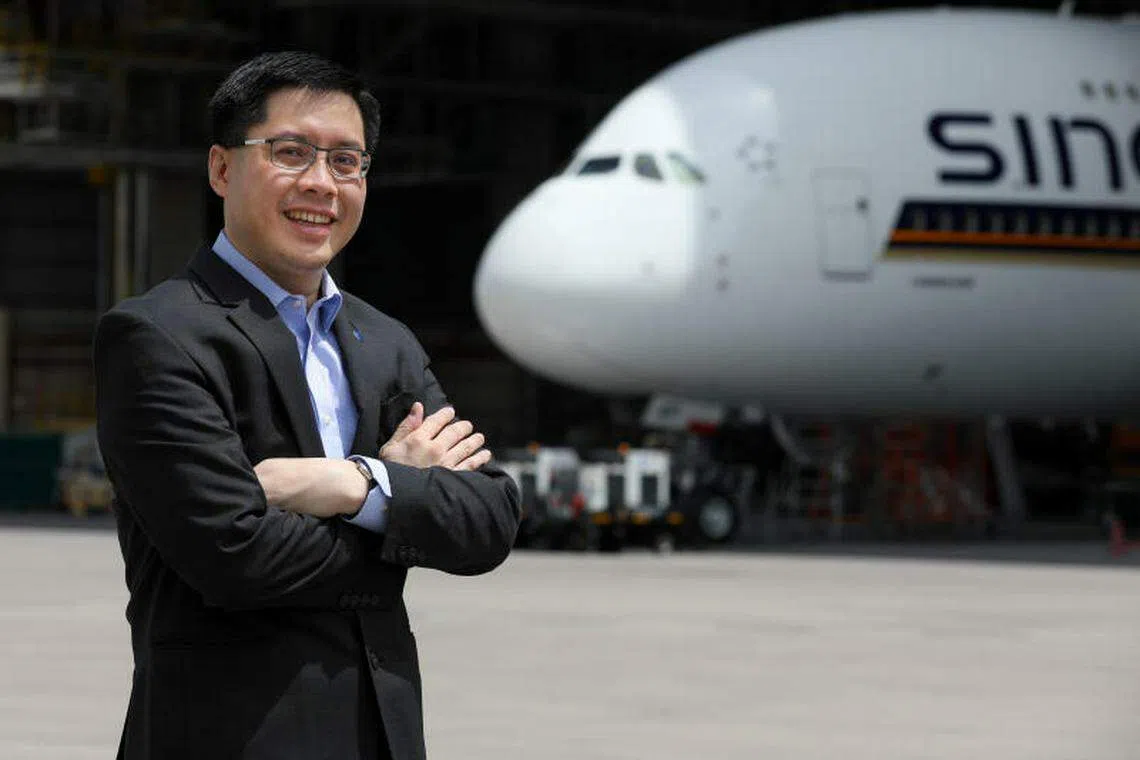
Chin took over the reins of the Singapore Airlines’ (SIA) listed aircraft maintenance, repair and overhaul (MRO) subsidiary in October, crossing over from the airline’s cargo division.
SIA Engineering has four segments in its core business: line maintenance, base maintenance, engine services and component services.
Line maintenance involves services carried out at the airport apron during transits and night stops, such as pre-flight aircraft checks and certification, scheduled light checks and maintenance, and cabin maintenance.
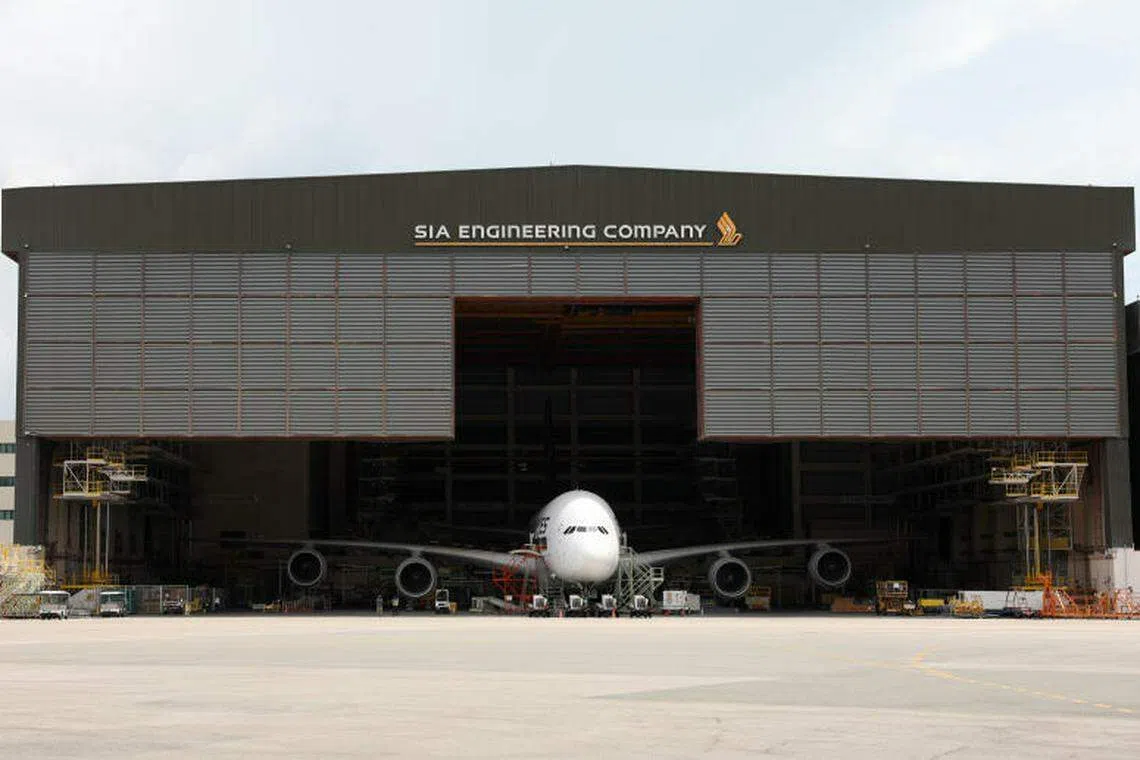
Base maintenance entails scheduled heavy checks carried out in a hangar for airframe structural repair and modification to ensure aircraft airworthiness, as well as cabin refurbishment and modification. These require more time and resources.
Maintaining its lead
SIA Engineering uses a network strategy for both line- and base-maintenance operations.
It is investing in new ventures, including one each in South Korea and Cambodia, to expand its line maintenance network. Currently, it has a presence in 36 airports in seven countries and a territory, excluding the two latest ventures.
Customers would then be able to undergo line maintenance over at these stations instead of at only one location, with the maintenance broken into several tasks at several airports.
Chin noted: “If certain things cannot be accomplished in Singapore, because (there is) not enough ground time as the aircraft is being utilised very, very highly, we then will be able to plan such that we accomplish some of these tasks somewhere in the network.”
He added that the new generation aircraft spend a lot less time at the hangar but more at the line.
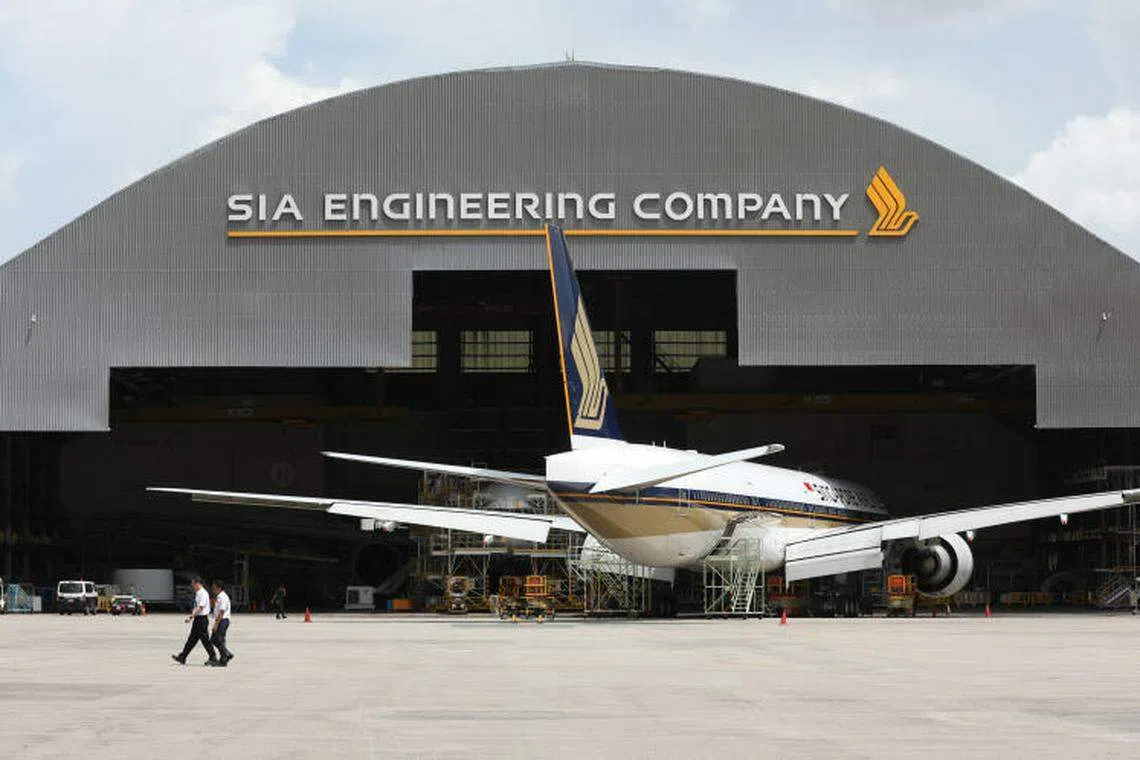
For base maintenance, SIA Engineering has sites in Singapore and the Philippines. It is now in the process of setting up a base with two widebody aircraft hangars in Malaysia. “We are now no longer shackled to just what we have in Singapore, but able to offer that network or that suite of offerings. Singapore will continue to be the key centre, because a lot of key capabilities are here.”
SIA Engineering aims to offer the same quality, reliability and turnaround times to customers at the overseas sites that they have enjoyed in Singapore. That will be a challenge to the firm, to make sure its operating system is applied consistently across the network.
Queried about any possible overcapacity, Chin said that SIA Engineering assesses demand based on aircraft growth. “So, (if) you look at the fleet orders, (you will know) the aircraft are coming. You have to create the capacity; hangars are not built overnight.”
SIA Engineering will also seek out opportunities through its joint ventures and associated companies, which contributed S$50 million in earnings to the MRO player – the lion’s share of the group’s net profit of S$59.3 million – in the first half of FY2024 to September.
Its JVs in the engine and component segments accounted for 97 per cent of the S$50 million profit due to faster recovery and their ability to pass on more cost increase to customers.
The group has 24 subsidiaries, JVs and associated companies, which revolve around its core MRO business in both the airframe- and line-maintenance segments and the engine and component segments. Its partners in many of these JVs are the original equipment manufacturers (OEMs).
For example, the firm has two engine JVs: Eagle Services Asia, with Pratt & Whitney; and Singapore Aero Engine Services (SAESL) with Rolls-Royce. Both are based in Singapore, and SAESL is the world’s largest MRO facility for all variants of the Rolls-Royce Trent engines.
SIA Engineering is working with both of them to expand their businesses further to capture the “tremendous” growth opportunities. “That’s just one example… we think there’s a lot more opportunity to grow in the JV space. And that would be a good source of returns going forward, you know, as we continue to invest in those businesses,” Chin said.
Meanwhile, SIA Engineering is looking out for takeover targets to expand the scope of its business and to capture new opportunities, for instance, in new aircraft technology.
In May 2022, the Singapore firm purchased a 75 per cent stake in a component MRO shop, SR Technics Malaysia (now renamed as Asia Pacific Aircraft Component Services or Apacs), with the original Swiss owner retaining the remaining 25 per cent stake.
Apacs recently obtained additional licences from Honeywell, enabling it to perform repair activities on more of the American maker’s aircraft component types, thereby growing both its capability as well as revenue, Chin noted.
Geographically, South-east Asia will be SIA Engineering’s prime focus, so as to be a “very strong player in this part of the world”.
However, it is also eyeing India and mainland China, the two booming aviation markets.
SIA Engineering does not have a presence in mainland China currently, but it recently signed a memorandum of understanding to explore opportunities in Fujian.
SIA Engineering has provided some MRO works to Air India in Singapore when the airline put more of its planes to the skies after being acquired by Tata Group. “We supported them and created quite a good working relationship that allows us to build for the future.”
However, it would be “commercial” without any edge over others for SIA Engineering in getting more business from Air India, Chin said. This is despite SIA set to own about 25 per cent of the Indian carrier and Air India now being helmed by Campbell Wilson, former chief executive officer of Scoot, the low-cost subsidiary of SIA.
Budget airline turbulence
SIA Engineering slipped into an operating loss of about S$300,000 for the second quarter, partly due to the debt impairment provision arising from the suspension of its Malaysian customer MYAirline. It declined to disclose the allowance set aside for uncollected payments from the low-cost airline.
MYAirline announced in October that it had suspended all operations with immediate effect, citing financial problems. It came a year following a 10-year agreement with SIA Engineering for support services.
Currently, 21 per cent of the MRO firm’s line maintenance customers at Changi Airport are low-cost carriers, up from 18 per cent as at the end of pre-pandemic Q2 FY2020.
Chin said that the firm already has a credit control programme, but MYAirline’s suspension came abruptly.
“We were caught out a little bit. But the exposure, I would say, it’s not so huge. Having said that, we have some lessons learnt there, for us to be able to monitor even more actively than in the past. Today, we already have a very structured programme to monitor the credit; now (we are) just looking at being able to refine it to capture cases like that where the risk is heightened, so to speak.”