

SIA maintains safe distance from shareholders even as passenger load factors recover strongly
Hybrid AGMs that combine physical and virtual participation should become the new post-pandemic standard

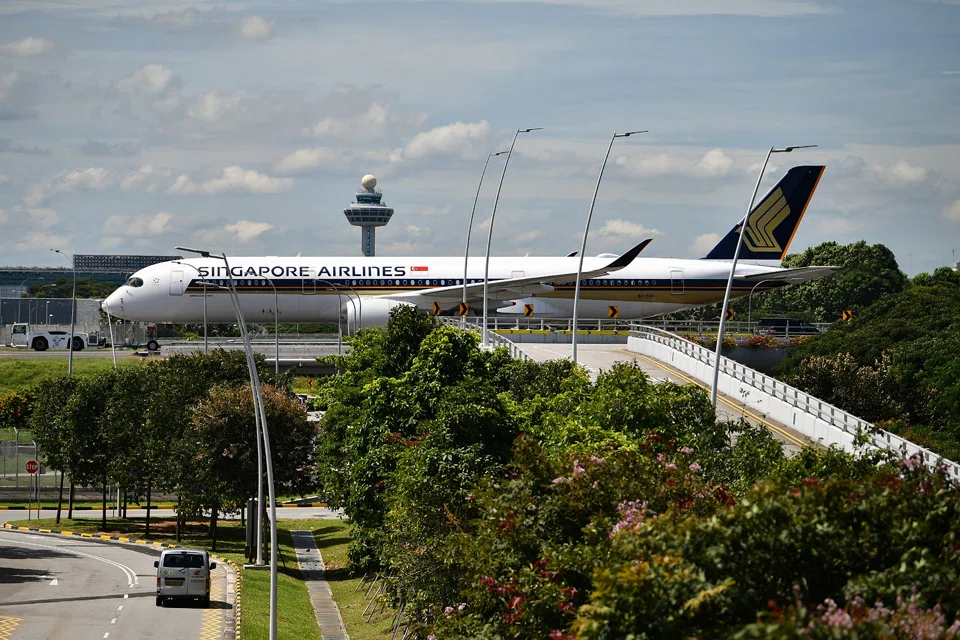
SINGAPORE Airlines has kicked off its financial year to March 2023 on a strong note, according to the group’s responses to questions from its shareholders ahead of its annual general meeting (AGM) scheduled for Tuesday (Jul 26).
The airline group said it carried 5.1 million passengers during Q1 FY2023 – up 158.3 per cent quarter on quarter and more than 14 times as high as the same period of the prior year. The group’s passenger load factor came in at 79 per cent for the 3-month period – up 34.1 percentage points quarter on quarter and 64.2 percentage points higher year on year.
SIA added that its forward sales for the 3 months to October 2022 have been robust, and that it expects demand to remain steady into the year-end holiday travel period.
Even as SIA packs more and more passengers into its planes, however, its board and top management will not be meeting investors face-to-face at the AGM this week – in order to curb the risk of Covid-19 transmissions.
Instead, SIA will hold a virtual AGM where its shareholders will be able to submit questions and cast their votes electronically.
SIA is not alone in keeping its shareholders at a distance. Most companies and real estate investment trusts within the Straits Times Index have held their most recent AGMs remotely.
A few of them did not even offer their shareholders any means of asking questions or voting in real-time. Among them were Jardine Cycle & Carriage, Sembcorp Industries, UOL Group and Venture Corp – all of which held AGMs in April.
At Frasers Logistics & Commercial Trust’s virtual-only AGM in January, unitholders were able to ask questions electronically but they had to appoint the chairman of the AGM as their proxy beforehand in order to exercise their voting rights.
Singapore Exchange Regulation (SGX RegCo) has made it clear this isn’t good enough. In its Regulator’s Column of May 23, it said it expects live engagement and voting at all AGMs for FYs ending Jun 30, 2022 onwards.
There is also a growing number of voices calling for a return to physical attendance of AGMs. The general view seems to be that investors stand to gain more from face-to-face interaction with a company’s board and senior management than they would from virtual engagement.
New standard for AGMs
My own view is that companies should resume allowing physical attendance at their AGMs, but they should continue trying to improve the virtual participation experience too.
The so-called hybrid meeting that combines physical and virtual participation should become the post-pandemic standard for AGMs.
Whatever their drawbacks, virtual AGMs have one significant virtue: They are more convenient for retail investors than a physical meeting.
Much like allowing large numbers of their employees to work from home, however, companies would probably never have attempted to hold virtual AGMs had the pandemic not forced them into it.
As the risks associated with Covid-19 now recede, companies should not be allowed to take the path of least resistance by sticking to virtual-only AGMs or returning to physical-only AGMs.
Instead, they should be pushed to re-tune elements of both formats to enhance overall shareholder participation at their AGMs.
For instance, the pandemic-era practice of canvassing shareholders for questions and responding to them ahead of the meetings ought to continue.
This was a poor substitute for face-to-face interaction at a physical meeting, of course. But it is a possibly useful complement to the live engagement that SGX RegCo wants all AGMs to offer going forward.
The early questions and answers are potentially a means for shareholders to alert one another of their concerns, and gain a sense of the board and management’s attitude to the issues raised. This could well provide for more effective engagement during the meeting itself.
SGX, Sias should lead
Will hybrid AGMs that incorporate real-time engagement and voting catch on? And, will they mark the beginning of livelier and more effective shareholder engagement by Singapore-listed companies?
Hearteningly, a few major companies allowed physical as well as virtual attendance at their most recent AGMs. Among them were ComfortDelGro Corp and Genting Singapore – both of which held AGMs in April. (Genting Singapore did not provide for real-time voting though).
Mapletree Industrial Trust and Mapletree Logistics Trust – which held their AGMs last week – also adopted the hybrid model, though the number of attendees at the physical meetings was capped at 350 people.
Mapletree Commercial Trust will adopt similar arrangements at its AGM scheduled for Friday, Jul 29.
It is unclear, however, if these hybrid AGMs are a new normal or just a waypoint back to old-fashioned physical meetings.
This brings me back to SIA. The airline group’s decision to not hold a physical AGM for fear of Covid-19 transmissions is likely to seem utterly disingenuous to many retail investors given that it is also doing everything it can to fill its planes with passengers.
The upshot is that the future of AGMs should not be left to the corporate sector alone. While Singapore’s leading companies can probably be counted on to push the envelope when it comes to growing their businesses, the same cannot be said when it comes to engaging investors at AGMs.
Indeed, many companies – especially those with a dominant shareholder and entrenched board – might well not view investor engagement to be the primary purpose of their AGMs. If they did, they would arguably not hold these meetings during office hours on busy weekdays.
If AGMs are to become a more effective forum for companies to present their financial statements to shareholders and address their concerns, regulators such as SGX RegCo and advocacy bodies such as the Securities Investors Association (Singapore) will probably need to take the lead and pressure companies into making the appropriate changes.
TRENDING NOW
‘We don’t want to stay as we are’: CEO Patrick Ng builds a more resilient Huationg
URA to review guidelines on floor space to give developers more design flexibility: Chee Hong Tat

He built the Vingroup empire. Now South-east Asia’s richest man is handing some key roles to his sons
32 companies, 6 individuals bag accolades at Singapore Corporate Awards 2026

