

SIA should address how it plans to manage interests of Temasek, minority investors

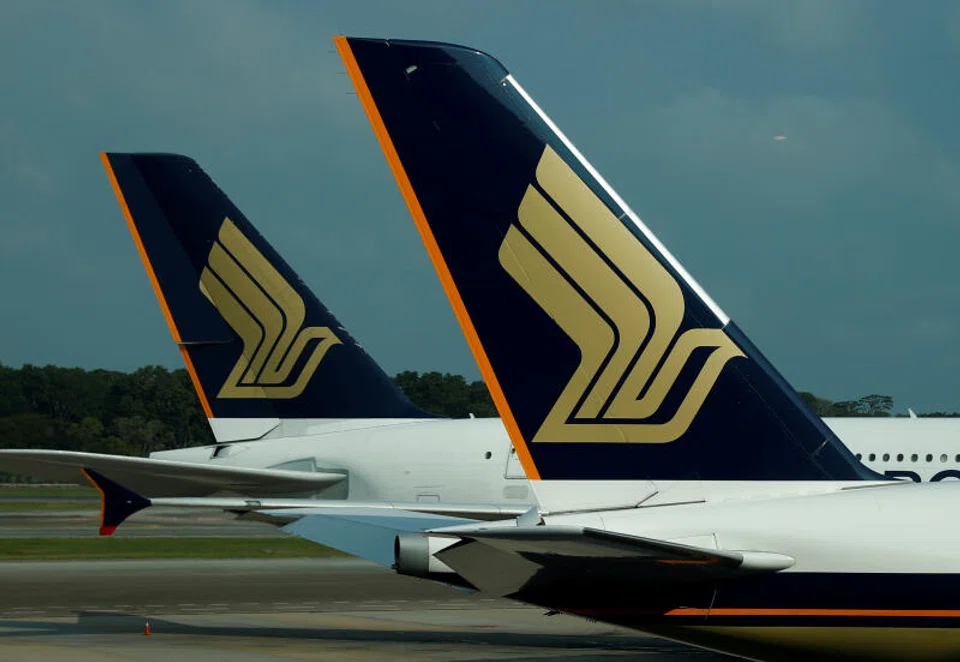
SINGAPORE Airlines (SIA) was asked several questions ahead of its annual general meeting last month by the Securities Investors Association (Singapore), or Sias. Among them was how it balances the interests of its equity holders versus those of its mandatory convertible bond (MCB) holders.
SIA’s response couldn’t have been less interesting.
It simply said: “We acknowledge and appreciate the support from all of our stakeholders. We will take their respective interests into consideration as we review options.”
The question from Sias deserves a properly considered response from SIA.
At the onset of the pandemic in 2020, SIA unveiled plans to raise as much as S$15 billion to sustain itself. This comprised S$5.3 billion through the issue of 1.78 billion new shares and S$9.7 billion through the issue of MCBs.
The new shares, issued at a deeply discounted price of S$3.00 each, were fully taken up by SIA’s shareholders.
The first S$3.5 billion tranche of MCBs was poorly received, though. Temasek had to take up nearly S$3.4 billion of the MCBs – or nearly 96 per cent of the whole tranche – representing its own entitlement of S$1.9 billion and the unsubscribed portion of S$1.4 billion.
The second tranche of the MCBs, worth S$6.2 billion, was also shunned by investors last year. Temasek took up its own entitlement of S$3.4 billion and the unsubscribed portion of nearly S$5.9 billion – which together represented nearly 95 per cent of the whole tranche.
Temasek’s exposure to SIA’s MCBs of more than S$9.2 billion actually exceeds the market value of its 55.5 per cent stake in the airline of S$8.9 billion.
This could put SIA’s board in a delicate position of having to weigh the interests of its largest shareholder against those of minority investors. In particular, the question of whether and how quickly the MCBs will be redeemed is going to be an important topic.
These 10-year MCBs are redeemable semi-annually at the option of SIA, at prices calculated to deliver an annual yield-to-call of 4-6 per cent per annum.
In June 2030, the accreted value of the MCBs that have not been redeemed will be converted to new SIA shares. The conversion price – which was initially set at S$4.84 – will be adjusted in the event of share splits, new share issues, share consolidations and, crucially, dividends.
SIA’s latest annual report states that as many as 3.48 billion new shares could be issued in June 2030 as a result of the conversion of the MCBs.
This would have a significant dilutive impact on minority shareholders. SIA currently has 2.97 billion shares in issue.
Rapid recovery
Some analysts assume this potential dilution will be averted by SIA redeeming the MCBs well before 2030.
In the first place, SIA is now charting a rapid recovery in profitability with the reopening of international borders.
For the 3 months to Jun 30, SIA reported a 202 per cent year-on-year surge in revenue to S$3.9 billion. It chalked up a net profit of S$370 million for the 3 months, versus a net loss of S$409 million for the same quarter last year.
As of Jun 30, SIA had cash and bank balances of S$16.1 billion and total debt balances of S$15.7 billion. The group also had access to undrawn credit lines of S$2.2 billion.
Moreover, the yield offered by the MCBs will step up from 4 per cent to 5 per cent after the 4th year, and up to 6 per cent after the 7th year. This incentivises SIA to redeem the MCBs sooner rather than later.
What does Temasek want?
The big question is whether Temasek sees it that way.
As a long-term investor linked to the government, Temasek may well prefer to see SIA prioritise strategic objectives – such as building up its presence in the low-cost carrier segment of the market; and accelerating its “multi-hub” strategy to participate in traffic growth in other parts of the world.
The MCBs that Temasek holds might also prove to be a relatively good long-term investment, given the recovery that SIA’s shares have already staged and the cut-throat nature of the aviation industry.
While SIA had a strong track record of staying in the black and paying dividends prior to the pandemic, its shares did not perform all that well. From end-2009 to end-2019, before the market began worrying about Covid-19, shares in SIA delivered a total return of minus 13.3 per cent.
In the end, it is the board of SIA that will have to manage the interests of Temasek versus those of its minority shareholders. Addressing whether and how quickly its MCBs will be redeemed, as well as the trade-offs involved, is arguably one of the most important issues to sort out.






