

Singapore firms who don’t tap their older workers are missing out on a goldmine
Professionals aged 65 and up have the knowledge and experience that could shape whether a company scales, survives or stalls
SPEAKING in Parliament in February 2026, Deputy Prime Minister Gan Kim Yong delved into the implications of Singapore’s total fertility rate hitting a historic low of 0.87, down from 1.24 just 10 years before.
His message was stark: Without intervention, the citizen population could begin shrinking by the early 2040s. Even currently, more than four in five employers already report difficulty finding skilled talent, twice the proportion in 2019.
Meanwhile, Singapore is ageing rapidly. One in five citizens is already 65 or older; by 2026, 21 per cent or more will have crossed this threshold, which is a demographic marker of “super-aged” society. (*see amendment note)
The other side of the wave
The instinctive reaction is to see only risk: More elderly requiring care and support, thinner cohorts entering the workforce, heavier burdens on the productive population.
The reading is accurate, but only captures the surface.
Singapore’s post-50 professionals grew up as the nation made its economic transformation. They built their careers through the Asian financial crisis, navigated Sars and the global financial crisis at the height of their powers, and were senior enough by the Covid-19 pandemic to understand the institutional resilience demanded.
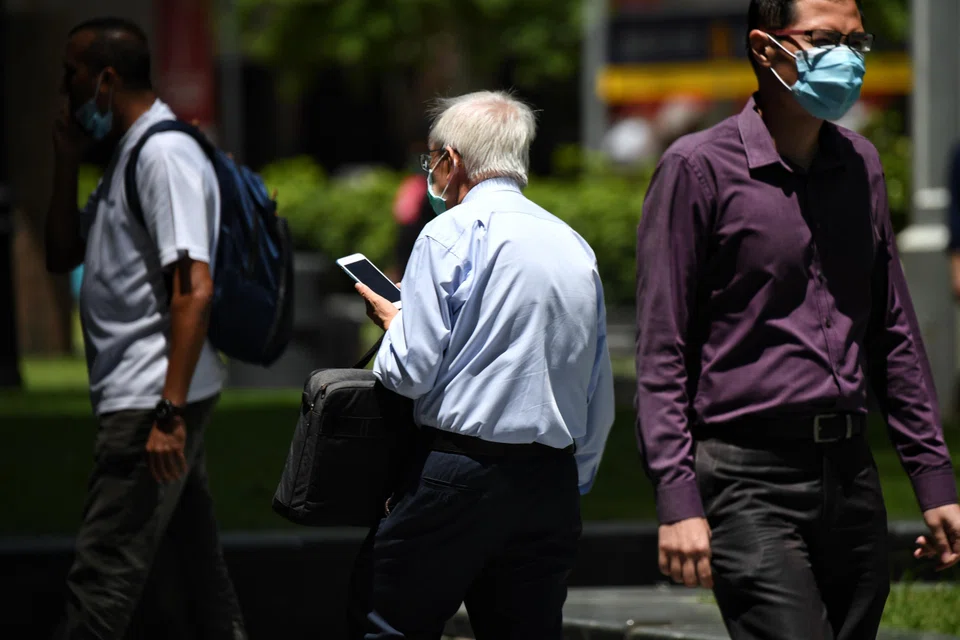
These workers already make up 37 per cent of the resident workforce.
Many are not seeking an exit from work. Three in four mature employees indicate no intention to retire before they turn 65.
They are actively choosing to stay engaged on their own terms – looking for flexibility, meaning and the opportunity to contribute at a level commensurate with their experience, without the intensity of a conventional executive role.
For employers, it is a structural opportunity if they choose to see it that way.
A store of value going untapped
Think of this generation of senior professionals the way an investor thinks of gold. The yellow metal is a store of value because it concentrates enormous worth in a form that can be deployed strategically.
Singapore has spent 50 years building a cohort of professionals whose careers are co-extensive with the nation’s economic development. What they have is condensed, embodied institutional knowledge, unavailable in textbooks, not replicable through training.
The question employers should be asking is whether they are deploying this value strategically.
Research cited by the Singapore University of Social Sciences identifies a persistent “assumption of a general decline of skills, abilities and performance among older workers, despite evidence suggesting this hypothesis to be inaccurate”.
Post-50 professionals have lived through every major technology cycle of the past three decades.
This matters as Prime Minister Lawrence Wong has made AI adoption a national priority, with Budget 2026 channelling significant support in that direction.
But AI adoption is not a simple software installation. It requires people who can translate strategic intent into operational reality, who know what to automate and what to protect, and how to navigate the human dimension of change.
In many organisations, the combination of experience and digital fluency may be precisely what makes AI adoption actually work, given that the technology lacks the intuitive ability and emotional quotient that make humans able to connect and understand each other’s needs and nuances.
Silver, gold, platinum: a framework
Deploying this value requires a deliberate strategy. There are three workforces available to employers, each suited to different needs and contexts.
The Silver Workforce keeps the experience you already have. Senior employees carry institutional knowledge, client relationships and operational depth – which walk out the door at the conventional retirement age.
Investing in flexible arrangements, job redesign and structured career planning to retain this lot of workers is a high-return investment in continuity. Government support through the Part-Time Re-Employment Grant is available to help employers make this transition.
The Gold Workforce compounds organisational capability, deploying senior experience in ways that actively build the capacity of the team around it.
This applies to external and internal deployments. An experienced senior hire brought in on a fractional, part-time or contract basis can embed deep expertise within a less-experienced team; existing senior employees repositioned as a mentor, practice lead or in-house trainer are doing the same work from the inside – transferring tacit knowledge that would otherwise retire with them.
The Platinum Workforce positions experience to catalyse transformation. At the inflection points that define whether an organisation scales, survives or stalls, a strategic adviser or transformation anchor with genuine senior experience is often the only affordable route to the calibre of judgement required. Platinum engagement, when well designed, has lasting effects.
Why employers aren’t reaching for it yet
Age-related discrimination remains the most commonly cited form of employment discrimination among older jobseekers in Singapore, and the second most cited among all employees.
Between 2018 and 2022, the Tripartite Alliance for Fair and Progressive Employment Practices received an annual average of 77 age-related complaints, making up nearly a quarter (24 per cent) of all discrimination complaints.
Studies have found that even HR managers responsible for age-related policies hold stereotypical views of older workers, suggesting that policy intent and organisational behaviour are not yet fully aligned.
For organisations considering non-standard engagements – fractional, part-time, or advisory arrangements – the barriers are as much structural as attitudinal.
Employers commonly cite unfamiliarity with ways to scope such roles, and to manage confidentiality and conflict of interests in such flexible arrangements. They are also concerned about internal fairness.
Workforce Singapore serves as an ecosystem enabler in building up this infrastructure. The Workplace Fairness Act, passed in January 2025, now enshrines age as a protected characteristic; the Part-Time Re-Employment Grant helps offset the cost of flexible arrangements.
First movers will not wait
The window is open. It will not stay that way indefinitely.
Organisations that act now – by developing the Silver capacity to retain institutional knowledge, the Gold capability to strengthen teams and the Platinum judgement to guide transformation – will build a durable advantage even as others compete for a diminishing pool of conventional hires.
For organisations uncertain where to begin, the lowest-friction starting point is often the most obvious – recently retired former employees who already know the business, culture and clients, and who may welcome returning on different terms.
The goldmine is available. The only question is who reaches for it first.
The writer is assistant chief executive of the transformation support group in Workforce Singapore
*Amendment note: An earlier version stated that one in four Singaporeans will be aged 65 or older by 2030. To reflect the correct demographic threshold used to define a super-aged society, the statistic has been updated to “21 per cent or more” and this is predicted to occur by 2026.
TRENDING NOW

Britain’s mansion tax shows the difficulty of targeting wealth

Once staunchly pro-China, Malaysian Chinese businesses are now distancing themselves from Beijing

The only common thing in S-E Asia is that we all eat rice: Cisco’s Asean president

Singapore data centre operator DayOne opts for US IPO at likely US$20 billion valuation

