

Singapore IR success not easily transplanted
Every new Asian jurisdiction considering IRs should be cognisant of its own distinctive set of political and socio-economic dynamics.
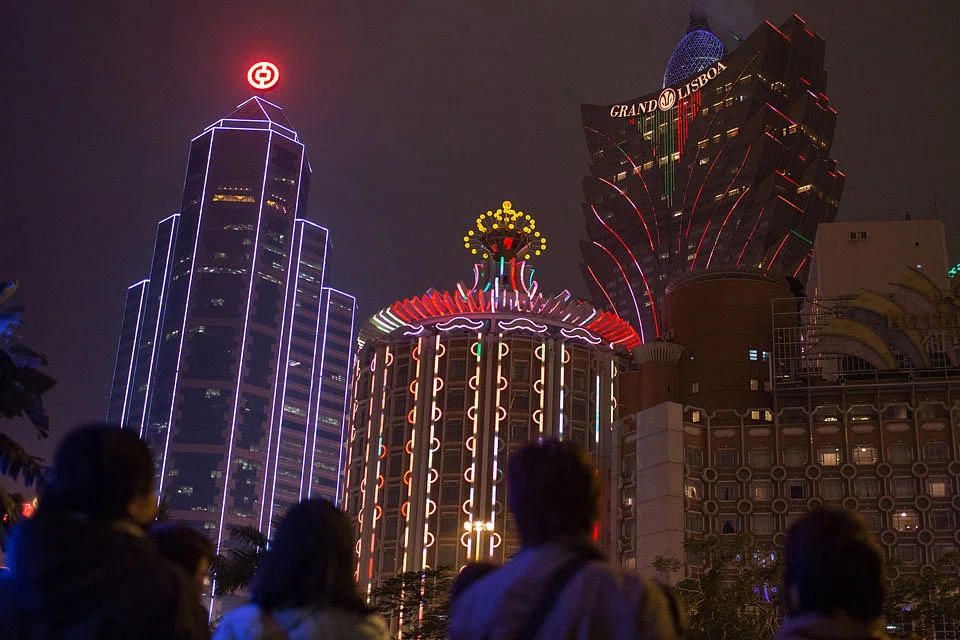
A PALL has been cast over the casino industry in Asia. In the old adage, when the US sneezes, the world catches a cold. In this case, when China sniffles, the casino market contorts into a coughing fit. Macau, the world's casino capital, has been suffering double-digit declines for the best part of two years with no sign of ebbing. The anti-graft campaign driven by Chinese President Xi Jinping has seen even senior Politburo cadres brought to justice and thousands of convictions of officials, many of whom were known to squander millions in Macau casinos. Since the crackdown began, the spigot of high rollers started to dry up.
In its early years, the heady days of Macau's casino boom piqued the interest of neighbouring Asian countries, with Japan and Thailand speculated to be the next to hop on the bandwagon. Instead, it was Singapore which stole the thunder. In its usual cool and efficient manner, the Singapore Inc machinery walked the talk and remodelled casinos into a more culturally palatable concept of an "integrated resort" (IR). Stressing that an IR is quite different from Macau or Las Vegas casinos, they portrayed spaces for leisure, entertainment and business integrated into a large-scale iconic lifestyle product which would enhance Singapore's repute as a premium "must-visit" destination. In vindication of the government's vision, both IRs here today rank among the world's most profitable casinos. The three hotel towers of Marina Bay Sands and its Skypark are now world famous and synonymous with the Singapore skyline.
But signs that all is not so well have begun to surface. The initial euphoria of the Singapore IRs' success, which had commentators predicting they would outstrip Las Vegas, did not happen. Revenue flattened and tourism arrivals reversed course and declined for the first time last year since the IRs opened in 2010. Also last year, many thought Macau's casino revenues would exceed US$50 billion - but they dipped instead to US$44 billion.
The resilience of Beijing's anti-corruption drive surprised pundits. Numerous high-ranking "whales" were nabbed, and what was first thought to be a short-lived exercise following Mr Xi's ascent to power has sustained its momentum. Hardest hit are the Macau casino junket operators who are the main conduits for high rollers from China. Many VIP rooms were shuttered as their clients sought cover from Beijing's dragnet.
Bigger junket operators began to hunt for new places away from the heat in Macau, dangling billion-dollar IR investments to countries such as Vietnam, Cambodia and even far-flung places like Samoa and Micronesia. This had hopeful analysts saying all is not lost and the market is merely becoming more geographically distributed. They justified their bullishness citing the growing success of the cluster of IRs along Manila Bay in the Philippines, with the new City of Dreams Manila which opened early this year with great pomp and fanfare. Philippine gaming officials proudly pointed out that they were the only market which grew in 2014 while the rest of the region declined.
A spate of junket-operator-led investments followed including a S$5.4 billion project in Vietnam, and another in Cebu. In Korea, a Singapore-style bidding process for two IR licences drew interest from Macau's casino tycoons, Lui Che-Wo and Cheng Yu-Tung. Korea's Jeju Island also attracted interest with its proximity to China. All these new investments exhibit a common thread in a junket-operator-centric business model.
Different business models
The next 12 months will be a watershed for the industry with a consensus emerging that Macau is not about to hit bottom anytime soon. Despite that, even with a "depressed" S$40-plus-billion industry, Macau remains the most lucrative casino market in the world. And while there's some physical similarity between the IRs of Macau and Singapore, their business models cannot be more different. Macau is dominated by junket players while Singapore's strict regulatory framework is a strong deterrent to such operators.
Many developers are now proposing a hybrid of the Singapore and Macau models: a wholesome Singapore-styled integrated resort fuelled by Chinese junket players. This fallacious proposition, although fraught with ambiguity, often looks appealing with its promise of high capital investment, thousands of jobs and high tax income. Investment-starved developing countries were not able to look beyond the window dressing at the fundamental flaws of such a business idea. The fact is that there is no one-size-fits-all IR cookie cutter, and the Singapore IR success story cannot easily be transplanted directly elsewhere.
Many of the economic models for proposed new IRs for Indochina, Korea and the Philippines are heavily junket-stacked. This presents a number of conundrums. First, would-be IR host countries need to decide if tourism growth is secondary because junket-based IRs attracts scant mainstream tourists. Second, developed countries like Korea face a dilemma of whether they aspire to cultivate a world-class regulated casino industry comparable to the US and Singapore. Doing this would mean alienating junket-modelled IR investors.
Third is the fallacy of junket operators who thought relocating to more amenable shores would allow them to resume business as usual because the Chinese government is tackling the corruption at its source, not the destination with every junket on its radar. But every new junket-related casino investment does not evade the attention of the graftbusters. Many junket operators have already gone bust and it is an open question whether any will be left standing at all, making such investments risky and creating the possibility of partially built mausoleums that are an embarrassment for their host countries.
But it is not all doom and gloom though. While there is no IR secret sauce, taking a leaf out of the Singapore experience may warrant some value. The past few quarters have been a bloodbath for casino-related counters in the stock market with some shedding more than half their market value. An exception that stood firm amid the carnage was Marina Bay Sands (MBS). When all other Asian casinos registered record lows in their business, MBS has had one of its finest years. MBS made a concerted effort to focus on and grow a premium mass gaming customer segment - a group that delivers higher yield per capita, in contrast with its peer IR whose brand is affiliated more with lower-yielding working-class demographics.
In addition, MBS emphasises developing strong direct relationships and loyalty with high net worth customers. All that is underpinned by a healthy balance sheet through rigorous credit management with premium customers, and a strong non-gaming revenue stream culminated in MBS cornering a two-thirds majority in Singapore's duopoly IR market. A lower exposure to junket players shielded Singapore from the China bug. The imperative is to derive revenue across a more diversified suite of offerings and not just rely on the casino. Implementing a robust customer segmentation strategy is an effective means to tide against a trough in any particular segment.
A strong regulatory regime in Singapore also helped prevent the sort of carnage that Macau has experienced. Despite declining visitor numbers, a S$7 billion market size created by just two IRs is still highly impressive. There are some who believe that Singapore may have left money on the table with a duopoly structure. Splitting the pie three or four ways would still be a very attractive proposition for any casino operator and result in an additional S$5-10 billion of foreign direct investment (FDI) and 5,000-10,000 more jobs. It will be interesting to see what happens when the duopoly expires in 2017 - in particular whether a willing populace and a strong electoral mandate for the government might lead to more casinos being permitted. It's a testament to the Singapore government's brilliance in transforming something culturally taboo and controversial like casinos into a Rubin's vase with a wholesome interpretation which has redefined and transformed the industry, making the term "integrated resorts" a common byword.
Rubin's vase
Another light may yet come around the corner when Japan votes on legislating casinos this year. With a 130 million population, a large middle class and high tourist appeal, it is well placed to usurp the throne as the world's pinnacle casino market. But Japan and other debutantes should take heed from the fundamental precept of Rubin's vase: that perception is unique and very individualistic. Every new jurisdiction considering IRs should be cognisant of its own distinctive set of political and socio-economic dynamics before taking the leap into this complex but potentially lucrative business.






