

Is Singapore ready for dual-class shares?
In the light of the Hong Kong bourse's recent decision, the Republic should grab the opportunity to take the plunge and forge ahead.
ON OCT 6, Britain's Financial Times (FT) reported that the Hong Kong Stock Exchange (HKEx) "scraps plan to woo Chinese tech groups with dual-class share rules". The Securities and Futures Commission of Hong Kong had announced that it will not support proposals to allow HKEx-listed companies to have dual-class shares.
This comes in the face of loud corporate clamouring for the listing rules to be relaxed. In September 2014, Alibaba Group launched its US$25 billion initial public offering in New York, setting a record for the biggest IPO in global corporate history.
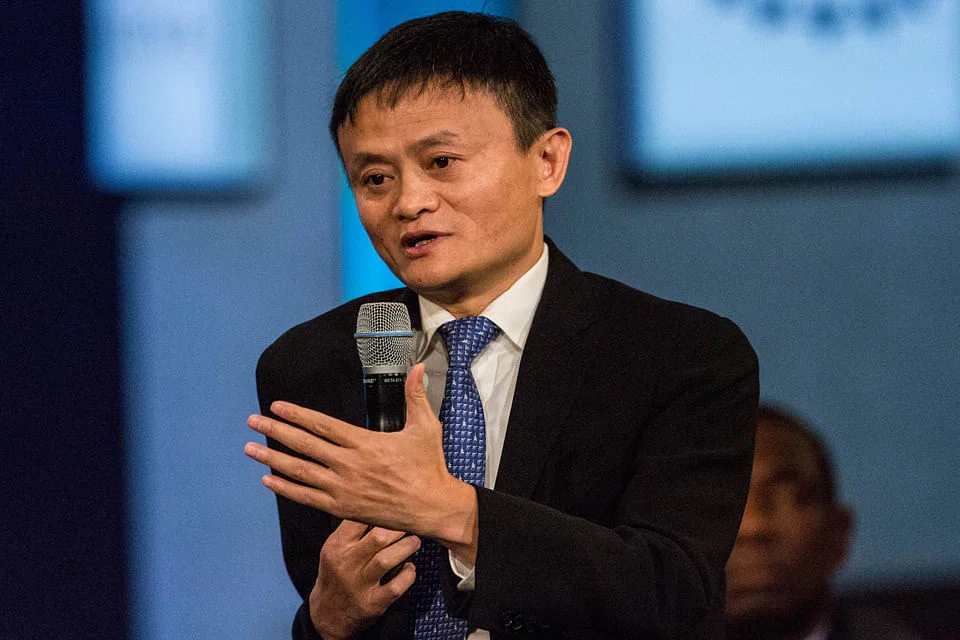
At the time, it was reported that Jack Ma had considered HKEx as a listing venue but had finally decided in favour of the US partly because the Fragrant Harbour did not like the smell of dual-class structures.
SOUL-SEARCHING
Singapore, too, does not welcome companies with dual-class shares. Like Hong Kong, we have lost out on some high-profile listings as a result of this - notably the much vaunted proposed IPO of Manchester United (which also took its listing to the US).
Our authorities have similarly been doing some regulatory soul-searching on whether they should relax the restrictive policy against dual-class shares.
Now that our arch rival financial centre has closed the door on dual-class shares, will the Singapore authorities heave a sigh of relief that they won't have to make such a difficult decision?
Or will they see this as a unique opportunity to pull ahead of Hong Kong, and become the pre-eminent listing destination in Asia?
I believe the latter would be the smarter move. But, first, let's discuss what the fuss is about.
Dual-class shares are shares which have different or weighted voting rights. Instead of carrying one vote per share, certain share classes carry more voting rights, or the right to make certain strategic management decisions. Facebook and Groupon Inc, for example, have two classes of shares, one of which carries many more votes than the other, while Google has three classes (see table).
These special shares are generally held by founding shareholders, directors and key employees, giving them more control over decisions of the company. Similarly, while not strictly a dual- class structure, some companies reserve key decision-making powers for a certain group. In Alibaba's case, a partnership (which includes Jack Ma) that owns 14 per cent of the listed company's stock has the right to nominate a majority of the board members (see table).
The main argument against such structures is that entrenching rights in the hands of management or a select number of shareholders, over and above their economic interest (that is, their shareholding percentage) in the company, is bad governance. Modern companies are meant to be run as corporate democracies, with one-share-one-vote chiselled into their foundations. Regulators are right to place shareholder protection above profits.
However, markets must also evolve with the businesses they cater to. If dual- class structures are necessary because of the peculiar characteristics of certain industries, then we need to strike a good balance between corporate governance and commercial necessity, or risk becoming irrelevant in the economy of tomorrow.
To that end, I offer a couple of initial thoughts.
First, we should relax the rules only where there are compelling business reasons. In most of the examples cited above, the companies concerned are in technology. Such businesses have a different DNA from traditional brick-and- mortar companies. They are valued using different metrics - revenue rather than profits; subscriber reach rather than customer base. Their cutting-edge technologies also mean larger risks and rewards, and correspondingly higher valuations. It was for such reasons that the astronomical price tags for WhatsApp and Instagram were accepted by the market. This sector is also very dependent on key personnel - Steve Jobs, Bill Gates and Mark Zuckerberg are all seen as instrumental to the success of Apple, Microsoft and Facebook. Management structures which enable key executives to drive the direction of the business may be necessary for the company's growth strategy.
CALIBRATED APPROACH
Second, Singapore regulators do not need to adopt the US model of dual-class structures wholesale. Any liberalisation of the regulatory framework should be a calibrated one. For starters, limit these share structures to super-sized listings. Large IPOs will attract institutional investors and savvy fund managers who are better equipped than retail buyers to evaluate the company's business and management. Also, consider building in "gates". Make the dual-class structure subject to renewal by a shareholder vote after, say, the first five years post-IPO. This will force the management team to prove the worth of the structure to the business and prospects of the company, and obtain a fresh mandate periodically.
The Hong Kong bourse had a stellar start to 2015. The establishment of Shanghai-Hong Kong Stock Connect allowed investors in the People's Republic of China to invest directly in Hong Kong-listed stocks, introducing a tidal wave of cash into the Hong Kong market. But more liquidity has also made HKEx a more volatile market. Slowing economic growth in the PRC has led to drastic losses on the exchange, with the index shedding almost 30 per cent since its seven-year high in May.
Although, by contrast, Singapore's stock exchange has been more stable, the Straits Times Index (STI) has still lost 23 per cent in the past 12 months. More worrying is the moribund state of the new listings market, with only nine IPOs this year, and all of them smaller companies. While it can be argued that Singapore, like the rest of the world, is simply being buffeted by the headwinds of a slowing global economy, I prefer to take the opportunity that a slower market affords to strategise the next steps.
Sure, Singapore can wait it out. Eventually the market will turn, sentiment will improve and the world will spend again. Our economy, and our stock market, will rise with the tide.
But Singapore has always shone brightest when defying the odds. Whether it was in attracting foreign investors in our nascent years, to ensure the survival of our impossible nation state; or in our improbable vision to become one of the world's financial hubs, we have always charted our path best where the naysayers were loudest. In both these trailblazing efforts, we excelled in bringing commercial solutions to market quickly, wielding a light but effective control via well-structured regulations. This is no time to shy away from doing what we do best.
TRENDING NOW

China recruited exec at Singapore data centre firm to spy on Nvidia CEO Jensen Huang: US intelligence
DBS, OCBC, UOB’s big sell-off: Was it their Q3 numbers or a broader market de-rating?

Could Japan trigger the next global financial crisis?
Philippines’ FDI slowdown exposes uneven investment prospects across S-E Asia

