

Singapore’s economy rebounded on decisive policy action, but challenges lie ahead
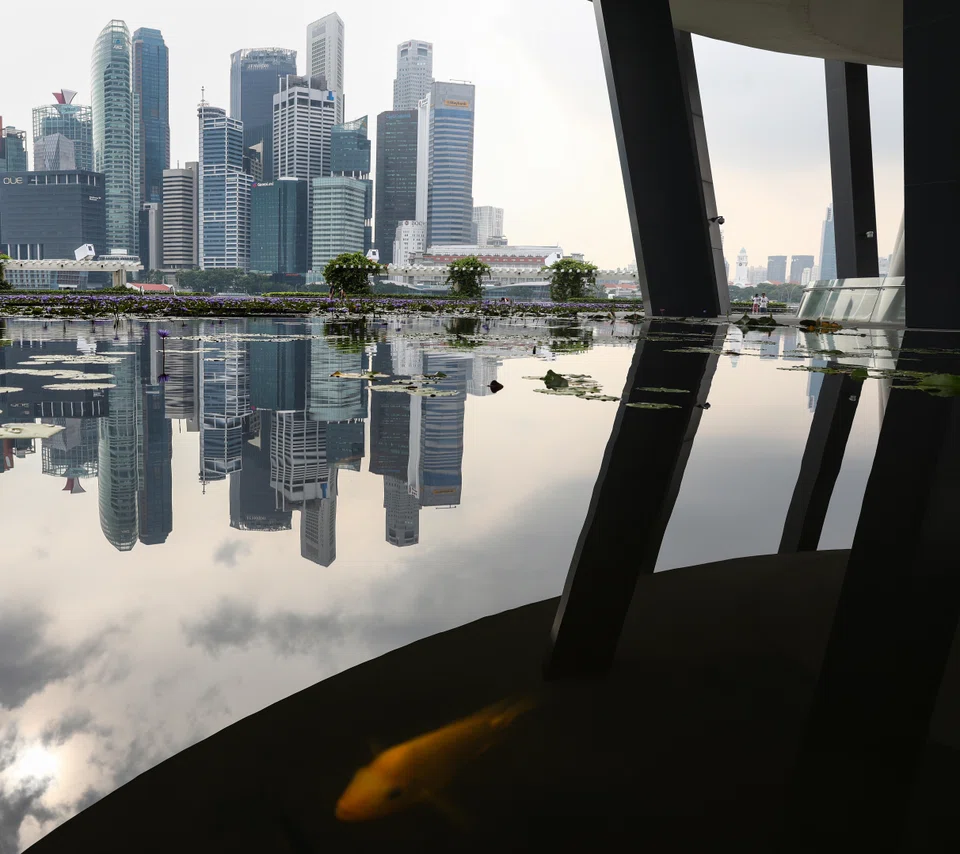
SINGAPORE’S impressive recovery from the pandemic is outperforming similar economies, with total output exceeding pre-crisis levels last year, but the rebound has also been uneven.
Decisive policy responses, like the Jobs Support Scheme, helped minimise economic scarring, while rapid vaccinations and long-standing robust economic fundamentals helped Singapore navigate global challenges. However, sectors like tourism, aviation, construction and in-person services are still lagging.
Now, the war in Ukraine is confronting global policymakers with new challenges and uncertainty as Russia’s invasion and resulting sanctions raise risks for slower growth and faster inflation.
Singapore’s authorities haven’t been spared. They acknowledge the need to be pre-emptive and agile in response to the evolving array of risks while also keeping focus on building buffers and enhancing resilience. They also noted that sound governance and clear communication of long-term policy goals are critical to retaining the hard-won confidence of the people and external stakeholders.
The country’s inflationary pressures, which predated the war, are now being exacerbated by it. While the recovery is expected to remain resilient, significant uncertainties cloud the outlook, including risks from more supply-chain disruptions, higher commodity prices, rising interest rates in the largest advanced economies, and weaker demand from major trading partners.
Those were among our main observations during this year’s annual review of the economy, formally known as the Article IV Consultation, at the conclusion of our discussions in May.
Central to the evolving risks to the outlook are developments in China, Singapore’s largest trading partner, as well as global economic fragmentation arising from the war in Ukraine.
First, a sharper economic deceleration in China poses significant risks to Singapore’s growth and would likely cause spillovers across the region—even though such an outcome would also offer some benefit by easing demand for commodities and in turn moderating inflationary pressures.
Second, the war could add to forces fragmenting our world economy. A reconfiguration of supply chains around allied blocs, known as friend-shoring, could weigh on global growth. That means preserving the diversity and resilience of these important trade links should therefore be a renewed priority for Singapore.
Given Singapore’s strong economic recovery and rising inflation, the ongoing policy normalisation across all the policy pillars remains appropriate. Fiscal policy should continue to gradually normalise in the next year or two while broadening the recovery through targeted support to sectors still hurt by the pandemic. Should further risks materialise beyond what is currently envisaged, Singapore can deploy its ample fiscal buffers to cushion the economic impact.
The authorities have acknowledged the need for fiscal policy to pivot to spend more over the medium term due to population aging and climate change, and to strengthen social safety nets while maintaining the sustainability of public finances. In this context, the society is appropriately transitioning to a new social compact where more collective action is expected while preserving individual responsibility through incentives to keep people in the labour force.
The shift to tighter monetary policy in October 2021, and out-of-cycle in January 2022, was timely. The more hawkish stance in April reflected careful consideration of the abrupt and rapid shift in the global and domestic inflation outlooks, amid broadly full employment conditions, and the need to do whatever it takes to contain price gains amid domestic and global pressures.
Further monetary tightening will be warranted if higher inflation proves to be unexpectedly persistent, to preserve price stability and keep inflation expectations well anchored. Such tightening, however, must be nimble and account for the lags involved in the monetary transmission amid potentially greater risks to growth from further normalisation in a highly uncertain world.
At the same time, macroprudential policies should continue to guard against risks to the financial system, including the buildup of vulnerabilities from housing prices diverging from fundamentals and elevated household and corporate debt amid rising interest rates.
As the pandemic eases—albeit with risks of new vaccine-resistant variants emerging—the focus of Singapore’s policymakers has appropriately shifted to accelerating transformation towards a digital, more inclusive and greener economy. This will also sustain economic growth, along with greater investment in climate-resilient infrastructure and dedicating more resources to high-growth sectors and more sustainable activities. Plans to accelerate digital adoption and innovation, while keeping the appropriate safeguards to preserve financial stability, will help maintain Singapore’s preeminent status as a key regional innovation hub.
The fiscal year 2022 budget calls for a new social compact to make the economy more inclusive by providing targeted support to low-wage workers, focusing more on early childhood learning and strengthening resilience through collective support as a complement to individual effort. These are welcome efforts to assure the most vulnerable people they won’t be left behind, and Singapore’s ample fiscal buffers put it in a good position to further reduce inequality.
On the green transition, Singapore’s more ambitious climate mitigation goals and actions including the higher carbon tax trajectory are noteworthy. However, while the energy crisis imposed by the war in Ukraine is underpinning the need and urgency to shift to renewable energy, it is also making that shift more challenging in the current conditions of high energy prices.
That means any unplanned delay in the climate agenda must be made up later by faster and more decisive action to accelerate the transition and help address one of this century’s biggest challenges to sustainable development.
The writers are from the International Monetary Fund (IMF). Krishna Srinivasan is the director of Asia and Pacific Department; Lamin Leigh is the Singapore and Malaysia mission chief at the Asia and Pacific Department.
TRENDING NOW

Peter Kwee’s Ridley Park bungalow on the market with S$100 million asking price

Motoring tycoon Peter Kwee is back in court: Here are his previous legal battles

Demand, tech capabilities position Apac and AI as Skyscanner’s next growth frontiers: CEO Bryan Batista

South-east Asia has lost Nvidia’s best salesman

