
Singapore’s next opportunity: Connecting private wealth to public growth  

The number of single-family offices in the Republic has surged to more than 2,000
Summarise
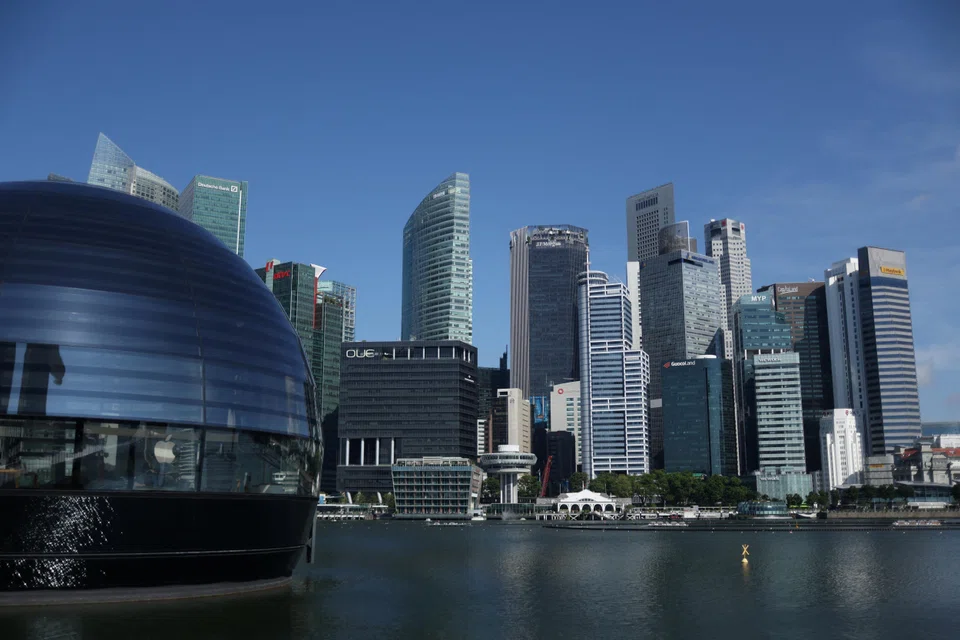
    • While GDP growth has surged, many SMEs are struggling to keep pace, says the writer.
    • While GDP growth has surged, many SMEs are struggling to keep pace, says the writer. PHOTO: REUTERS
    Published Thu, Apr 23, 2026 · 06:45 AM

    AS SINGAPORE cements its status as one of the world’s fastest-growing wealth hubs, policymakers are increasingly asking whether the city-state’s expanding pool of private capital can also help fund its real economy.

    The number of single-family offices in Singapore has surged from around 400 in 2020 to more than 2,000 in recent estimates. 

    Beyond tax optimisation, sustained inflows of regional and global wealth are drawn by Singapore’s jurisdictional stability, regulatory clarity, global market access and, increasingly, depth of domestic capital.

    Singapore’s monetary authorities have reduced documentation requirements and streamlined reporting. Such developments should extend the pipeline for family office registrations and bring in substantial capital, especially at a time when geopolitical upheaval is pushing ultra-high-net-worth individuals to review where they base their wealth. 

    Singapore’s economy is increasingly showing signs of operating at two speeds. While gross domestic product growth has surged, many small and medium-sized enterprises (SMEs) – which make up 99 per cent of businesses and employ 70 per cent of the workforce – are struggling to keep pace. 

    The economy expanded 5.7 per cent year on year in the fourth quarter of 2025, primarily fuelled by an artificial intelligence-driven electronics boom and high-value manufacturing, particularly in semiconductors. 

    But despite the impressive growth, an SME confidence index suggested that such businesses adopted a cautious outlook at the start of the year, with less than half of SME owners (47 per cent) expecting conditions to improve – and this was even before the onset of war in the Middle East.

    It would be no surprise if policymakers increasingly were to see family offices not merely as wealth preservation vehicles, but as potential providers of patient capital capable of supporting the country’s next phase of economic expansion. 

    Singapore has already introduced requirements encouraging family offices that benefit from tax incentives to contribute to philanthropic initiatives and local investments. While these requirements can largely be met through investments in listed equities, real estate investment trusts or investment funds, family offices could consider playing a more direct role in addressing the financing needs of smaller companies. 

    Equity-linked financing offers one potential way for family offices to unlock liquidity from existing portfolios, allowing them to deploy capital to the growth funding needs of startups and SMEs without divesting core holdings.

    Underwriting growth and the real economy

    Many SMEs continue to feel the squeeze from loans taken during the Covid-19 pandemic. Due to traditional bank constraints, more SMEs are turning to fintech and alternative lenders for faster, though often more expensive, short-term capital. 

    Singapore’s venture capital (VC) ecosystem is also facing turbulence. 

    The collapse of the Indonesian aquaculture unicorn eFishery in early 2025, a higher-interest-rate environment in recent years, and a lack of notable exits has significantly chilled investor sentiment across the region. The number of final fund closes for South-east Asia-focused VCs fell to just four in 2025, down from 33 in 2023.  

    Venture debt is therefore increasingly being used by startups to extend their runway. Even the Singapore government has introduced a S$1 billion private-credit growth fund in 2025 to provide more flexible financing for high-growth local enterprises. 

    It’s in this context that Singapore is looking for ways to fill the venture funding void and the SME credit gap.  

    Last year, a new growth-capital work group was established to strengthen venture and private-equity pathways, explicitly aiming to close the gap between private capital and public markets, and to create a clearer funding pipeline from startup through initial public offering. 

    It’s a recognition of the fact that while Singapore has achieved robust growth, it remains uneven across sectors.

    In markets such as the US and parts of Europe, family offices already play an influential role in venture funding, providing patient capital that often bridges the gap between early-stage innovation and institutional investment. 

    A December 2024 survey found that family offices and high-net-worth individuals are the most common limited partners for European VC funds, with 84 per cent of surveyed firms listing them as backers. 

    For family offices, playing a more active role in Singapore’s venture and SME financing ecosystem would also require a shift in operating models requiring increased headcount and greater professionalisation, matching up to the family office standards found in other leading financial hubs. 

    Deploying capital into private markets demands deeper due-diligence capabilities, stronger risk-management frameworks and greater familiarity with venture and SME lending strategies. Many family offices may also need to work alongside banks, specialist fund managers and even other family offices to share risk and identify opportunities. As these pools of private capital become more institutionalised, they will also want to play a larger role in shaping policy discussions around the financing challenges facing Singapore’s SMEs and startups.

    Ultimately, if Singapore succeeds in linking its expanding private-wealth sector with the financing needs of startups and SMEs, family offices could become a powerful new pillar of domestic capital formation. In doing so, the city-state would move closer to a model where private wealth not only accumulates in Singapore, but actively supports the growth of its entrepreneurial economy.

    Writer is CEO of Singapore at EquitiesFirst



