

Singapore’s productivity paradox
Despite its impressive overall economic profile, the republic’s labour productivity, though improving over time, continues to disappoint. What gives?
AFTER falling a few places last year, Singapore recently reclaimed its usual stop near the top (third) in IMD’s ranking of the most competitive economies in the world. The prestigious ranking scheme, based on both statistical measures and survey results, gathers a lot of media attention and countries that place highly in the scheme seem poised for continued economic success. This seems particularly true of Singapore, which is not only one of the wealthiest countries in the world, but is also stable politically, well-positioned geographically, heavily digitalised, blessed with a terrific educational system, excellent infrastructure, high rates of savings and investment, and a government that is honest, hardworking, efficient, and highly supportive and protective of property rights. Quite a bundle of competitive assets in other words.
This said, imagine what the city-state could do if it could substantially increase its labour-productivity growth rate, for, according to a number of studies published by academic economists over the past three decades, Singapore’s performance has been lagging by this metric. Before analysing the labour-productivity question in Singapore, a few words about the concept itself. On the surface, labour productivity seems a straightforward concept, but it comprises several component parts, making it difficult to measure precisely, much less to assess the relative contribution of each component. Labour productivity is usually defined as real economic output per hour worked, but the level of output achieved per labour hour can depend on a variety of factors, not just the quality or skill level of those doing the work. For one thing, labour productivity is powerfully affected by the amount and quality of capital — durable goods (machinery, software, etc) used in the production process by those doing the work. But that is not all, because the way labour and capital and other inputs (such as energy and purchased services) are combined can also strongly affect how much real output is generated per labour hour. This broader measure is known as total factor productivity (TFP).
In the growth-accounting models, TFP is the residual unexplained by an increase in quantity and quality of the labour force and the stock and vintage of capital equipment. This residual is generally believed to arise from a number of factors such as management and entrepreneurship which employ these factor inputs. In the long run, growth in knowledge and technical progress are other factors.
With the variety of variables involved in determining the level of labour productivity, it is not surprising that measurement constitutes a tricky problem and that experts often disagree about both the overall level of productivity in a given economy and the factors primarily responsible for that level. Nonetheless, there has been uncommon agreement about certain questions relating to labour productivity in Singapore. A range of distinguished economists, both foreign and Singaporean, have pointed out, first of all, that Singapore’s growth over time has been mainly the result of increased inputs of labour and capital. They are quick to add that the growth rate of labour productivity has generally been low in Singapore, with most of the measured gains registered coming not from enhanced human capital or from increases in TFP, but from capital deepening, ie, a relative increase in the stock of physical capital vis à vis the number of labour hours worked. Foreign academics such as Nobelist Paul Krugman, Alwyn Young, John Page, Jong-Il Kim and Lawrence J Lau, Chang-Tai Hsieh, and Dale Jorgenson agree on this point (although there is some disagreement among them regarding the causes). Moreover, a number of Singaporean authorities concur. To be sure, there has been some pushback from eminent local academics—a nuanced reconsideration by Goh Keng Swee and Linda Low in 1996 comes immediately to mind—but, generally speaking, most economists agree that, despite its impressive overall economic profile, Singapore’s record regarding labour productivity, though improving some over time, continues to disappoint.
This is particularly true of TFP. Long-run estimates of Singapore’s TFP over the period 1964-2019 recently made by personnel associated with the University of Groningen’s well-respected Growth and Development Centre reveal a zigzagging record since 1970 or so—certainly no secular upward trend in the TFP growth rate. Moreover, the researchers found that the growth rate of TFP (at constant national prices) declined continuously in Singapore from 2011 through 2019. Although other studies have found that productivity has improved in some sectors (manufacturing, most notably), the same factor responsible for most of Singapore’s productivity gains historically, capital deepening, is still preeminent. In other words, the pattern first identified by Young, Kim and Lau, etc -- and later affirmed by Krugman, Dale Jorgenson, and others--persists.
As suggested earlier, explaining labour productivity is no simple task. Figures for the Covid years are generally unreliable and certainly atypical, but some data for the immediate pre-Covid period are illuminating. For example, in 2017 Singapore’s real GDP per hour worked was US$48.25 (adjusted for purchasing power). In the US - a country characterised by substandard educational levels, declining infrastructure, a low savings rate (pre-Covid), mediocre human capital, spotty efforts at digitalisation, and a largely dysfunctional governmental system— the figure was US$65.51 in the same year. In 2013, real GDP per hour worked in Singapore, measured in the same terms, was US$41.46 while in the US the figure in the same year was US$67.32 And while labour productivity in the US is among the highest in the world, a few other nations rank higher. What about TFP? Here, again, the secular trend regarding TFP growth in the US remains impressive. What gives?
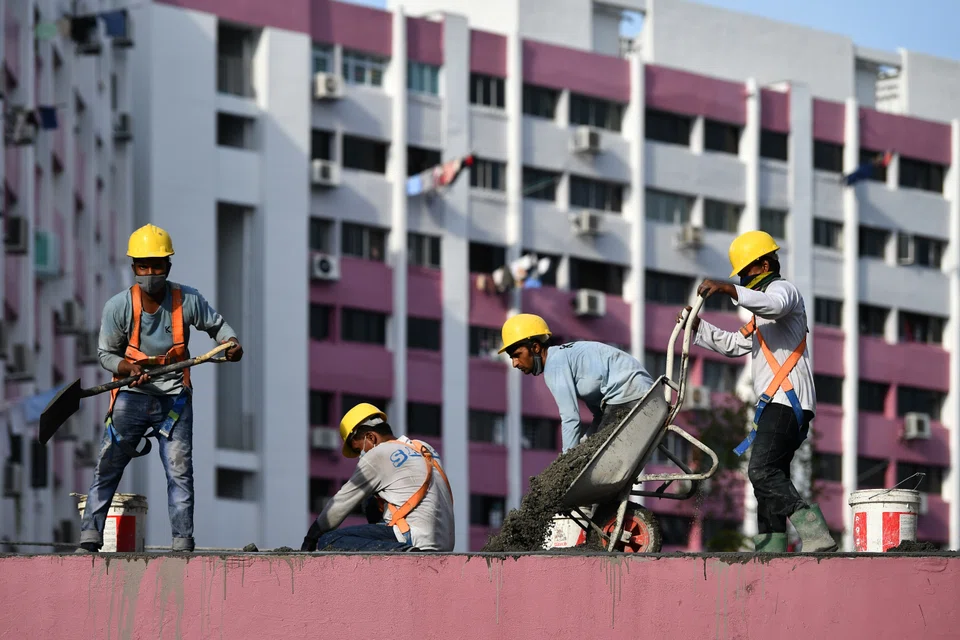
No one answer, clearly, and it’s hardly enough in the Singapore case to talk about economic growth by “perspiration” rather than “inspiration”-- as Nobelist Krugman did in a famous 1994 essay entitled provocatively, “The Myth of Asia’s Miracle” —and leave it at that. There are a variety of factors involved in explaining the low TFP scores for Singapore. For instance, the (over)reliance on low-skilled, transient guest workers in some key sectors may be holding back labour productivity (eg construction). A key theme among some commentators—Lawrence B Krause, for example-- has been the pervasive role of government-linked companies (GLCs) in the domestic economy. GLCs in many developing countries have been huge failures more often than not, causing a drain on public budgets and subject to economic inefficiencies, nepotism and other modes of corruption. Unlike its many developing country counterparts, Singapore has been known for the financial soundness of its GLCs, and the government runs its GLCs along strict commercial principles.
Nevertheless, potential issues of concern that have been identified include the crowding out of private enterprise in sectors dominated by the GLCs, the problems of coordination and control in increasingly complex bureaucracies, the avoidance of failure dominating the potential gains of successes in the overly risk-averse decision-making calculus of GLC managers and the tension between the withholding of information for commercial competitive reasons and the public accountability of GLCs founded on tax-payer’s money.
Sectoral shifts to higher-productivity activities will help some in the future, as will skill upgrades in the labour force, and in the efficiency of domestically-oriented economic activities. Robotics and digitalisation may help at the margin too, as may some changes emanating from the new Forward Singapore initiative. Who knows? Tilting a bit more in the direction of the “shambolic” United States regarding risk receptivity/”safety-ism” attitudes toward failure, system flexibility, spontaneity, and acceptance of “shopfloor” decision-making might also become part of the mix. And greater concern in Singapore over what historian Jerry Muller has called “the tyranny of metrics”—the extension of numerical modes of representation into inappropriate areas—would help too. At the end of the day, though, one thing is certain: Future growth and development in Singapore and elsewhere will be largely about labour productivity and TFP.
Peter A Coclanis is Albert R Newsome Distinguished Professor of History and director of the Global Research Institute at the University of North Carolina-Chapel Hill (US). Tilak K Doshi is a Forbes contributor and fellow at the Global Research Institute of the University of North Carolina.






