Six months into Ukraine war, will European unity hold?
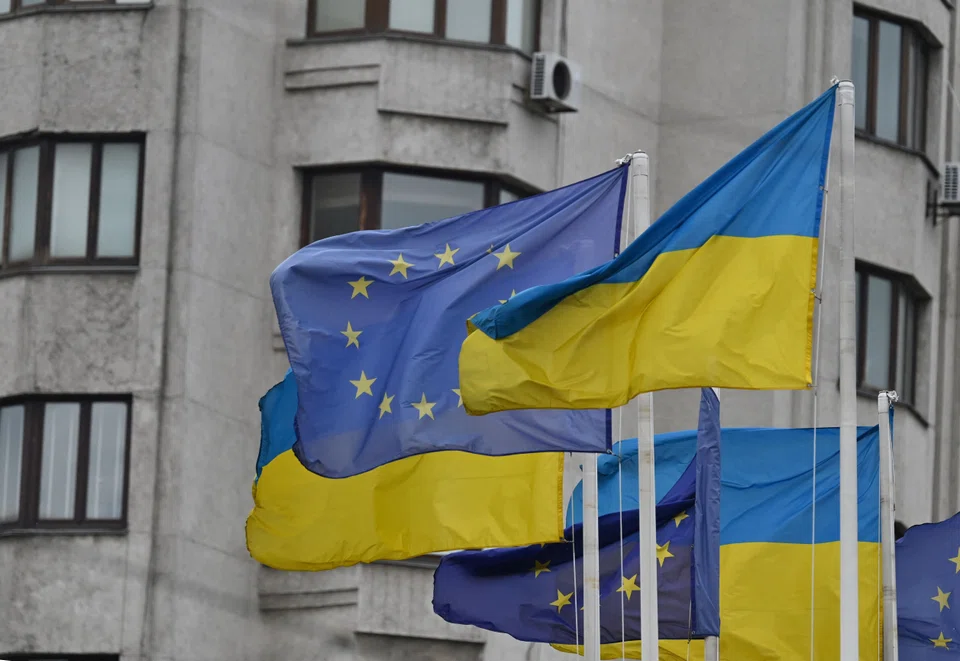
SINCE Russia invaded Ukraine, one of the genuine geopolitical surprises to many has been the stronger-than-expected unity the West has shown against Moscow.
Some seven economics sanctions packages have already been announced by the EU alone, yet with August 24 marking the six-month anniversary of the conflict, greater cracking is showing in the European wall.
It is Hungary which has been the most outspoken outlier so far. Yet behind wider European public statements of support for Ukraine are significant differences between key Western European states such as Germany and France, versus nations on the East of the continent which want to see an even tougher response such as the Nordics, Baltics, and Poland.
The schisms within Europe were showcased in June in a European Council on Foreign Relations poll which showed that, while Europeans feel great solidarity with Ukraine and support sanctions, they are split about longer-term goals. They divide between a ‘Peace’ camp (35 per cent and potentially growing) that wants the war to end speedily, and a ‘Justice’ camp that believes the more pressing goal is to punish Russia (22 per cent).
In all countries, apart from Poland, the Peace camp is larger than the Justice equivalent -- by a mammoth 41 per cent to 16 per cent. Meanwhile, the preference for Peace is strongest in Italy (52 per cent) and Germany (49 per cent) where citizens worry, increasingly, about the cost of sanctions and the threat of military escalation.
A further one-fifth (around 20 per cent) decline to choose between either Peace or Justice, but still largely support the EU’s actions in response to Russia’s war in Ukraine. Members of this swing group share the anti-Russian feelings of the Justice camp, but also worry about escalation, like the Peace camp. In the coming months, more of this third group may move more toward the Peace or Justice camp and their views could be crucial to determining Europe’s next steps.
This suggests that the resilience of European democracies will, significantly, depend on the capacity of governments to sustain public support for policies in Ukraine that will ultimately bring pain to different social groups.
This will be challenging as the survey reveals an already sizeable, and potentially growing, gap between the stated positions of many European governments and the public mood in their countries. The big looming divide is between those who want to end the war as quickly as possible, and those who want to carry on fighting until Russia has been defeated, if indeed this is possible.
For now, these European cracks have been camouflaged quite successfully by the Brussels-based club. However, this may be much harder this Autumn and Winter as the economic and political pain bites harder from the Ukraine crisis.
Changes of leadership could also make a difference too. Italy which under Prime Minister Mario Draghi was a strong supporter of Kyiv, could become significantly less supportive of a hard-line stance against Moscow if the nation’s right-wing bloc, within which there is significant sympathy toward Russia, wins power in the coming months.
In this context, where European unity will probably become harder as time goes by, a significant uncertainty remains how much longer the war will last. Six months in, this is highly uncertain, but there are some big clues as to next steps.
In coming weeks, it is unlikely either side will win a decisive victory imminently. That is, for as long as Moscow is prepared to expend huge resources in the conflict, and while Ukraine continues to be supplied extensively by the West.
The most likely scenario in upcoming weeks therefore is probably a “war of attrition” into the final quarter of 2022. This could even see the conflict lasting into 2023, albeit potentially at a lower fighting tempo.
The level and range of risks in Ukraine remains exceptionally high. This is partly because Moscow’s “exit strategy” is not clear, and miscalculation is still a significant possibility. While the Russian military was ineffective to begin with, it now controls between 20-25 per cent of Ukraine.
Moreover, it is now the announced strategy of the Western alliance led by the United States to try to inflict a defeat on Russia. In the history of NATO in the post-war era, this is a very important difference from before, and raises the stakes further in the months to come.
Historically, wars have tended to end in two ways: when one side imposes its will on the other on the battlefield, then at the negotiating table; or when both sides embrace a compromise they deem preferable to fighting. Unless something big changes, neither is likely in Ukraine imminently, especially as both sides are prepared to expend massive resources in the conflict.
Following Russian territorial wins in recent months, Ukraine is gathering a large fighting force equipped with Western weapons to try to recapture some of its territory from Moscow which now controls the combined size of Belgium, Luxembourg, and Netherlands. Meanwhile, Russia is preparing for the next stage of its offensive with its forces stepping up military operations.
In this context, there could be continued, significant market volatility in the weeks ahead. This would impact the energy and wider commodity markets. Moreover, the new emphasis on energy security means the transition from fossil fuels is slowing further in 2022, and this inertia could last much longer if war continues into 2023.
The economic impact of the war may be exacerbated by Russia cutting off more gas supplies, at least periodically, to increasing numbers of EU nations in coming months. Hence why the bloc’s energy ministers have agreed a controversial new plan to try to deliver voluntary cuts of 15 per cent in gas use from now to March 2023.
Pessimistic as this “war of attrition” scenario may seem, with the human cost -- including for millions of refugees -- largest of all, it is not the worst-case outcome. That future is most likely to be realised if the conflict escalates beyond Ukraine to involve NATO countries.
While this still seems unlikely to many, it cannot be dismissed, such is the volatility of the situation. While NATO is doing what it can to support Ukraine without getting itself entangled in a direct military confrontation with Russia, miscalculation by one or both sides is a real concern.
Such miscalculation could be a genuine catastrophe for many, and use of nuclear or chemical weapons could not be ruled out. Moreover, not only would the regime of sanctions and counter sanctions grow, there would also be wider economic collapse, expediting the impulse toward de-globalisation.
Andrew Hammond is an associate at LSE IDEAS at the London School of Economics
TRENDING NOW
He built the Vingroup empire. Now South-east Asia’s richest man is handing some key roles to his sons
Grab CEO’s wife Chloe Tong on life with Anthony Tan and finding her purpose
What role can Japan play in Asean’s future?
From folding clothes to factory work: Why China is sending humanoid robots to school