So what about America's 'forgotten men and women'?
Trump's critics deride his image as a Man of the People, say his populism will be called out
Washington
A YEAR after the 2016 presidential election, it has become clear to almost everyone why Donald Trump and not Hillary Clinton is now occupying the White House.
And, no, it has very little to do with the so-called Russian "interference" in the election, or with anything that former FBI director James Comey said or did before the vote.
As numerous studies have concluded, what determined the outcome of the presidential race were the votes of thousands of white blue-collar workers and residents of rural districts in key electoral states, including Pennsylvania, Ohio, Michigan and Iowa.
Most of them had traditionally voted for Democratic presidential candidates but decided to switch to the Republican contender last November. Pollsters and political scientists are still trying to figure out what helped produce this stunning electoral realignment? What has led an unemployed auto manufacturing worker from Michigan to cast his or her ballot for a presidential candidate representing a political party that has traditionally been identified with the interests of Wall StreeRt and Corporate America?
Why would the poor inhabitants of Ohio's Appalachian counties and other areas of the industrialised Midwest, many of whom lack health insurance and who survive economically thanks to their monthly Social Security checks, elect as president, a real-estate tycoon from New York who has pledged to obliterate the national health-care insurance programme created by his predecessor and to reward the wealthiest Americans by reducing corporate tax rates?
The short, simple answer: "It was Populism, Stupid!"
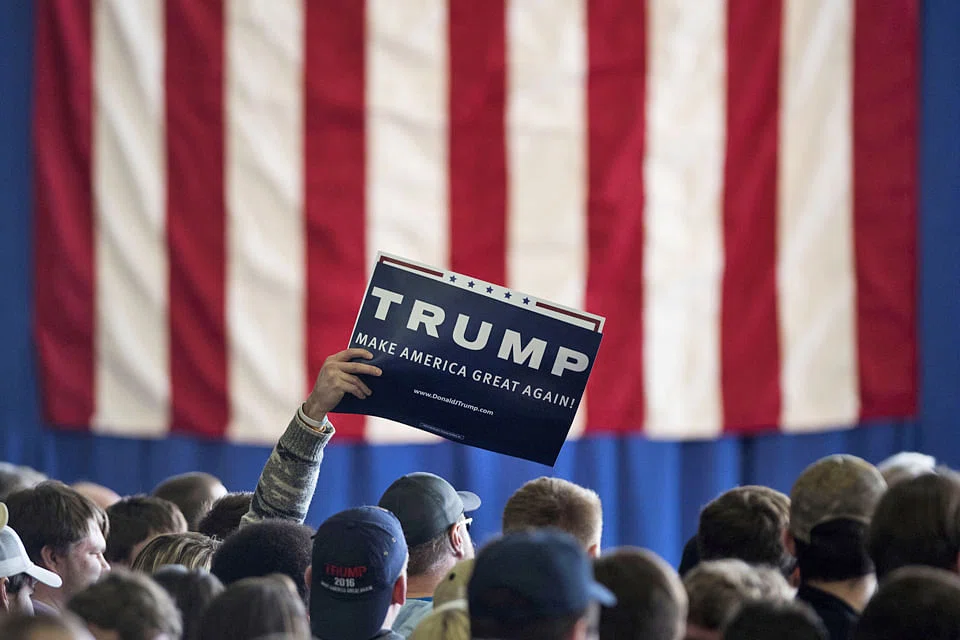
Candidate Trump marketed himself as the champion of the "forgotten men and women of this country" residing in the Fly-Over Nation of Middle America, the alleged victims of globalisation, who were threatened by imports from China and immigration from Mexico; he would stand-up to the members of the "elites" in Washington and Wall Street, he said.
In a way, he seemed also to be trying to rebrand the Republican Party itself, to transform it from the political vehicle of the country's capitalists, who have actually benefited from cheap imports and labour, into a political movement that would be on the side of the nation's workers and struggling middle class.
Trumpism would replace Reaganism.
POPULIST MESSAGE
There is no doubt that many of the voters that Candidate Trump targeted during the presidential campaign ended-up buying into his populist message, hoping that he would "bring back" the jobs lost to China, deport millions of illegal immigrants to Mexico and, most importantly, support legislation and pursue policies that would not only create new jobs for them and their families, but would also raise their salaries, improve their access to health-care, and re-energise a dwindling middle class.
Notwithstanding the continuing populist rhetoric President Trump spouts, critics have been ridiculing the notion that the billionaire in the White House - himself a beneficiary of globalisation and who appointed the wealthiest Cabinet in American history, including several former Goldman Sachs partners - is or has ever been a Man of the People. His entire "populism", they contend, is nothing more than a political con-job, and sooner or later, his supporters in Middle America would figure that out.
In reality, opinion polls suggest that while he has lost some support in suburban Republican districts, those forgotten men and women that constitute his most solid electoral base in states like Ohio and Michigan have not abandoned him - yet.
That President Trump is still seen by these voters as a defender of the interests of the American workers reflects his success in retaining the populist brand he acquired during the presidential campaign.
It is true that he did not abrogate the North American Free Trade Agreement (Nafa) nor has he launched a trade war against China, but through his rhetoric, media events and ad-hoc gestures, he creates the impression that he does care about those forgotten men and women and is trying at least to "do something" to help them.
Hence his decision to withdraw from the Paris Climate Accord and to repeal environmental regulations that may hurt the mining industry and to approve the Keystone XL pipeline, reversing the Obama administration's decision to block that oil project, have been applauded by miners of West Virginia and Kentucky and by workers in oil and gas industries.
Never mind that no one seriously believes that the answer to America's unemployment problems lies in the expansion of the mining industry. It is the perception that counts.
Candidate Clinton and the rest of those elitist liberal Democrats and their environmentalist pals are the enemy of those hard-working miners; President Trump, on the other hand, is standing behind them and does not give a damn about the Climate Change nonsense.
So he refrained from imposing punitive tariffs on Chinese imports and now counts President Xi Jinping as a personal friend. But he did get the US out of the Trans-Pacific Partnership (TPP) trade deal that would have supposedly destroyed the entire American economy, and he now promises to force countries running surpluses with the US to buy American products, and to prevent American companies from relocating production abroad.
GREAT VICTORIES
And occasionally, when a foreign government pledges to invest more in the US and an American company decides to keep its workforce at home, President Trump and his aides talk those up as great victories for his policies.
Never mind that his arguments that drive his populist and economic nationalist agenda - that the problems facing American workers, are a result of predatory Asian trade policies and lousy trade deals - fail to point to the real structural economic reasons for America's stagnant wages and job insecurity: Automation and other technological changes and the transformation in the global economic balance of power.
President Trump has failed to propose any ideas on how to respond to these challenges.
Moreover, contrary to the expectations that he created, the Republican Party has not been reinvented as the political party of American workers.
In fact, the Republican congressional leadership, as well as most the president's top economic advisors, remain committed the principles of the free market and free trade. They are advocating the old Reaganite economic mantra of cutting taxes on corporations and the well-to-do and of reducing government spending on social-economic programmes.
And when Trumpism seems to be incompatible with Reaganism, Republican lawmakers and the business interests they represent resist the White House's protectionist agenda, tailor an alternative plan to Obamacare that denies health-care benefits to the kind of lower-middle-class Americans who voted for President Trump, and propose changes to the tax code that reward large American companies and members of the so-called globalist elite.
It is possible that in three years from now, when it becomes obvious that American jobs are not returning home, and that the US trade deficit with China and other economies is growing, some of those who elected him in 2016 may start questioning the wisdom of his "populist" agenda.
Yet President Trump is hoping that at the end of his first term in office, when he would ask his ardent supporters in Pennsylvania and Iowa: "Are you better off than you were four years ago?", they would all respond with a YUGE "We are!" and re-elect their populist saviour for another term.