Social media in the post-Trump world
Tech platforms face tough days ahead as they get sandwiched between opposing calls for free speech and more regulation
FOLLOWING the deadly siege on the Capitol building in Washington DC on Jan 6, technology giants cracked down on tens of thousands of extremists and conspiracy theorists. The purge's most famous victim was former United States president Donald Trump, who was banned from Twitter, Facebook and Instagram "due to the risk of further incitement of violence", as Twitter put it.
It is an odd point in history where private companies have to be relied on to control elected public officials. Corporations are censoring the leader of the free world, with general approval.
Yet for a long while, social media companies have insisted that they are merely "platforms" for users to express their views. Those companies are reluctant to make rules to determine which type of views are acceptable and which are not. Remaining impartial is good for business, allowing for a wider user base, but is important also from a legal perspective. If a company makes it clear that it does not moderate content, then it decreases the scope for lawsuits about bias, and distances itself from responsibility for user comments.
The task of regulating hate speech then falls to the regulators, lawmakers and courts. But the public is now dissatisfied with that state of affairs. Fake news travels at the speed of electrons, whereas lawmakers are changed only at the speed of elections. Governments take a long time to become aware of problems, study them, propose solutions and pass laws.
Thus, social media platforms are forced to start employing experts to make rules, and programmers to make algorithms to detect and shut down unwelcome speech. They have to formulate community standards, filter content, handle appeals and become the arbiter of truth and falsehood, effectively forming an in-house justice system. And in so doing, they have found themselves having to grapple with complex moral and ethical issues.
However, there is no profit to be found in regulating speech. On the contrary, it costs time and money. Companies also have to understand the issues involved in a wide range of controversies such as abortion, capital punishment, gay rights, gun control, religion, race, gender and even vaccines. None of these topics is easy to discuss, let alone resolve.
The lazy solution may be to side always with the majority. But this approach creates its own problems. It is an impossible position: the only certainty is that there will always be a group that will complain of bias.
Free for all?
What if a platform simply decides that this is all too much, and hold itself out as a completely unregulated space? A salutary lesson is found in Parler, a self-proclaimed "unbiased" social media platform. Its free-speech position attracted extremists, who found that they could say things there that they could not elsewhere.
Apparently, evidence exists that Parler was used to coordinate the storming of the United States Capitol. Apple and Google removed Parler's mobile app from their stores. Amazon Web Services cancelled its hosting services. Without a place to download the app, and without the infrastructure to host the service, Parler is now offline (techspeak for "dead").
Free-speech platforms can thus attract too much legal liability and reputational damage for business partners to stomach.
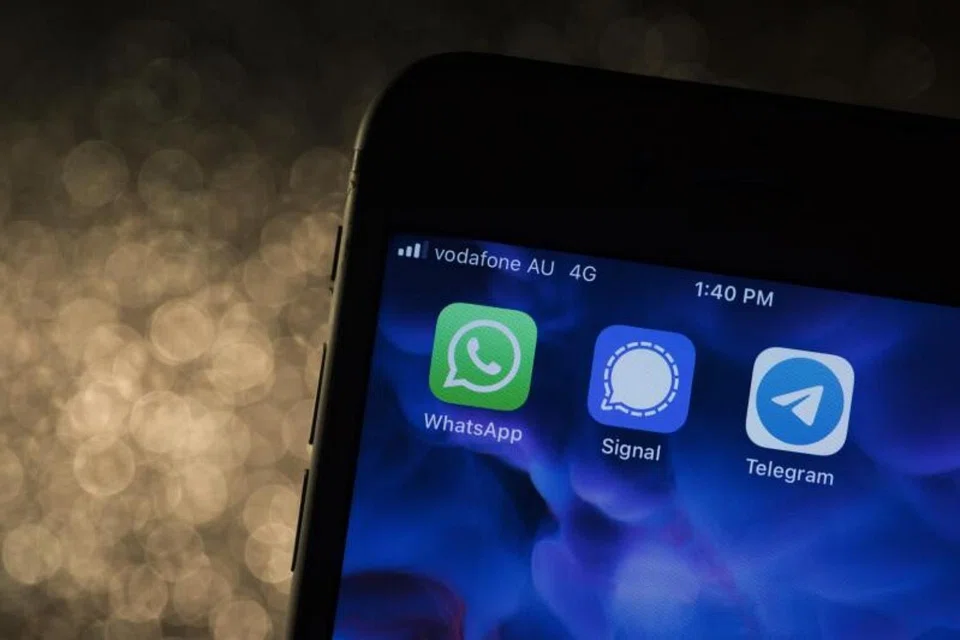
As for the disenfranchised Parler users, they began migrating again. They found themselves on messaging platforms such as Telegram and Signal where they encountered birds of a different feather: WhatsApp refugees.
Although WhatsApp is owned by Facebook, users could opt out of data-sharing with Facebook, but that policy would change by Feb 8, 2021, when dissenters would have to stop using the service entirely.
Users were outraged. Never mind that WhatsApp's privacy policy has always contained provisions allowing it to share data with Facebook.
The backlash from that announcement was so unequivocal that WhatsApp was forced to delay the implementation of the new policy. Rival service Signal experienced tens of millions of downloads in the days following WhatsApp's initial announcement. Telegram reported 25 million new users in just 72 hours. Co-founder Pavel Durov said that the exodus from WhatsApp to Telegram showed that "people no longer want to exchange their privacy for free services".
The bad news for these messaging platforms? They may face the same fate as Parler.
Former US ambassador Marc Ginsberg has asked a California court for an order requiring the Telegram app to be removed from the Google Play Store. Mr Ginsberg claimed that Telegram facilitates violence, extremism and anti-Semitism. He complained that while Google has removed Parler, it has not taken any similar action against Telegram even though (according to Mr Ginsberg) there are Telegram users who likewise threaten, encourage and coordinate racist violence. He has filed a similar suit to ask for a court order removing Telegram from Apple's app store.
Ultimately, it seems that all users want is a platform that
- provides a safe space for communication actively
- actively protects people from offensive speech
- is fast, reliable and secure
- caters to text and voice messages, pictures and videos and
- operates non-stop for billions of users.
And, oh, it has to be free.
Are users just being naive? Won't every free messaging app eventually have to monetise data, in order to survive? Are they doomed to a nomadic future, where they wander from one free messaging app to another? And are they really asking these free apps to adjudicate and determine what people say? Mr Trump's experience with Twitter, and users' experience with WhatsApp, have led everyone to the same place: When it comes to messaging, we still haven't found what we are looking for.
They don't trust other users. They don't trust government. And they don't trust technology companies. Maybe mistrust is healthy. But it makes everything complicated.
Pay for the privilege
Bans may not be the answer for hate speech and fake news. If bad things are said, then it is best that they be said openly, where they can be monitored and countered. It is worse if bad actors are driven underground, where they are harder to monitor. And it may be healthier for society if we are all able to hear and read unpleasant, disagreeable statements. It is a bad idea to listen only to ideas that chime with our own, for that leads to a herd mentality. It is a good idea for the general population to become resistant to fake news, for that leads to herd immunity.
And if users believe that free and open communication is valuable, then they must act accordingly. Because, one way or another, everyone has to pay for the privilege of speech.
- The writers are from TSMP Law Corporation. Adrian Tan is a partner and head of the IP & TMT practice, and Kevin Elbert, a senior associate in the litigation practice.