TOPLINE

ST Engineering focuses on synergies from US$2.7 billion acquisition to reach greater heights

The group is on course for achieving its financial targets

Tay Peck Gek
Published Mon, Apr 29, 2024 · 05:00 AM
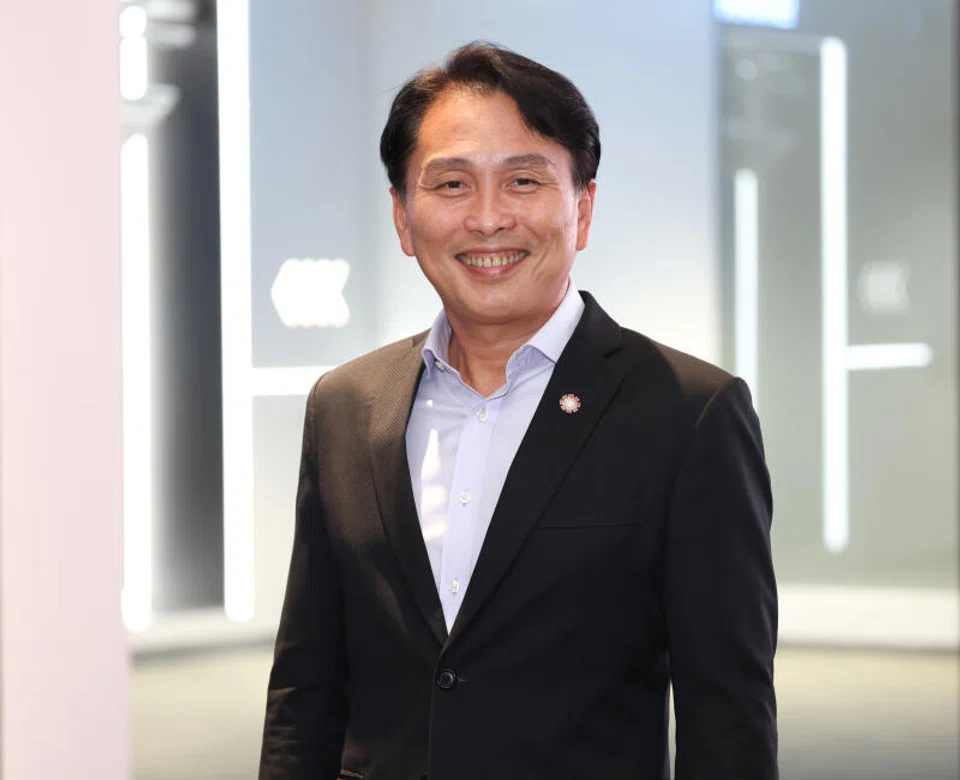
    • Vincent Chong, group chief executive officer of ST Engineering, says there are investment opportunities beyond mergers and acquisitions for the mainboard-listed group.
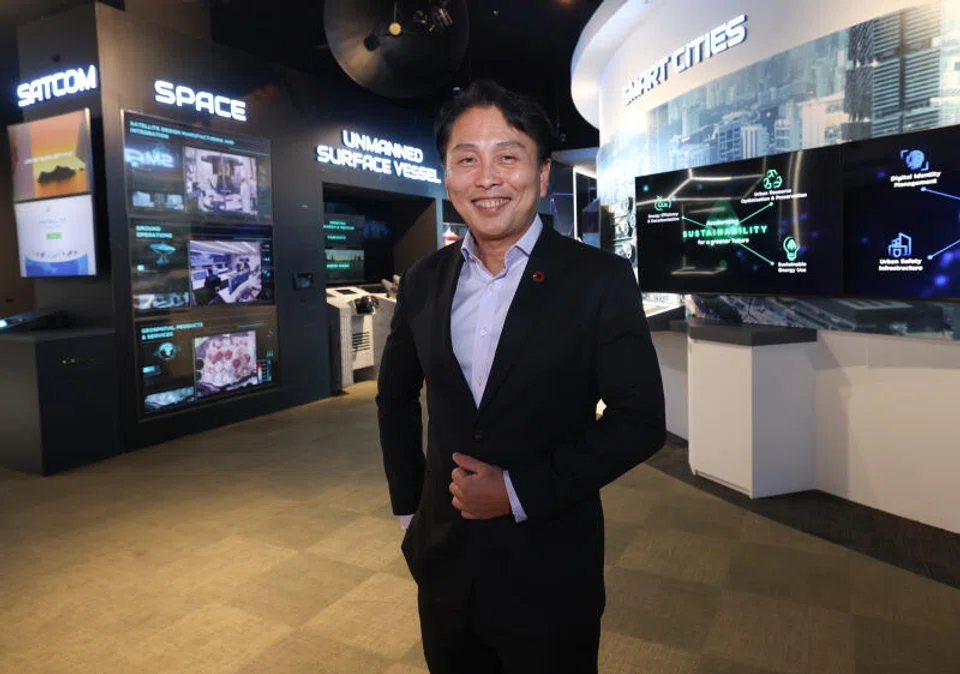
    • ST Engineering group CEO Vincent Chong says investing across business cycles during the pandemic helped the group recover more quickly.
    • Vincent Chong, group chief executive officer of ST Engineering, says there are investment opportunities beyond mergers and acquisitions for the mainboard-listed group. PHOTO: YEN MENG JIIN, BT
    • ST Engineering group CEO Vincent Chong says investing across business cycles during the pandemic helped the group recover more quickly. PHOTO: YEN MENG JIIN, BT

    SINGAPORE Technologies Engineering (ST Engineering) is reaping the synergies from its acquisition of TransCore – its largest yet – after hitting its financial milestones for the US$2.7 billion purchase.

    Vincent Chong, group chief executive of the technology, defence and engineering powerhouse, said the group was working to make sure it delivers “the outcomes that we want to achieve in the acquisition”.

    When ST Engineering announced that it was buying TransCore in 2021, it envisaged that the North American electronic tolling and congestion pricing solutions provider would fast-track its goal of becoming a market leader in smart mobility.

    The Singapore mainboard-listed group aimed to achieve synergies through cross-selling its intelligent transportation systems solutions to North America, while offering TransCore’s products to South-east Asia.

    TransCore was expected to be cash flow-positive from the first year and profitable from the second year after the deal, which was completed in March 2022.

    ST Engineering achieved these near-term financial milestones, with the wholly owned subsidiary in the 2023 financial year delivering earnings that were sufficient to cover financing, integration and amortisation costs ahead of the plan.

    The group is now reaping synergies with TransCore in the fold.

    In February, its urban solutions business (of which TransCore is part) won a Dubai Mall contract that involves integrating a barrier-free smart car park system developed in Singapore with traffic toll technology developed by TransCore. 

    The contract, the value of which was unspecified, will enable automatic and ticketless parking fee collection at the facility, which has more than 13,000 parking spaces.

    Vincent Chong, group chief executive officer of ST Engineering, says employees should be kept engaged and feeling valued during times of change. PHOTO: YEN MENG JIIN, BT

    On strategies for making acquisitions such as that of TransCore work, Chong said: “We spent a lot of time engaging the employees because it was a change. You know, when shareholders changed, when your team changed, we had to make sure that we (kept) the employees engaged and (feeling) valued.”

    The group also facilitated “a gradual transition to new processes and procedures” for the employees, keeping in mind differences in company policies between ST Engineering and the previous owners.

    “Making them feel that they are part of a very successful organisation that has many capabilities in technology and innovation... can help them improve their business,” Chong added.

    On track to meet goals

    Although it has made the mega deal work, ST Engineering has no immediate plans for another significant merger and acquisition (M&A), said the helmsman, who took the reins in 2016.

    “It doesn’t mean that we are limited to just M&As. Organically, we also have many business opportunities that we can deploy capital (towards) that will create shareholder value.”

    The group is instead working on other investment opportunities, including a S$170 million aerospace hangar complex in Singapore’s Changi Creek, and a commercial aerospace maintenance, repair and overhaul joint venture with Shunfeng Airlines in Hubei, China.

    As at end-2023, ST Engineering had cash of S$353.3 million as operating activities netted cash inflows of about S$1.2 billion, while there was a net S$1.4 billion cash outflow to investing and financing activities.

    Its net profit was S$586.5 million for FY2023, up 9.6 per cent year on year, and its revenue rose 11.8 per cent to S$10.1 billion – both top and bottom lines broke records.

    Its commercial aerospace business accounted for S$3.9 billion of revenue, exceeding the target of S$3.5 billion the group set in 2021 for FY2026.

    It is on track to achieve its goals of S$3.5 billion and more than S$500 million in turnover for its smart city and digital businesses (comprising artificial intelligence, cloud and cyber), respectively, by FY2026.

    The AirFish, a craft that glides over water, is manufactured by a joint venture of ST Engineering. It is being tested for maritime transport. PHOTO: ST ENGINEERING

    When asked whether ST Engineering has set its targets too low, including the near-term financial milestones for TransCore to manage shareholder expectations, Chong dismissed the suggestion.

    “We don’t do that. I think in any target-setting, and in any goals that we set for ourselves, it’s based on a balanced view of how we think the business will evolve. If you look five years out, I don’t think you can be exactly on the dot because there will be external factors that are beyond your control.”

    He cited commercial aerospace as an example. The business was severely impacted by the Covid-19 pandemic, but ST Engineering continued to invest in building new capacities to position itself for the sector’s upturn.

    It built a hangar in Pensacola, the United States, and another in Guangzhou, China during the thick of the pandemic. “Our ability to invest across business cycles, even in the challenging Covid environment, also helped us recover (more quickly) than we originally planned,” Chong said.

    He attributed ST Engineering’s performance to the skilful execution of strategies and plans, as well as the company’s reorganisation in 2021, helping its staff focus on the sectors and domains that their teams are responsible for.

    The group was reorganised into the commercial and defence and public security clusters, replacing the sector structure of aerospace, electronics, land systems and marine.

    Meanwhile, the group has noted more international defence opportunities in Eastern Europe and the Middle East. Coincidentally, these are where wars are raging.

    “We don’t sell into conflict zones,” Chong clarified, adding that ST Engineering’s defence business offers the capabilities that some of the countries in these areas want.

    Chong attributes ST Engineering’s performance to the skilful execution of strategies and plans, as well as the company’s reorganisation in 2021. PHOTO: YEN MENG JIIN, BT

    Its defence and public security business delivered a 40 per cent year-on-year improvement in earnings before interest and tax to stand at S$567.4 million. This was due partly to its exit from the loss-making US marine business, which resulted in enhanced margins.

    The US marine business was one of 16 ventures that ST Engineering quit in the past seven years as a result of portfolio optimisation, with some causing write-offs while others made gains.

    The group exits businesses when the investments no longer meet strategic intents, deliver the expected financial performance, or give material contribution in terms of scale.

    “The review is (continual) because market factors change all the time. So we have to be nimble and we have to be agile,” Chong said.