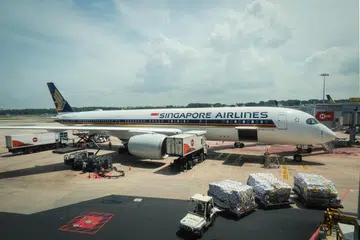
Sri Lanka-Singapore FTA a win-win for both sides
Bilateral ties are warm, but not matched by equal robustness in their trade and business ties. This free-trade agreement will change that.
WHILE the global trade war threatens to disrupt global trade and the prospects of global economic growth, encouraging signs of commitment to trade are visible elsewhere.
The EU-Japan bilateral free-trade agreement (FTA) paving the way for unrestricted trade within their combined economies of more than US$20 trillion is great for trade prospects in the Asia-Pacific. The prospects would also be augmented by the Sri Lanka-Singapore FTA (SLSFTA) that came into effect in May 2018.
The SLSFTA is Sri Lanka's first FTA since 2005 and the most comprehensive it has signed so far. It represents a modern 21st century FTA, with not just traditional trade issues like trade in goods, trade remedies, trade facilitation and dispute settlement, but also 'WTO plus or extra' issues - such as competition, investment, intellectual property and procurement - which are discussed by ambitious FTAs like the Comprehensive and Progressive Trans-Pacific Partnership (CPTPP).
Expansion of market access by eliminating tariffs is an important feature of the SLSFTA. Since Singapore allows the bulk of imports in duty-free, the onus of liberalisation was on Sri Lanka. Sri Lanka will progressively eliminate tariffs on 80 per cent of goods over 15 years under the agreement. The long phasing is understandable given concerns of domestic industries on opening up.
The SLSFTA addresses non-tariff measures, particularly through detailed mention of quality standards for food products that mutual imports need to adhere to. These can be benchmarks for future FTAs and prevent exporters from encountering unexpected regulatory barriers. The agreement also has detailed provisions on commitment in services trade, including separate chapters on telecommunications and e-commerce. These should boost bilateral digital trade and help in development of Sri Lanka's ambitious Port City Financial Center.
The SLSFTA underlines Singapore's search for trade and investment partners beyond East and South-east Asia and its recognition of Sri Lanka's potential as a trading hub in the Indian Ocean region. From a Sri Lankan perspective, it is an outcome of the country's post-conflict trade policy to boost flagging growth and strengthen ties with South-east Asia and the Asia-Pacific.Through the SLSFTA, Sri Lanka would get closer to becoming a formal part of the Asean trade architecture.
The agreement also marks the possibility of Sri Lanka joining the Regional Comprehensive Economic Partnership (RCEP) and becoming a core element of Asia's big FTA game. Its aspirations are expected to be endorsed by Singapore. Joining RCEP, to be the world's largest FTA between the 10-member Asean and its six FTA partners accounting for more than a third of global GDP and almost half of the global population, would give Sri Lanka access to an enormous regional market and dynamic Asian FDI.
TOWARDS A FRUITFUL SLSFTA
One of the main benefits for Sri Lanka from SLSFTA is an increase in FDI from Singapore. Just about 5 per cent of inward FDI into Sri Lanka during 2014-17 came from Singapore. The SLSFTA would enable a better investment climate for foreign firms through its provisions on safeguards against expropriation of and discrimination against foreign investments. Singapore firms can bid for large government procurement projects in Sri Lanka.
Sri Lanka's Board of Investment is also targeting Singaporean FDI in infrastructure, IT services, tourism and education. But Sri Lanka's investment climate needs to improve in on-ground "doing business" parameters, such as opening a business. Streamlining colonial-era business regulations and showing consistency in economic policy would help gain the confidence of risk-averse Singaporean investors.
Greater inter-country agency cooperation, such as between Singapore's Economic Development Board (EDB) and Sri Lanka's Board of Investment, can help Sri Lanka in locating sustainable FDI in key sectors like transport, logistics and urban development. The Board of Investment needs to step away from managing export-processing zones and refocus its capacity on investment promotion.
Opening its first overseas office in Singapore could contribute significantly to this objective.
The SLSFTA must note concerns of Sri Lankan business over "round-tripping" of state-subsidised imports from Asean and China via Singapore. Such concerns can be addressed through effective usage of the SLSFTA's rules of origin. Worries also exist over the free movement of skilled professionals (such as doctors, engineers and lawyers) to Sri Lanka from third countries. However, the SLSFTA only provides for controlled entry of a few foreign managers and technical manpower per project, which usually accompany FDI internationally.
Sri Lanka and Singapore's warm diplomatic relations have not been accompanied by equal robustness in their trade and business relations. The SLSFTA is expected to change this substantially. Both sides are expected to benefit significantly. Sri Lanka should gain through import of cheaper consumer goods and intermediate inputs, FDI and technology transfer and healthy competition for domestic producers.
Singapore businesses, on the other hand, will gain from greater access and investment opportunities in Sri Lanka's growing economy, its base of literate and productive workers and Sri Lanka's strategic location for plugging deeper in Indian Ocean trade and the South Asian regional market.
SLSFTA also symbolises greater institutional bonding between South Asia and South-east Asia, as well between global trade traffic encompassing the maritime spaces of Malacca Strait, Bay of Bengal and the Indian Ocean. Singapore is working with India and Japan to develop the Trincomalee Port (the world's fifth largest natural harbour) and Trincomalee city in north-eastern Sri Lanka. Such integration of maritime trade and business is great news at a time when global trade prospects are threatened by uncertainties.
TRENDING NOW
He built the Vingroup empire. Now South-east Asia’s richest man is handing some key roles to his sons
Despite the de-dollarisation debate, demand for dollar liquidity in Asia is growing
Can a first-time homebuyer couple earning S$18,000 a month afford a new EC unit?
Asia needs new energy security architecture