

Staying listed in the US could prove to be a rough ride for Singapore companies

Benjamin Cher
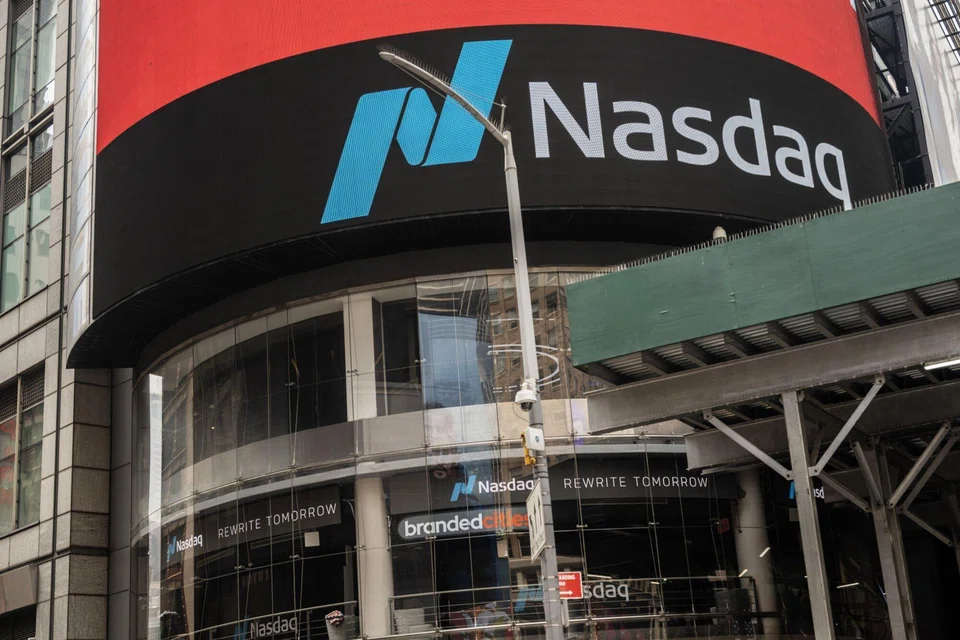
RIDE-HAILING startup Ryde and personal-finance comparison platform MoneyHero Group are the latest in a string of Singapore-linked companies to seek a listing in the US markets.
But, as one market observer puts it, these companies risk “falling between two stools”. As a small fish in a big pond, some of these Singapore companies could fail to raise adequate capital from the market and garner interest among investors to buy into the stock.
In a preliminary prospectus lodged on Aug 31, Ryde indicated that it intended to raise up to US$17 million in an initial public offering (IPO) on the New York Stock Exchange (NYSE).
With its single-market operation in Singapore, Ryde’s valuation is unlikely to match that of its rival Grab.
Meanwhile, MoneyHero will list on Nasdaq via a business combination with special-purpose acquisition company Bridgetown on Friday (Oct 13).
Registered and domiciled in Singapore, MoneyHero’s operations are spread out across Singapore, Malaysia, the Philippines, Hong Kong and Taiwan – markets that might be a little far for US investors to understand its growth potential.
Valued at US$342 million, MoneyHero will fall under Nasdaq’s third-tier Nasdaq Capital Market for companies with under US$2 billion in market capitalisation.
Companies in this tier rarely get any coverage from brokerages and research houses. But this appears to be a common theme running through the Singapore companies listed on Nasdaq.
Not all rosy
Dishwashing and cleaning systems provider JE Cleantech raised US$12 million in its Nasdaq IPO in April 2022, with shares priced at US$4 apiece – the bare minimum needed to list on the exchange.
Just months after its listing, JE Cleantech’s share price fell below US$4 in July 2022. It has since sunk to US$0.46 as at Oct 9.
On Nov 4, 2022, the company received a written notification from Nasdaq’s Listing Qualifications Department that it was not in compliance with the minimum bid requirement.
JE Cleantech had up to 180 days, or before May 2, 2023, to ensure that the closing bid for its shares was at least US$1 for a minimum of 10 consecutive days. Failing this, the counter could be subject to delisting.
But JE Cleantech could be eligible to be allowed extra time to meet these conditions if it met the continued listing requirements for market value of publicly held shares and other initial listing standards for the Nasdaq Capital Market.
Another Singapore company, proptech platform Ohmyhome, also priced its IPO at US$4 a share. Since its Mar 23 listing, its share price has fallen to US$2.89 as at Oct 9.
The latest entrant, facilities-management platform, Simpple, priced its IPO at US$5.25 a share, and began trading on Sep 13. The counter is trading 2.4 per cent lower at US$5.12 as at Oct 9, its performance the same as the other listees.
Wooing Singapore IPOs
From access to deep capital markets and brand name prestige, much ink has been spilt on the allure of a Nasdaq listing.
Companies often seek out such a listing, seeing it as a promised land of public markets where capital is overflowing.
Meanwhile, a dearth of IPOs in the United States has led market participants there to search further east for potential listees, according to industry watchers.
With bankers often influencing the decision on where to list, Nasdaq market participants would undoubtedly extol the positives of a listing there. But getting a company to decide to list there would likely be more beneficial for the market participants than the company itself.
These participants are often the sole bookrunners for these IPOs, which net them about 5 per cent to 6 per cent of the transaction value. Added together, these small deals could help tide them over and keep them busy until IPOs return again.
The prestige of being listed on Nasdaq might be dazzling to shareholders, with the potential of deep capital markets and investors to call on. But the reality has not been as rosy for Singapore companies listed on the exchange.
With over 3,000 companies listed across all tiers of Nasdaq, there is a real danger of being lost in the crowd.
These companies also often fail to whet investors’ appetite as they do not have any operations within the US.
For most of these Singapore companies, getting listed on the Nasdaq might be the easy part. Whether it makes sense for them to remain listed – or if they can even meet the minimum requirements to do so – might be the greater challenge.
TRENDING NOW

Singapore bars Alice Huang, woman tied to affair with Nvidia’s Jensen Huang, for misleading police

Nvidia prepares to oust Jensen Huang after news of second affair, with executive: reports

Higher rates, weaker spending: Is the Philippines entering stagflation?
Nvidia’s market value sinks below US$4 trillion after CEO Jensen Huang resigns

