
Sustainability lessons from the Covid-19 outbreak

The fundamentals of ESG have come into sharp focus in an almost surreal display of what can be achieved if countries truly collaborate on sustainability.
Published Wed, Mar 25, 2020 · 09:50 PM

    AS THE world struggles with the current coronavirus pandemic, those who have experienced past crises dispense sagely wisdom "not to waste a good crisis".

    Ironically, through this period of the Covid-19 challenge, when the world is shutting down travel, halting business activities and closing borders in the fight against this deadly virus, the sustainability fundamentals of ESG (environment, social and governance) have come into sharp focus, in an almost surreal display of what can be achieved if countries truly collaborated on sustainability.

    The closure of factories in China and the imposed quarantine orders for workers to stay home after the discovery of the coronavirus late last year has produced the unintended consequence of cleaner air in China. The country's Ministry of Ecology and Environment said the average number of "good-quality-air days" in China's industrial Hubei province in February rose 21.5 per cent over that in the corresponding period last year.


    This reported improvement in air quality is supported by satellite images released by Nasa and the European Space Agency, showing a significant reduction in nitrogen dioxide emissions, which are released into the atmosphere by the exhaust of cars, coal power plants and factories, in the major Chinese cities in January and February.

    The improvements also continue in the area of China's carbon dioxide emissions, which have fallen as output fell between 15 per cent and 40 per cent across key industrial sectors.

    Carbon Brief, a climate science and energy website, reports that this positive result is likely to have wiped out a quarter or more of the country's CO2 emissions over the four weeks of February - the period when production activity would normally have resumed after the Chinese New Year holidays.

    This data is certainly encouraging and goes to show that air pollution and its impact on the planet is not some "fake news" made up by theoretical scientists with their "heads in the clouds", or the over-reaction of climate activists bent on grossly exaggerating the impact of industrial activities on the planet's environment.

    Likewise, the halting of gondola activities in Venice has brought back dolphins into the city's famous canals, through which now flows visibly clearer waters.

    It is hoped that this is the undisputed evidence that will convince countries to take concrete steps to implement sustainable alternatives, and find a better way to limit the impact of their activities on the environment.

    Diversity and inclusion are often highlighted as two important aspects of the social element in ESG. The fact that Covid-19's infection potential makes no distinction of one's ethnicity, background and nationality emphasises the point that each person and every community is essentially the same. All are exposed to the same risk of infection and by extension, all are worthy of the same treatment and support as a member of the global community in fighting this virus.

    For societies and communities to be sustainable, we will need to develop a growing awareness of and appreciation for the need to be inclusive, while reflecting the diversity of the different groups and communities of people which make up the world we live in - with the basic common denominator being our identity as fellow human beings.

    Unless we all endeavour to move ahead together and aspire to not leave anyone behind, we are collectively only as strong as our weakest link - something we are seeing so clearly in our collective fight against Covid-19.

    The pandemic has caused unprecedented anxiety and reactions such as panic buying and fierce fights over food and household items, like the now infamous toilet rolls. But it has also seen the coming together of communities to support neighbours and fellow men and fellow women in quarantine, as well as the outpouring of honour and gratitude for frontline medical personnel who are risking their lives in fighting the virus.

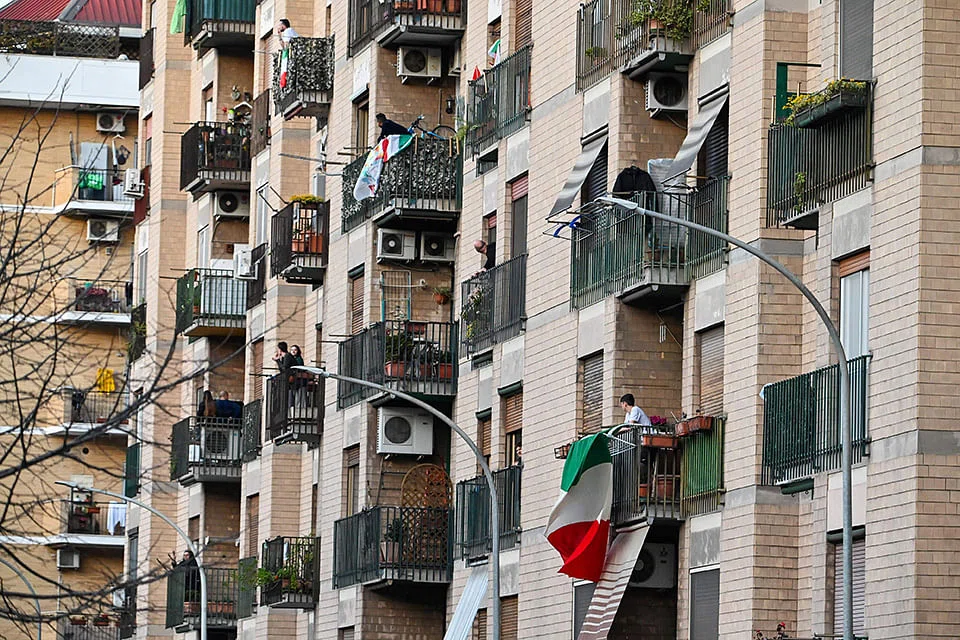
    All these actions add to the increase of each society's social capital and ultimately the elevation of communities. From Hubei province in China to the Lombardy region in Italy, the virus has greatly challenged the inhabitants, but it has, strangely, also strengthened the social fabric of these communities, uniting them in overcoming a common deadly foe.

    It is hoped that this lesson on social cohesion, the increase in social capital and the handsome returns that can be attained through the unity among nations and communities, will be a lasting one. A lesson that propels the world towards imagining what greater good it can do, together, for the inhabitants of our planet.

    Corporate governance in sustainability has always focused on the management of a corporation - its board, shareholders and the various stakeholders in that entity. Covid-19 has shown us some integral aspects of governance: From having the vision and determination to "do the right thing" to the consequential cost of implementing these decisions.

    Whether it is China taking the draconian step of imposing the largest known quarantine of 60 million individuals to Italy's decision to first lock down its most wealthy region and, ultimately, its entire nation from the outside world, this required the courage and boldness to "do the right thing" - for themselves and the world.

    While we often romanticise about the "benefits" of doing the "right thing", we do not always dwell on the associated costs for carrying out such actions. Principles may be priceless but exercising them does come with price tag. It is still early days but a country like China is already bearing a huge economic and financial cost for "doing the right thing" - be it in greatly lowered growth rates or the possible risk of a recession.

    The governance lens is not focused on the short term but always on the long term; leaders of both countries (and corporations) will always need to have this deeply ingrained as an immoveable principle in their governance foundation. When the dust finally settles on this pandemic, there will be no doubt that the courageous decisions taken by countries like China and Italy are worth every cent of the consequential financial impact.

    Even as we continue this "world war" against Covid-19, let us take a cue from the late Winston Churchill who was involved in the last world war: "The true guide of life is to do what is right."


