

Tackling market concerns should be priority for new SGX CEO
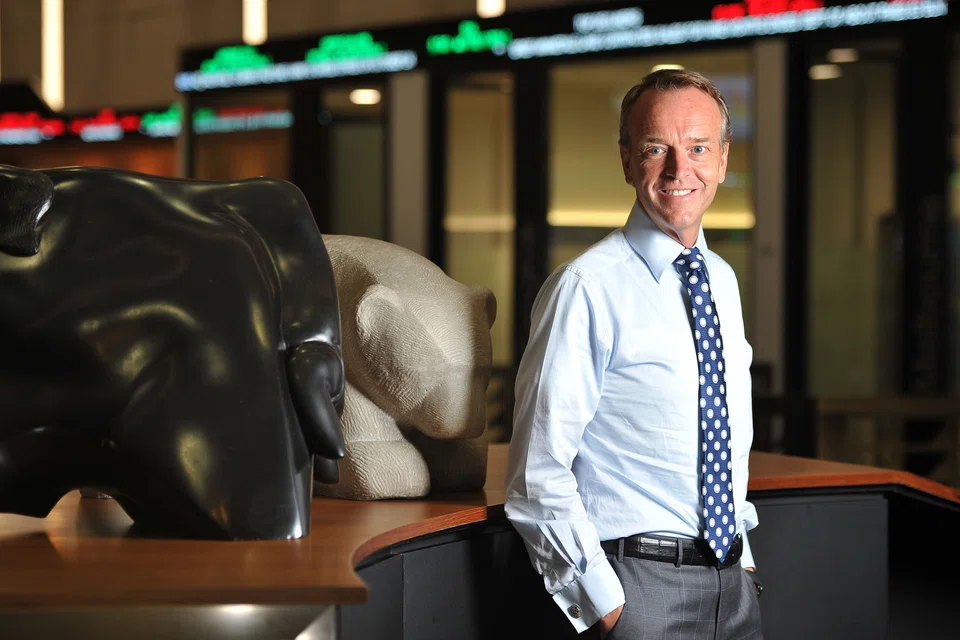
WHEN a new chief executive officer (CEO) takes the helm at Singapore Exchange (SGX), which may happen later this month, he or she will inherit a fundamentally strong and profitable organisation which enjoys a strong brand name as an Asian gateway but one which also faces difficult challenges going forward.
The most obvious is how to deal with the competitive threat posed by a large upswing of interest in China equities brought on by the recent Hong Kong-Shanghai connect, a threat that might require SGX to strike up useful connections of its own with other exchanges. Another challenge would be to continue growing its lucrative derivatives business, the foundations of which have been laid by outgoing boss Magnus Bocker. The biggest challenge, however, will be balancing the sometimes incongruent demands of SGX's shareholders with those of its stakeholders. The former can be identified as a fairly homogenous group which demands growth, profits, share price performance and dividends. To achieve this via the derivatives business, China in particular offers the best opportunities and the exchange has already gained a decent foothold here with its FTSE China A50 Index futures contract.
Stakeholders, however, are a much more differentiated assortment with differing demands, mostly related to the local equity market. Investors for example - both retail and institutional - would expect new, attractive and exciting listings. Local companies looking to raise equity capital expect the exchange to command good valuations and offer them a liquid market after listing. Retail and minority investors whose CPF monies are invested in equities demand stronger regulation and greater protection of their rights, expectations that have to be balanced against the risk of over-regulating. Day traders in the meantime want plenty of liquidity but are against the introduction of more algorithmic programmes and high-frequency trading as these are believed to bestow unfair advantages on their users despite the liquidity they bring to the rest of the market.
Trading representatives (TRs), a group which plays an important frontline role for the exchange, want better working conditions in terms of better hours and a more equitable split of commissions. Over 3,000 strong, retail TRs believe the local equity market has regressed in the past 4-5 years and earlier this year approached the government to intervene with suggested structural reforms. Even though the retail investment landscape is rapidly evolving due to inroads made by private banks, TR concerns should not be taken lightly as they are still important market stakeholders.
Timing will play a critical role since all regional markets except Hong Kong are at present suffering from low liquidity, volatility and overall investor interest. Reasons for this include worries about rising interest rates, falling growth rates, a slowdown in China and the eurozone's seemingly never-ending problems centring, at the moment, on Greece's debt. More recently, a large amount of money has likely been funnelled out of the local market towards China after Morgan Stanley Capital International announced it is considering including China "A" shares in its emerging market indices. This has pushed local benchmark indices down, heightening concerns over the health and attractiveness of the equity market. Addressing these concerns should be a priority for the exchange's new chief.
TRENDING NOW

Vietnam’s northern provinces, not Hanoi or Ho Chi Minh City, are powering near 10% GDP growth

VietJet hit with global asset freeze in FitzWalter dispute

Gridlock or growth? The Asean Power Grid faces a critical window of opportunity

LNG, stronger regional power links key to Asean’s energy resilience: Shell

