A targeted approach to attracting tech companies may work best for SGX

EARLIER this month, UK-based semiconductor company Arm said it would be pursuing its primary listing only in the US this year – taking London out of the picture.
The decision was seen by many as a blow to UK politicians, who were reportedly working hard to land the blockbuster initial public offering (IPO). Arm was dual-listed in London and on the Nasdaq before being bought out by SoftBank Group in 2016.
Arm reportedly has not ruled out a potential secondary listing in London down the road.
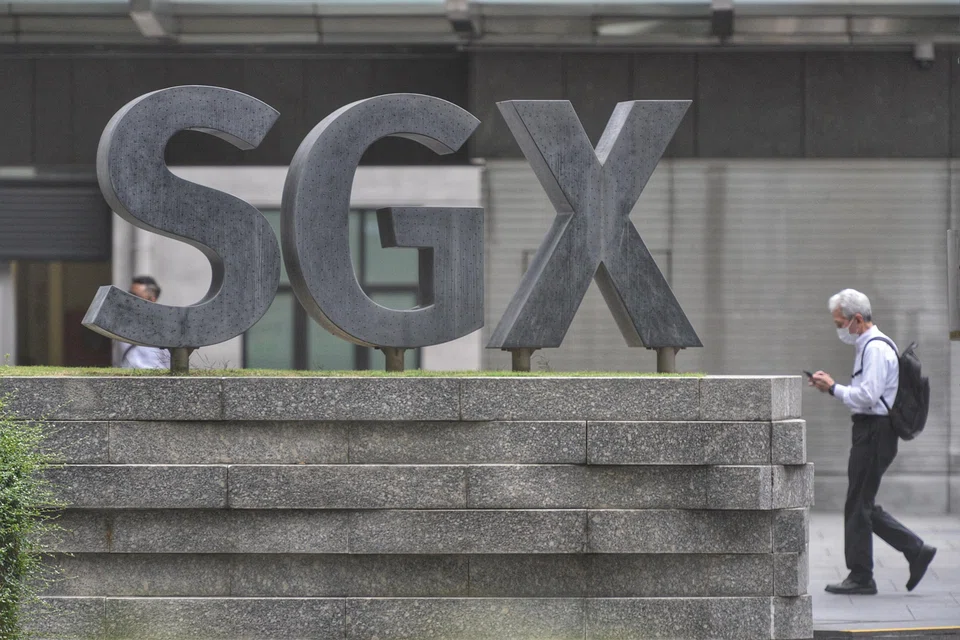
Its choice is not surprising. This situation would sound familiar to investors in Singapore who have grown used to the fact that large, home-grown tech companies would bypass the Singapore Exchange (SGX) when looking to go public.
Critics have been quick to assign blame to poor decisions on the part of exchange management, regulators and politicians.
More likely, the situation is merely a reflection of the current reality of global capital markets.
Exchanges should accept this, and adjust.
Tough reality
Singapore-headquartered companies Grab and Sea have listed on the Nasdaq and New York Stock Exchange (NYSE), respectively, and garnered multibillion-dollar valuations.
Their overseas listings have boosted their profiles, and given them the valuations they desired.
The NYSE and Nasdaq are the two largest exchanges by listed market capitalisation, and most of the large global tech players – including Amazon.com, Microsoft and Alibaba Group – are also listed in the United States.
Trading activity is far more active. The daily average value of Sea shares traded over the past year amounted to over S$600 million, according to Bloomberg data.
This is roughly half the entire Singapore market’s securities daily average value of S$1.2 billion in 2022.
It isn’t just the big players that have been looking abroad. Last year, PropertyGuru listed in the US via a business combination with a special purpose acquisition company (Spac). Carousell had attempted to do the same, but its plans eventually fell through.
SGX has tried to improve its attractiveness with various initiatives, including allowing dual-class shares and Spacs.
In September 2021, government agencies, state-owned investor Temasek and SGX also unveiled a slew of initiatives to boost equity financing for high-growth enterprises in the Singapore market.
But with the slowdown in global IPO activities in 2022, these actions have not yet yielded the hoped-for results.
The few startups that have braved the tepid markets have not given up on their ambitions to be listed abroad.
A Nikkei report last December noted that Singapore and Hong Kong startups are side-stepping their home exchanges to merge with US Spacs instead of locally listed Spacs.
It cited Refinitiv data that showed at least eight Singapore startups had announced plans last year for combinations with US Spacs – mostly with small deal sizes falling below US$500 million.
Targeted approach
When it comes to the smaller or even mid-sized IPO aspirants, however, non-US exchanges probably have a fighting chance.
After all, any issuer with a domestic or regional business and a market cap of under US$1 billion is unlikely to receive much investor or analyst attention in the large US markets.
When such companies insist on going to the US, they may suffer from thin trading and weak valuations. They may eventually be forgotten, and may even have to be delisted.
Such small and mid-cap issuers may be better off staying in their local markets, where investors understand their business.
Exchanges should focus on convincing such players to stay local instead of heading to the US.
It is harder to make the same argument for large players such as Arm, whose processor architecture powers virtually every smartphone.
But that doesn’t mean non-US exchanges have to be left out entirely, as they can still work towards getting a dual or secondary listing in a company’s home base. Maintaining a listing on a second exchange would give local investors easier access to the counter, and allow for trading beyond US hours.
In Singapore, IPO activity was lacklustre in 2022. The only mainboard listings were the three Spacs.
But SGX was able to attract secondary listings, and fairly large ones at that: Chinese electric vehicle manufacturer Nio listed in May, while Philippine liquor giant Emperador made its trading debut in July.
These listings followed the debut of Thailand’s Sri Trang Gloves in 2021.
Shortly after listing, Emperador joined the Straits Times Index. It is worth noting that Singapore’s stock barometer also has other secondary-listed counters: conglomerate Jardine Matheson, grocery and convenience store operator DFI Retail Group, and property group Hongkong Land. All are members of the Jardine group of companies and have their primary listings in London.
Having such listings on the SGX adds to the vibrancy of the local market.
SGX has taken other steps to develop its market. Last July, it signed an agreement with the NYSE to collaborate on dual listing of companies on both exchanges.
When global IPO activity picks up, SGX may yet be in a good position to capture a secondary or dual listing of a large home-grown tech play.
Accepting the current realities of global capital markets, and adopting a targeted approach, may be the best way forward for non-US exchanges to get a diverse mix of issuers in their markets.