

Tech’s ‘zombie unicorns’ reach the end of the road
PRESIDENT Donald Trump’s tariff tantrum has so far delivered only bad news for tech – as it has for just about everyone except Maga (Make America Great Again) diehards. Fintech firm Klarna Group and ticketing platform StubHub have paused their initial public offering (IPO) plans, threatening to starve venture firms of the cash they need to satisfy investors.
That suggests the last two years of declines in startup funding have further to drop. But there are silver linings for tech founders and their backers. The tariff shock could offer a healthy correction to an ecosystem that has long struggled to focus on financial fundamentals.
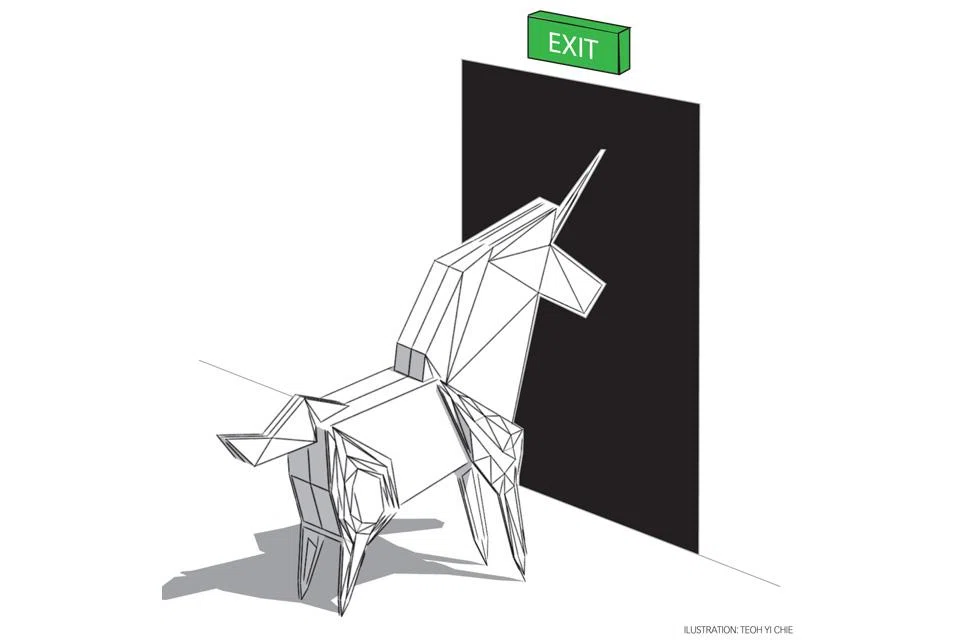
Even before the last two years of artificial intelligence (AI) hype that fuelled bubbly tech valuations, Silicon Valley had a zombie unicorn problem: Many startups that attained unicorn status by getting a valuation of US$1 billion or more had dwindling prospects and little hope of justifying their status.
In 2021, for instance, more than 354 startups reached the billion-dollar threshold, but only six have since held IPOs, according to a recent Bloomberg News report.
Several others were acquired for less than US$1 billion, while those that managed to raise venture capital funding did so at a lower valuation, a so-called down round. The result is that as at February 2025, there were a record 1,200 venture-backed unicorns that had yet to go public or get acquired, according to CB Insights.
That is the result of assumptions they could keep fundraising at increasing valuations regardless of performance. But that was not happening. Less than a third of the unicorns from 2021 have managed to raise more capital in the last three years.
But here is a novel idea: maybe companies that cannot survive without constant capital infusions do not deserve to keep plodding on. Maybe the startup ecosystem’s addiction to growth and postponement of a public-markets reckoning was not such a great idea.
Perhaps the venture capital firms that are now expressing “Covid-level fear” should welcome the potential cleansing effect that Trump’s economic disruption could bring, particularly now as the generative AI boom has threatened to create more froth.
Secondary markets, for instance, are more likely to give appropriate discounts to overvalued startups. Consider that a co-founder of OpenAI managed to raise US$1 billion last year for a startup that had no plans to sell a product or service.
Critically, the next generation of startups being founded this year, which are already leaner and raising less money because of their greater utilisation of AI tools, will be built on sounder principles with more disciplined capital spending.
I argued last year for ditching “unicorn”, a decade-old term, and replacing it with “thoroughbreds”, a moniker coined by London venture capitalist Saul Klein to describe tech startups bringing in at least US$100 million in revenue annually.
Should the economic uncertainty continue, it might finally force fast-growing startups to build real businesses or die trying. If the slowdown of the last two years was a pause on exuberance, the latest economic disruption could lead to concrete changes in business models and a renewed focus on fundamentals – not just hope and promise.
There is a risk that along with a slowdown in IPOs, we see fewer acquisitions, a less-glamorous but common path for startup exits.
“If both major liquidity pathways continue to stall, we risk a broader retrenchment,” said Gary Dushnitsky, a professor of strategy and entrepreneurship at London Business School. “The coming months will be critical in determining whether the ecosystem emerges leaner and stronger, or enters a prolonged downturn.”
Europe is a good place to set the standard. While the region’s tech startups struggle to get the later-stage funding they need to scale up, its venture firms are more interested in the hard numbers that reflect sustainable business models, thanks in part to the more stringent financial-disclosure rules that European firms must follow.
For Silicon Valley, Trump’s tariff shock has delivered a hard truth: The free-money era will not be back for a while. A transition to a healthier tech ecosystem will be painful for startups and venture capitalists, but it will also mean more sustainable, innovative businesses. The unicorns that survive will be the real thing – not zombies. BLOOMBERG






