

Tesla’s second stock split in 2 years a welcome catalyst

Nisha Ramchandani
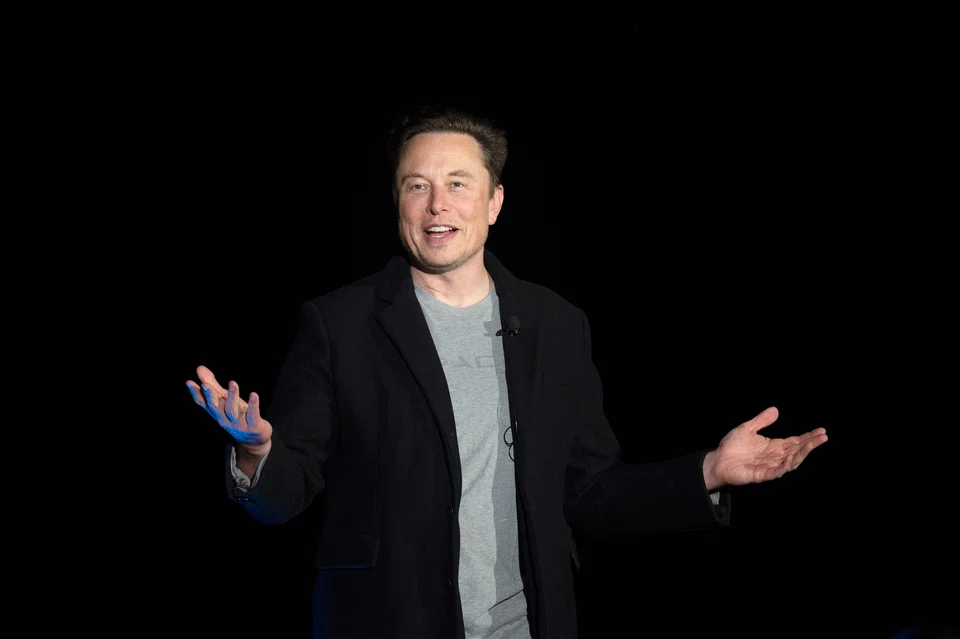
AT an annual meeting last Thursday (Aug 4), Tesla shareholders greenlit a 3-for-1 stock split that is poised to take place on Aug 24. Essentially, shareholders will get 2 additional shares for every share of Tesla they hold on the Aug 17 record date, while trading on a split-adjusted basis will start from Aug 25.
Since the electric-vehicle (EV) maker first mooted the idea of a stock split in March, the counter has outperformed the Nasdaq, surging roughly 50 per cent from a 52-week low of around US$620 in May to close at above US$925 on Aug 4. The rally came on the back of better-than-expected Q2 earnings, as well as a US$430 billion bill in the United States that is expected to deliver - among other things - EV tax credits.
Tesla closed 6.6 per cent lower at US$865 on Friday (Aug 5), however, partly due to some profit-taking on the news of the confirmed share split. The counter is also below its 52-week high of over US$1,240 per share, which at the time saw its market capitalisation crossing into the trillion-dollar territory.
Assuming a US$900 price, Tesla would ease to around US$300 per share after the stock split. While it doesn’t change the firm’s fundamentals, the split does increase trading liquidity and bring it more comfortably within the reach of employees and retail investors - and Tesla has certainly proved popular with retail investors in particular.
The latest share split follows some 2 years after a 5-for-1 stock split in August 2020, which at the time prompted a sharp 60 per cent jump in the counter between the day it was first announced and the day it took effect.
Companies generally implement a stock split after the shares have run up significantly with the aim of making the stock more affordable - without losing value - in order to reach a wider pool of investors. But it may also be perceived as a sign of bullishness on the part of the company’s management that the company will continue to perform well.
Amid supply chain snarls and a resurgence of Covid-19 cases in China, the EV maker beat analysts’ estimates of earnings per share (EPS) of US$1.81 as EPS clocked US$2.27 in Q2 2022, up from US$1.45 a year ago but easing from US$3.22 in Q1 2022. Where manufacturing is concerned, Tesla is gunning for a “record-breaking second half” in 2022 after its factories in California and Shanghai achieved their highest-ever production months during the quarter. Cash and cash equivalents stood at US$18.32 billion at the end of the second quarter.
Meanwhile, Tesla expects that its Model Y will be on track to become the world’s best-selling car by revenue this year, and by volume next year - overtaking the Toyota Corolla. It also plans to add to its line-up with the launch of the long-awaited electric pick-up truck, Cybertruck, sometime in mid-2023.
In the near term, headwinds remain as rising interest rates and the macroeconomic environment spark concerns of a recession, while supply chain issues persist. Then there’s the overhang on the stock stemming from the ongoing legal spat between Twitter and Tesla chief Elon Musk after the CEO pulled the plug on a US$44 billion offer for the social media company.
Investors are concerned that Musk may need to sell more shares in Tesla to stump up the funds for the multi-billion-dollar acquisition, which could also serve as a distraction from running the EV company. But some analysts reckon the overhang could lift if Musk agrees to purchase Twitter at a renegotiated (read: lower) price or is able to walk away from the deal by paying a break-up fee.
In the longer run though, future growth looks promising for the EV maker, which is striving to hit a production target of 20 million EVs annually by 2030, ballooning from over 930,000 units in 2021. It would mean heavily ramping up the number of Tesla factories to 10 to 12 by 2030, up from 4 currently across the US, Shanghai and Berlin. For a start, Tesla is expected to announce a new factory later this year, with the US seen as a potential location.
Of course, the legacy automakers and other EV makers are looking to muscle in on the increasing demand for EVs, but with climate change high on the global agenda, EV adoption is set to boom.
For long-term investors betting that Tesla will continue to successfully ride that wave, the upcoming stock split is a welcome near-term catalyst.
The writer has a long position in Tesla shares.
TRENDING NOW

First Resources blames El Nino, outside fires for Kalimantan hotspots amid haze scrutiny

High Court rules against Julius Baer’s Singapore trust arm in US$50 million family trust dispute

Singapore key exports jump by higher-than-expected 68.4% in September, led by non-electronics
MSCI proposes standalone status for Indonesia; Jakarta stocks plunge 8%

