

The risk of Democrats becoming minority party
Tuesday's election results suggest that voters are turning against a party in danger of becoming hijacked by its progressive wing.
 Add BT as a preferred source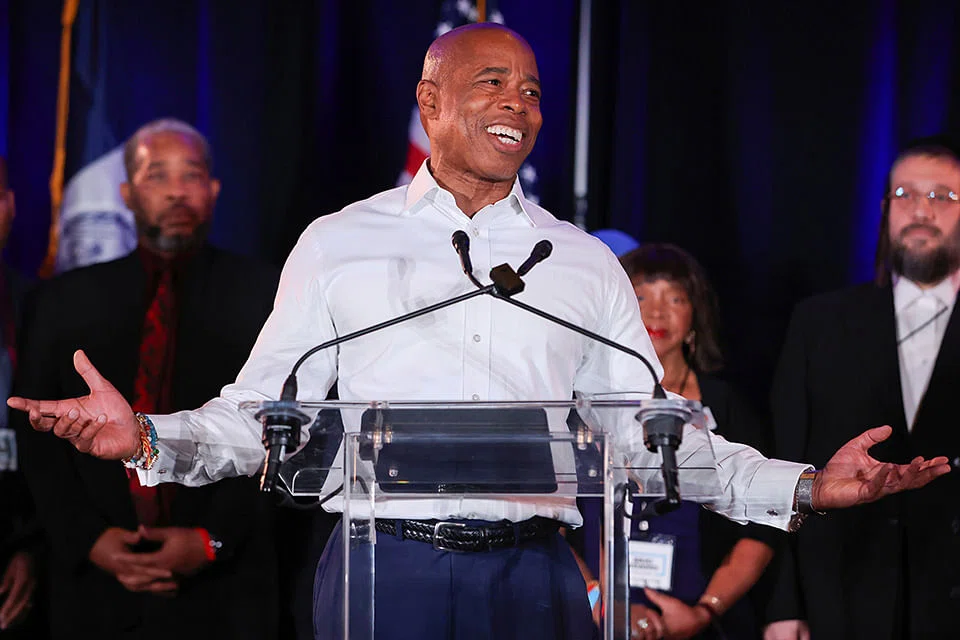
RECENTLY The New York Times tried to imagine what it might have been if instead of having two major political parties, the United States had a six-party system, including a centre-left party, the New Liberal Party, and a centre-right one, the Growth and Opportunity Party.
Then there would also be the Progressive Party, focused on equity and racial justice with a strong vision of inclusive democracy. Its potential leaders would include New York Congresswoman Alexandria Ocasio-Cortez (AOC), Senator Bernie Sanders from Vermont, and Senator Elizabeth Warren from Massachusetts.
According to the Times and based on data from surveys, the Progressive Party would at best fit about 14 per cent of the electorate, with its strongest support coming from politically engaged, highly educated young people, especially women. But it would be a minority political party, that in a European-style parliamentary system could at best hope to participate as a junior member in a coalition government, like, say, the Green Party in Germany.
Yet since the 2016 Democratic presidential primary race between Senator Sanders and former Secretary of State Hillary Clinton, when the Vermont Senator seemed close to victory, the left-leaning progressive wing of the Democratic Party has been gaining more influence inside and outside of the Democratic Party. Some now identify it with the party.
Indeed, if the proverbial Man from Mars had spent time monitoring American politics in the last four years, browsing through the mainstream media as well as through Twitter, Facebook and other social media, he would have had to conclude the following: That a large number of Democrats support defunding the police and open immigration, and believe that the US is a racist country where white supremacy reigns, and that American kids should be taught all that in public schools.
And that AOC and the rest of the so-called Squad - three other women of colour, namely Representatives Ilhan Omar of Minnesota, Rashida Tlaib of Michigan and Ayanna Pressley of Massachusetts, who have complained about the repression of Blacks, Hispanics, women and lesbian, gay, bisexual, and transgenders (LGTBs) in the hands of straight white men - represent the views of a large segment of the Democratic Party.
Navigate Asia in
a new global order
Get the insights delivered to your inbox.
That perception of a left-leaning Democratic Party has become even more prevalent following the killing of a Black man, George Floyd, by a white policeman in May 2020, and in the aftermath of the national protests in support of racial justice last summer which degenerated in some cases into violent riots.
But then surprise, surprise! When it came to electing their 2020 presidential candidate, a clear majority of Democrats selected an old straight white man to represent them in the race against a reviled Republican president.
Moreover, the presidential candidate - former senator and vice-president Joe Biden, a 78-year-old Washington insider - marketed himself to the American voters as a moderate Democrat who would be able to work with Republicans to promote a bipartisan agenda and to unite a polarised nation.
That explained why he won the votes of some Republicans who could not see themselves re-electing former president Donald Trump, as well as of many Independents who were hoping to see a centrist Democrat occupying the White House.
But the unsettling electoral loss suffered by the Democrats in the race for the Governor of Virginia on Tuesday, where the Republican candidate Glenn Youngkin beat his Democratic rival, former Governor Terry McAuliffe, suggests that the expectations of those moderate Republicans and Independents have not been fulfilled.
That McAuliffe lost in a state where Candidate Biden defeated Mr Trump by a margin of 10 percentage points, and that the gubernatorial race in New Jersey, a traditionally Democratic state where Candidate Biden had won the presidential race by 16 percentage points, was very tight, are signs that many voters have turned against a party where the progressive left seems to exert more influence than expected, and where AOC and the Squad are seen as the voice of the Democrats.
Democratic leaders and supporters of President Biden would argue that those sentiments amount to a misperception on the part of voters in Virginia and other states. They insist that their party remains located in the political centre, as does the Democratic candidate for the Virginia governorship, McAuliffe. After all, as a political ally of a self-proclaimed moderate Democrat, former president Bill Clinton, McAuliffe previously ran Virginia like a pragmatic politician.
But since entering office, President Biden seemed more aligned with the agenda of the political left. He has proposed to spend trillions of dollars on expensive social-economic programmes, portraying himself as a transformative president who was seeking to reorient the country in a progressive direction that doesn't align with the hopes of the majority of Americans.
As opinion polls suggest, most Americans do want to help the poor and the needy, to narrow the social-economic gap and to deal with the challenge of climate change. But they are not ready to back a radical policy agenda that would involve a massive redistribution of wealth and allow the federal government to take over large chunks of the economy.
And when President Biden - under pressure from moderate Democrats and perhaps as a sign that his pragmatic instincts were being reinvigorated - decided to revise his massive spending programmes, members of the party's progressive wing vetoed his more sensible plans.
Doing so on the eve of critical election races and just before President Biden's important trip to Europe, amounted to a major blow to the Democrats and to the president. That the left-leaning Democrats also refused to approve an infrastructure plan (that passed in the Senate with bipartisan backing and enjoyed the support of a majority of American voters) may explain why many of these voters decided to punish the party on Election Day.
But the political backlash against the Democrats went beyond specific policy issues. The progressive left has in a way hijacked the public discourse and media coverage in the US to the extent that it has forced a change in the way that race, gender and other issues are being discussed, especially by Democrats.
Hence the never-ending talk, including by the president and other leading Democrats, about "systemic" and "structural" racism, "white privilege" and "equity" as opposed to "equality", not to mention the continuing use of politically correct terms like "persons of colour", "Latinx" (instead of Latinos), and most recently, "BIPOC" which refers to individuals who are Black, indigenous, or other People of Colour.
This debate over social-cultural issues dominated the race for governor in Virginia, with Republicans exploiting much of the opposition of parents in the state to the teaching of so-called Critical Race Theory in public schools.
One piece of good news for the Democrats on Tuesday was the victory of Democrat Eric Adams in the race for Mayor of New York City. Adams, a former police captain and who would become the second Black mayor in the city's history, ran on a moderate pro-law-and-order agenda, and rejected calls by progressives to defund the police.
Adams' victory and McAuliffe's defeat may force the Democrats as well as President Biden to reassess their shift to the political left and their embrace of the agenda of their populist wing, and to consider re-positioning themselves at the political centre.
But even if that reassessment takes place it is more likely than not that the Democrats would lose their slim majorities in the Senate and the House of Representatives in next year's midterm elections, and that President Biden would find it more difficult to advance his social-economic plans.
Decoding Asia newsletter: your guide to navigating Asia in a new global order. Sign up here to get Decoding Asia newsletter. Delivered to your inbox. Free.
Share with us your feedback on BT's products and services
TRENDING NOW

Thai and Vietnamese farmers may stop planting rice because of the Iran war. Here’s why

As more Asean states turn to Russia for fuel, will Moscow boost its influence in the region?

Middle East-linked energy supply shocks put Asean Power Grid back in focus

Meet the women who run one of Singapore’s most trusted hotel brands

