

Time for Asian cross-border digital payment innovation
Given its fintech prowess and world-leading CBDC work, China can play a pivotal role in driving digital currency co-operation in Asia. Alternatively, the region’s more digitally-savvy countries could come together to explore a Diem-like digital currency for Asia.
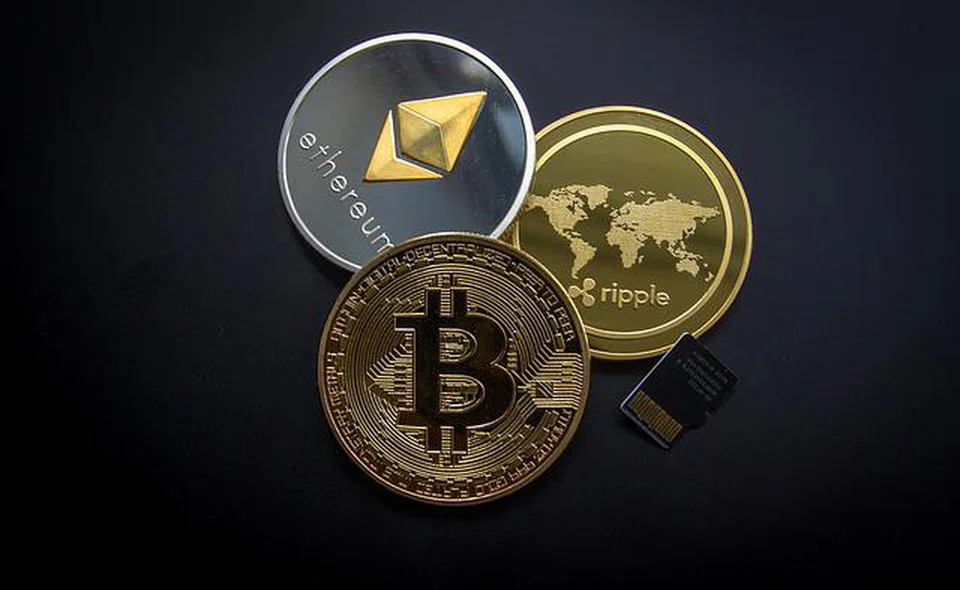
IN AUGUST 2019, Mark Carney, then governor of the Bank of England and former chair of the Financial Stability Board, an international body that monitors and makes recommendations about the global financial system, called for a global monetary system to replace the US dollar.
He explained that “…the dollar accounts for only 10 per cent of global trade and 15 per cent of global GDP but half of trade invoices and two-thirds of global securities issuance.... countries are forced to self-insure and hoard dollars to guard against potential capital flight, leading to excess savings and lower global growth…”
The ill effects of “helicopter money” (aka quantitative easing) -- new US dollar money printed on a massive scale and distributed among the public to stimulate the economy during a recession -- are also well documented. They include causing runaway asset prices benefiting the rich and exacerbating social inequality; rising global inflation; dollar debt distress among many developing countries; and growing risks to financial stability.
Weaponisation of international currency
The ongoing war in Ukraine has highlighted the impact of the weaponisation of the dollar. Overnight, countries affected by the financial sanctions imposed by the US are cut off from the dollar-based global financial system, and the dollar reserves they have painstakingly built become worthless. This raises doubt about the legitimacy and rationality of using the greenback as international currency. Hence, renewed talk about de-dollarisation has ensued of late.
But the cure is not to have another national currency to replace the US dollar as the international and reserve currency. After all, whichever currency replaces the greenback may exhibit the same ill effects listed above, as the monetary authority of a sovereign state is likely to place its domestic interests before the interests of the global community in the conduct of its monetary policy.
Hence, in place of the dollar, Carney suggested exploring “some form of a truly global currency similar to Facebook Inc’s proposed Libra (later known as Diem)“, adding : “That would be preferable to allowing the dollar’s reserve status to be replaced by another national currency such as China’s renminbi”.
Digital Asia should rise to the occasion
Post-Covid-19, Asia is well recognised as the fastest growing region in the world. The volume of intra-Asia trade and investment has grown. For example, due to the US-China trade tensions, firms in China are setting up secondary manufacturing locations or shifting parts of their production and supply chains to other Asian countries such as Vietnam, Indonesia, Thailand and Malaysia to diversify their risks, in what’s known as the China Plus One strategy.
Asia is leading global digitalisation, with its base of Internet users far exceeding the numbers elsewhere. Digitalisation in Asia has extended well beyond the infocomm and technology (ICT) sector, with widespread Internet usage underpinning e-commerce, online work and play, fintech, financial and other services.
The case for closer digital currency co-operation to support growing intra-Asia e-trade and digital economies is strong. Conditions are also ripe now for Asia to take the lead globally in developing regional digital currency co-operation for cross-border payments.
Recently, China has been actively pilot-testing the e-CNY, its central bank digital currency (CBDC) which has a clear lead over the rest of the world. However, given the controversy over the role of a national currency as a global currency, and the international community’s growing apprehension towards the monetary hegemony of the US dollar, the case for a regional Asian digital currency akin to Facebook’s Diem or an integrated digital currency system for cross-border payments in Asia can be appealing.
Besides, in the short to medium term, China is focused on transforming its economy with a “dual circulation” development strategy, where the “internal circulation” -- ie the domestic cycle of production, distribution and consumption plays a leading role -- while "external circulation" (ie international trade and investment) remains its extension and a supplement, to ensure a strong and stable domestic economy.
This development strategy comes at a time when the external environment has become increasingly complex, hostile and destabilising, given the US-China trade and tech war, war in Ukraine, climate change-related disasters, supply chain disruptions, food and energy crises, etc. To China, in the foreseeable future, this domestic and inward orientation is more important than pursuing the agenda of making the RMB an international currency to replace the US dollar. In any case, the RMB is hardly widely accepted in the international community.
What, then, are the alternatives to a national currency being used as global currency facilitating cross-border payments?
“Asian Dollar” – a regional digital currency for Asia
As countries look for ways to de-dollarise, it is not inconceivable, and in fact a plausible tactical move, for China to actively drive efforts at digital currency co-operation in Asia, instead of internationalising the RMB. And that’s particularly so given the country’s sizable digital economy (which made up nearly 40 per cent of its GDP in 2020), fintech prowess and world-leading CBDC experimentation.
One alternative is for Asia to learn from Facebook’s interesting work on Diem project, which unfortunately was frustrated by regulatory concerns in the US. A cryptocurrency designed to be used as a simple, low-fee medium of exchange around the world, Diem aims to provide better, cheaper, and more open access to financial services for all. It is intended to be run and governed by the Diem Association, an independent not-for-profit association with members comprising diverse businesses, non-profit and multilateral organisations, and academic institutions.
The design concept and proposed governance structure of Diem are indeed attractive to countries looking for an alternative cross-border payment method away from the US dollar. Asia’s more digitally-savvy countries could come together to explore a Diem-like non-national “Asian Dollar” – a digital currency for Asia. However, this writer is under no illusion that such an endeavour won’t meet with many challenges. One reasonable step to take is to entrust a development institution such as the Asian Infrastructure Investment Bank (AIIB) or Asian Development Bank (ADB) to conduct a feasibility study with the support of governments and technical experts.
Pan-Asia m-CBDC shared platform
Another alternative is to build on the current development of new cross-border digital payment infrastructure in Asia known as multi-CBDC (m-CBDC) platform projects. These projects are aimed at allowing financial institutions to use CBDCs issued by participating central banks to transact directly with each other on a distributed ledger technology (DLT)-based shared platform. This has the potential to reduce dependence on (i) the inefficient traditional network of correspondent banks, and (ii) also the use of US dollar for cross-border payments.
A recent article “CBDC networks could defang sanction threats” published by the Official Monetary and Financial Institutions Forum (OMFIF) noted that following the war in Ukraine, Russia’s central bank is working on a digital rouble and has expressed interest in its value as a means of facilitating cross-border payments that is free from Western political influence.
On the m-CBDC shared platform, each participating central bank issues its own CBDC in its domestic currency. Participating commercial banks are then able to hold these different CBDCs directly without the need for accounts with correspondent banks, and can transact directly with each other.
Currently, there are two such on-going projects in Asia – Project “Inthanon-LionRock” and Project “Dunbar”.
Project “Inthanon-LionRock” is a venture involving the Hong Kong Monetary Authority, Bank of Thailand, Digital Currency Institute of the People's Bank of China, and Central Bank of the United Arab Emirates. Project “Dunbar” is a collaboration between Bank Negara Malaysia, Monetary Authority of Singapore, Reserve Bank of Australia, and South African Reserve Bank. Both projects are supported by the Bank for International Settlements Innovation Hub in Hong Kong and Singapore respectively.
By working towards the interoperability between these two projects and extending the platform’s coverage of countries from Asia, a Pan-Asia cross-border digital payment infrastructure will be in sight in time to come.
The writer is an adjunct university professor, an angel investor, and adviser and mentor to fintech startups. He was formerly director of MAS Academy.
TRENDING NOW

Singapore tech stocks plunge as Nasdaq bloodbath spills into region

S$3 billion money laundering case: Rare Pateks and Rolexes, diamond-covered Hermes and more head to auction
OCBC Q3 profit rises 3% to S$2.04 billion, slightly above expectations

From legacy to launch: Francis Yeoh and Yeoh Pei Xien on family unity and YTL’s next‑gen ventures

