

Time for SIA to show it has what it takes to soar higher post-pandemic
It has gone from a record net loss of S$4.3 billion for FY2021 at the height of the Covid-19 pandemic to posting its highest-ever earnings of S$2.7 billion for the FY2024 ended March

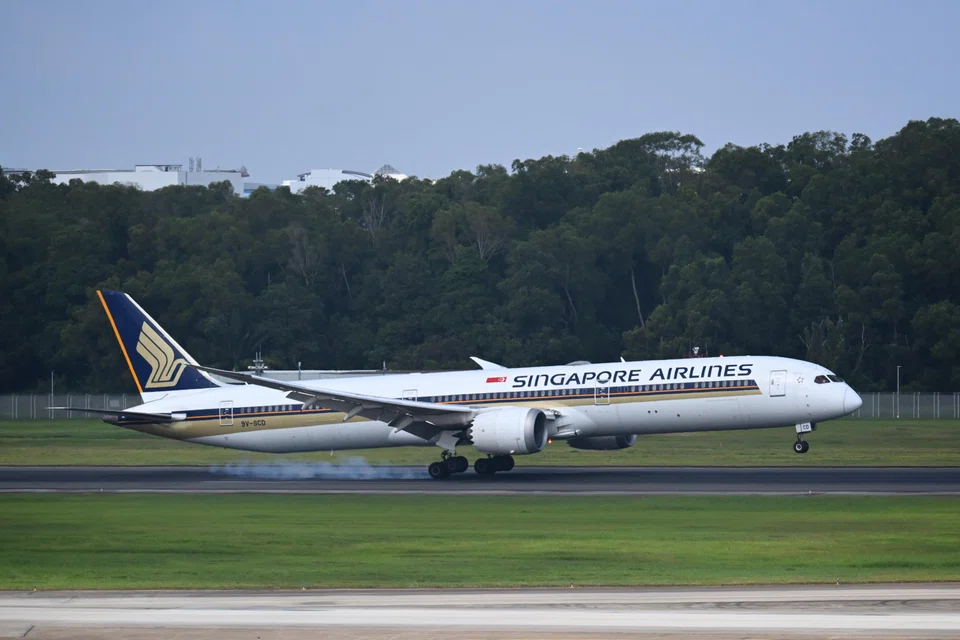
SINGAPORE Airlines (SIA) has endured a difficult time over the last four years.
The national carrier fell to a record net loss of S$4.3 billion for FY2021 at the height of the Covid-19 pandemic.
It raised S$15 billion from selling rights in 2020 and 2021, including S$9.7 billion of zero-coupon mandatory convertible bonds (MCBs), to tide the group through the pandemic that sent the global aviation industry into a tailspin.
This helped the group – including its budget airline Scoot – to not only stay afloat, but also largely preserve its pilots and aircraft fleet. It was also able to keep the crew operationally ready while waiting in the wings for the pandemic to pass.
On May 15 this year, SIA delivered its highest-ever earnings of S$2.7 billion for the FY2024 ended March. It also announced that it will be redeeming the remaining MCBs on Jun 24 before their maturity in 2030.
Its passenger capacity is now comparable to pre-pandemic levels. With these benchmarks, SIA could be said to have put the pandemic firmly behind it.
What was meant to be a transition back to a “business as usual” mode for SIA took place in a difficult landscape presenting multiple challenges – geopolitical tensions, macroeconomic uncertainties, supply chain constraints and inflationary pressures, to name a few.
Besides competition, the vagaries of the operating environment also require airlines to be responsive and nimble.
SIA was thrust into the international spotlight last week when one of its aircraft flying from London to Singapore encountered “sudden extreme turbulence”, which resulted in one death and dozens of injuries. The flight was diverted to Bangkok.
The carrier’s crisis-handling skills were put to the test, and it appears to have passed with flying colours so far. SIA won compliments from some quarters for being prompt and clear in its updates, preserving its brand from any immediate hit.
Analysts whom The Business Times spoke to agreed that the unexpected tragedy is expected to have limited impact on SIA’s reputation or financial standing.
As the tragic incident is not believed to have resulted from human error or faulty equipment, SIA’s brand is not expected to be affected.
Notwithstanding the record-breaking earnings in FY2024, however, the group continues to see some operational pressures.
For one thing, passenger yields declined in its latest financial year ended March as its peers continued to ramp up their capacity. Non-fuel expenditures rose as suppliers updated prices in line with inflation.
Passenger yields at SIA and Scoot have dipped year on year in every quarter in FY2024, or 7.6 per cent for the full year. The yield for the budget carrier fell more steeply, by 15.9 per cent, than that of the full-service airline parent, which slid 4.7 per cent.
Scoot posted a steep decline of 68.2 per cent year on year in operating profit, while that of the full-service carrier fell 13.1 per cent.
This caused the group’s operating profit to fall 19.5 per cent for the second half of FY2024.
SIA CEO Goh Choon Phong pointed out at the financial results briefing that Scoot’s steep profit slide had to do with the budget unit’s operations being largely regional. “Regional routes are the ones that see a greater injection of capacity, so you can expect there is greater competitive pressure,” he said.
Scoot has had years of loss-making before the pandemic. Perhaps the challenges of supply chain constraints and geopolitical tensions were less pronounced pre-pandemic.
But the airline industry has always been a highly competitive one – perhaps even more so in this post-Covid era as some upstarts entered the industry opportunistically, hoping to grab a slice of the robust travel demand and elevated yields.
Some airlines that had been awash in red before the pandemic managed to wrest a big cut off their debts in bankruptcy protection during the pandemic, and thus reset their balance sheets.
Corporate travel, meanwhile, has not recovered to pre-pandemic levels. And whether or when the current robust travel demand would fizzle out is yet unknown.
SIA flexed its muscles when it overcame the pandemic’s challenges and was the first off the blocks to capture pent-up travel demand after borders reopened, and rewarded shareholders and staff alike.
Goh was confident that the group would be able to take on the challenges in the post-pandemic world as he asked rhetorically at the results briefing: “More importantly, do we have what it takes? We believe so.”
It is now time for the group’s management to show that it is capable of executing its strategies well in the business-as-usual world and continue to soar even higher.






