

To beat Covid, politicians need to think like philosophers
Kantians will argue for doing everything to save every last soul, while utilitarians will argue that a more balanced approach will work better in the long run.
 Add BT as a preferred source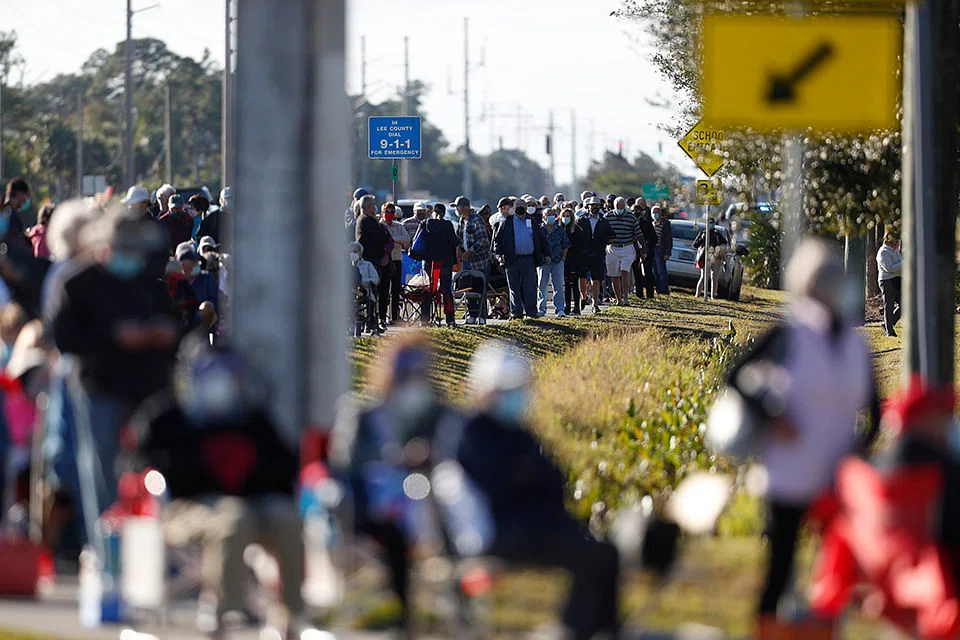
AS THE year began, so it is ending. Early in 2020, the pandemic blindsided governments, which dithered over both the scientific and moral imperatives while much of the populace indulged in selfish and conflicted behaviour that seemed to belong in Glengarry Glen Ross or Lord of the Flies rather than in a modern democracy.
Those same problems now afflict the distribution of the vaccines, the miracle of scientific achievement that has the potential to bring the pandemic to an end.
The lamentable difference is that this time, we have had months to think about the issues at stake and to prepare. Scientists and boards of ethicists have done the work. Yet, politicians still seem clueless or cowardly, unwilling to lead the public through the excruciating questions that need to be asked and answered.
At the heart of the issue is a philosophical problem that has bedevilled the West (where individual liberties remain far more important than in Asia) throughout the long months of the pandemic. At the risk of oversimplification, it is the battle between the ideas represented by Immanuel Kant and John Stuart Mill.
To complicate matters, this moral and ideological debate is usually disguised as scientific judgment.
"Mathematical modelling indicates that as long as an available vaccine is both safe and effective in older adults, they should be a high priority for vaccination," the UK government wrote in its guidance for Covid-19 vaccinations.
But as Oxford University medical ethicists Alberto Giubilini, Julian Savulescu and Dominic Wilkinson pointed out: "Whether older adults 'should' be high priority depends on what we want to achieve through a vaccination policy. And that involves value choices.
"Distribution of Covid-19 vaccines will need to maximise the public health benefits of the limited availability, or reduce the burden on the NHS (National Health Service), or save as many lives as possible from Covid-19. These are not necessarily the same thing, and a choice among them is an ethical choice."
Politicians, as a rule, have not treated it as an ethical problem, or presented it to the public as one. So maybe it should not be surprising that confidence in the approach we are taking - or indeed any kind of public unity - remains elusive.
When it comes to what the vaccine is trying to achieve, there are two broad possibilities:
1. Give the vaccine to those at the greatest risk of dying from the virus.
2. Inoculate people so as to minimise the spread and maximise the impact.
These questions raise two severe problems, one ethical and one scientific. The ethical problem is that they lead to very different programmes of vaccine distribution.
One programme broadly falls in line with a school of thinking that goes back at least as far as the 18th century Enlightenment philosopher Immanuel Kant, and holds that we should always treat people as ends in themselves and not as means to an end.
In common parlance, this is similar to the biblical "Golden Rule" - do unto others what we would want done to ourselves. Under this approach, we should first vaccinate those who are most at risk from the virus.
This means giving priority to the elderly and those in care homes, and then steadily spreading vaccinations to younger age groups. This is happening in the UK and Germany.
The other programme is more utilitarian. This school of thinking, dating back to Victorian liberal thinkers led by John Stuart Mill, holds that we should aim to seek the greatest good for the greatest number of people.
Sacrificing a few to save many, then, can be justified. This would lead to vaccinating those most likely to catch the virus and spread it, even if their mortality risk is low.
Doctors and emergency workers would go first, followed arguably by prisoners, people who come into contact with lots of other people, and those in communities that are particularly susceptible to spread. This is pretty much the course being followed by most states in the US.
Utilitarians also think in terms of maximising the amount of life saved. To use the ethical jargon, if we aim to maximise the number of "quality-adjusted life years", then saving the elderly, who already live restricted lives, grows harder to justify.
This division is much the same as the argument over lockdowns, where Kantians argued for doing everything to save every last soul (through complete lockdowns), while utilitarians argued that a more balanced approach would work better in the long run. That issue is still very much alive. Added to this classic dilemma, there is the scientific problem.
The new Covid-19 vaccines are remarkably effective in preventing illness. What is not yet clear - as the US Food and Drug Administration has conceded - is whether being vaccinated will stop the people who take it from infecting others, and it is why vaccinated people are still being asked to wear masks.
Implications for strategies
This has implications for our philosophical strategies. If vaccinating medical workers and potential "super-spreaders" first might not help reduce the spread, then there is no choice but to give the vaccine to the oldest first. (Sorry, utilitarians.) If it does, then a programme aimed at those most likely to spread the disease becomes very easy to defend.
To make the decision, we need scientists to tell us whether the vaccine can stop infectiousness, and to identify who should best be vaccinated to halt the pandemic most quickly - both profound and difficult questions.
The problem confronting everyone in the West is that we are not even talking about this stuff. Moral choices are unavoidable. We need to understand them, discuss them as a society and come to conclusions. Then we need to apply the science to those choices. Western institutions have so far proved wholly unable to stage such a public discussion.
In its absence, the hoarding and anti-social behaviour witnessed last spring is now showing itself in hideously selfish antics over the vaccine. People are jumping queues and impersonating others, while interest groups are involved in an unsightly attempt to lobby Congress for their people to get the shots first.
When Stanford Medical School attempted to organise distribution using an algorithm, it faced an insurrection from staff chanting: "The algorithm sucks!"
The first vaccines mark only the beginning of the end of the pandemic. Ahead of us lie the nightmares of dealing with the issue that many high-risk factors overlap with social factors.
Ethnic minorities and the poor are at greater risk both of catching the virus and of sustaining serious harm from it if they do. If governments around the world decide to give them priority (and both Kant and Mill might well agree that they should), will that decision be communicated clearly enough to gain acceptance among those who have to wait?
At the end of a year that posed deep and troubling moral questions, the tragedy is not only that they remain unanswered, but that society at large, despite help from scientists and ethicists, have scarcely even attempted to address them. Many more lie ahead. BLOOMBERG
Decoding Asia newsletter: your guide to navigating Asia in a new global order. Sign up here to get Decoding Asia newsletter. Delivered to your inbox. Free.
Share with us your feedback on BT's products and services
TRENDING NOW

When every phone becomes a satellite phone, what happens to Asia’s telcos?

Too little, too late? Manila’s billion-dollar bid to ignite its sputtering EV industry

Japan Home closing outlets; staff say Valu$ taking over operations

Timah Partners lands S$60 million facility from lenders including UOB, RHB

