

Tomorrow's business leaders need high ethical standards
IN MANY cities around the world, there are ongoing experiments for self-driving cars, also known as autonomous vehicles (AV). However, the use of such vehicles, which are described as more efficient than manual cars, comes with an array of moral issues which might stall the emergence of a successful industry. The challenges pertaining to the use of information-based smart technologies such as big data analytics are well known. When it comes to self-driving cars, the conundrum is even more excruciating. It is a matter of life and death literally.
Indeed, imagine you are in your AV and suddenly while you are exiting a bridge, a group of pedestrians rush on the road (for example, children running after a ball). The driverless vehicle has not enough space to carefully slow down and stop. The only options are either to crash the vehicle onto the bridge's side railings, with the risk of falling over and killing the AV's occupants, or to drive over the pedestrians and killing some of them.
What should the AV do? These types of ethical questions are those facing AV manufacturers. To address such dilemmas, researchers at the Toulouse School of Economics in France have conducted experiments to gauge public opinion and come up with an acceptable answer.
TRENDING NOW

Britain’s mansion tax shows the difficulty of targeting wealth

Once staunchly pro-China, Malaysian Chinese businesses are now distancing themselves from Beijing

The only common thing in S-E Asia is that we all eat rice: Cisco’s Asean president
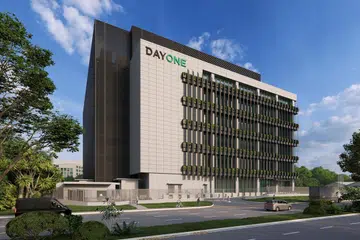
Singapore data centre operator DayOne opts for US IPO at likely US$20 billion valuation

