Tone down expectations post-Party congress, but hold on to hope in a slower-growing China
Even as growth may slow, China’s market offers scale; and there is room for reforms to help advance the economy.

Leslie Yee
I SPENT much of 2015 and 2016 living and working in Shanghai, China. I have fond recollections of the city.
Shanghai bustled with energy. Businesses in many sectors were busy innovating and acting quickly to execute ambitious growth plans. I was then in my mid-40 and entertained thoughts that if I were younger or my family were with me, Shanghai might be a good place to spend many years to develop my career.
I also remember that colleagues and business associates in the city had unbridled optimism that the economies of Shanghai and China as a whole would continue to grow rapidly for years to come, and that salaries and asset prices would continue to rise quickly.
Memories of living in Shanghai flooded back when the city went into lockdown for around two months earlier this year to fight the spread of the Covid-19 pandemic. It was painful to see the damage suffered by the residents and the economy during the lockdown.
Fortunately, some normalcy has since returned to Shanghai. But I wonder if the heady days of fast-growing prosperity in Shanghai – and China as a whole – will be a thing of the past.
Party congress
At the 20th National Congress of the Chinese Communist Party (CCP), which was held in Beijing on Oct 16-22, 2022, there was no shift away from the country’s dynamic zero-Covid strategy, despite the stress to the economy caused by the pursuit of such a strategy.
Indeed, what was striking coming out of the recent CCP congress, which is held once every five years, is that pursuit of strong economic growth may not be of utmost importance.
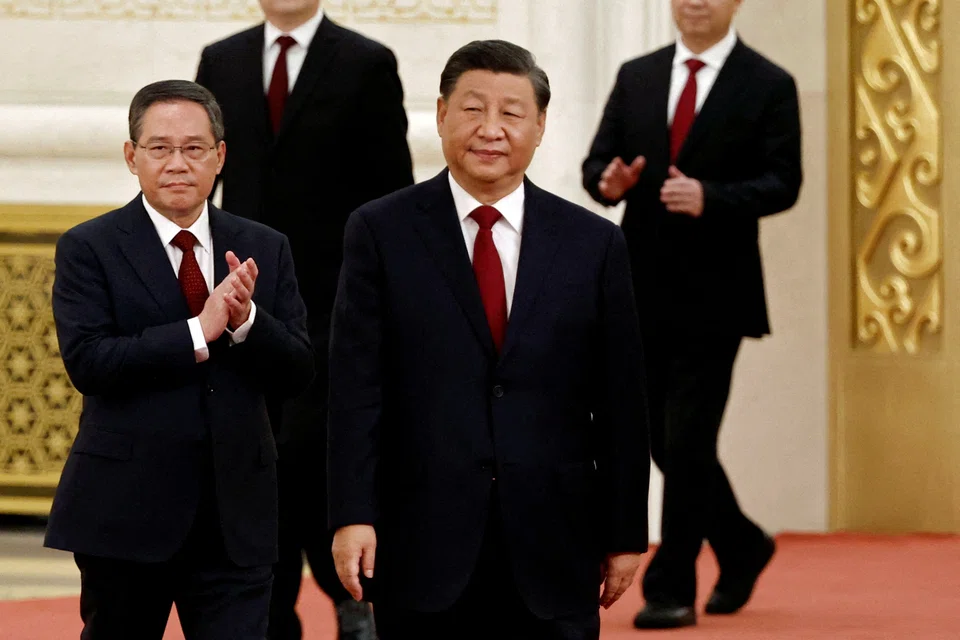
At the congress, President Xi Jinping, who secured a third five-year term as leader of the CCP, emphasised the importance of national security and social stability. The new seven-man Politburo Standing Committee that sits at the apex of the CCP, which was unveiled at the end of the party congress, is led by Xi and filled with members who are all seen to have close allegiance to Xi.
Since the close of the congress, the Hang Seng China Enterprises Index, a gauge of Chinese stocks listed in Hong Kong, plunged 7.3 per cent on Oct 24 from its previous close. Shares of tech giants Alibaba Group Holding, Tencent Holdings and Meituan fell by more than 10 per cent as investors remained sceptical that Xi and his allies would seek a rejuvenation of private enterprise.
Still, pessimism over China’s growth path can spawn near-term winners, such as among those helping wealthy Chinese families to set up family offices in Singapore. Luxury homes and physical properties such as office buildings, strata office spaces and shophouses in Singapore may benefit from wealthy Chinese looking to diversify or set up base outside China.
Slowing growth
Global equity investors may start adjusting long-term allocations as they factor in the implications of a China that could grow say at 2-3 per cent annually. If the US grows at around 1.5 per cent annually, China may not overtake the US as the world’s largest economy for possibly another 40 years – if ever.
Projecting annual growth at 2-3 per cent may be optimistic given risks such as rising tensions between China and its major trade partners, growing government interference in the private sector and increasing concerns about the debt load.
Still, it can be wise for the Chinese government to emphasise national security and social stability, as the country has endured much instability. Decades of agitation, revolts and uprisings ended China’s last imperial dynasty – the Qing Dynasty – in 1912. The CCP, under the leadership of Mao Zedong, emerged victorious over the Kuomintang after a drawn-out civil war, and proclaimed the establishment of the People’s Republic of China in 1949.
Can China be secure and stable if its economy grows in the low single digits? Might unrest brew if insufficient jobs are created for the millions who enter the workforce every year? In the summer of 2022, around 10.8 million new Chinese university graduates entered the workforce. Looming large too is whether social safety nets are adequate for a rapidly ageing population, and the funding of such social provisions.
Even if one assumes China can transition to a much slower pace of economic growth while maintaining social stability, there are big implications for investors in Singapore and elsewhere from a China where personal income and wealth grow slowly, and businesses go slow on expansionary growth.
The Chinese were the largest source of international visitor arrivals to Singapore pre-pandemic and a fast-growing segment. Questions over how freely Chinese nationals can travel abroad persist. If, at some point, the Chinese can travel more freely again, they may not be as important a source of international visitors for Singapore and many other destinations, as the Chinese may become less international-focused and more restrained in their spending.
Near term, real estate in Singapore stands to benefit from wealthy Chinese seeking safe havens. However, longer term, if the pace of producing multi-millionaires and billionaires in China slows, this source of demand for properties in Singapore could be blunted. Prices of luxury homes and trophy commercial assets here may be affected by potentially slower wealth creation in China.
Crucially, the Chinese market is key for many Singapore listed companies which sell to Chinese businesses and consumers, whether in China or overseas. Contributions to revenue and profit from serving the China market could falter for many Singapore listed companies in the years ahead.
The Chinese people have grown much richer since the country’s economy started opening up in the late 1970s. Still, China’s per capita income is roughly one-fifth that of the US. While China’s demographics are unfavourable, and its economy faces major challenges, China’s market offers scale and there is room for reforms that can help advance the economy.
Last week, China reduced the amount of time that travellers and close contacts of infected people must spend in quarantine, and abolished the suspension of international flight routes due to the detection of Covid-infected passengers. Still, China’s economy may need to see more concrete moves to relax Covid-related measures, where lockdowns in cities are triggered by a few infections.
While pessimism over China’s prospects may be rational, perhaps the new team at the top can offer enough room for private enterprise to thrive and help many people grow richer amid a push for common prosperity, which in turn may be the key to maintaining social stability.