
Tourism players hitch a lift as Singapore Grand Prix flags off once more

Nisha Ramchandani
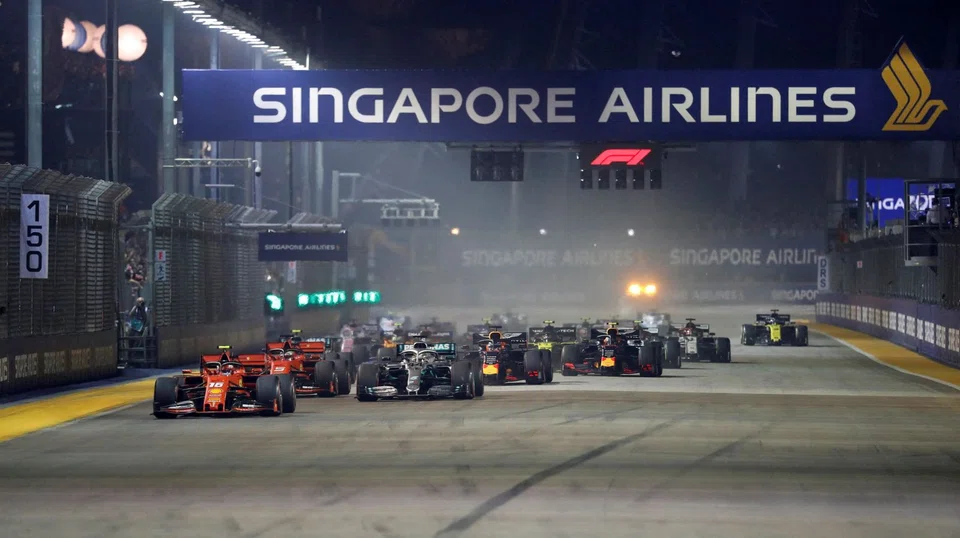
AFTER a forced 2-year break brought on by the global pandemic, the Singapore Grand Prix is finally zipping back into town. This is the first race since 2019 as Singapore doubles down on the rebound in travel and tourism, having freshly inked a 7-year contract to remain a host venue.
In a nod to pent-up demand for travel and anything resembling normalcy, tickets sales for the 2022 Singapore Grand Prix (Sep 30-Oct 2) have been selling fast and furious since they were first released for sale on Apr 13. In fact, race promoter Singapore GP is banking on hitting sales volumes that rival the 2019 edition, which saw 268,000 race-goers over the 3 days. Incidentally, that was the second-highest tally since 300,000 spectators thronged the Marina Bay circuit during the inaugural race back in 2008.
A street race held in the heart of the city, the Singapore Grand Prix has earned the Republic over S$1.5 billion in incremental tourism receipts and attracted over 550,000 unique international visitors since its debut in 2008.
For the upcoming Grand Prix, CGS-CIMB estimates that up to 35,000 tourists could make their way to Singapore’s shores – which could potentially fill 45 to 50 per cent of the island’s hotel room inventory. Trackside hotels that are a stone’s throw from the action typically enjoy a nice bump in room rates over race weekend, but even non-trackside hotels tend to command better rates as the season’s only night race brings in the crowds. In past years, about 40 per cent of race-goers typically came from abroad.
“Our channel checks reveal that room rates for hotels located along the F1 circuit are 2.8 to 3.3 times higher than normal, while (those for) hotels in the city centre have risen 1.2 to 2 times over F1 weekend,” CGS-CIMB said in a recent report.
Earlier this month, trackside hotel Mandarin Oriental, which is owned by , reported that occupancy for race weekend was already trending over 80 per cent. Other trackside hotels likely to benefit include ’s Pan Pacific Singapore and Parkroyal Collection Marina Bay, Las Vegas Sands’ Marina Bay Sands, as well as ’s (CICT) Swissôtel The Stamford.
Meanwhile, hotels close to the action include CICT’s Fairmont Singapore and ’ JW Marriott Hotel Singapore South Beach.
After nearly 2 years of anaemic inflows, a big influx of tourists will no doubt be warmly welcomed by Singapore’s hoteliers. (SIA) – which first came onboard as title sponsor of the Singapore Grand Prix in 2014 – is also likely to enjoy strong passenger loads. As it is, the flag carrier is already reaping the benefits of frenzied demand and a bigger share of capacity at Changi Airport as rivals struggle to ramp up their own capacity – translating to fatter passenger yields and profits (sky-high oil prices notwithstanding).
Then there are the spillover effects, as malls that are adjacent to the track – such as ’s Suntec City and ’s Raffles City – should see an uptick in sales from tourists and locals in search of food and beverage (F&B), entertainment and retail therapy.
The F1 aside, the second half of 2022 will bring a number of heavy-hitting MICE (meetings, incentives, conferences and exhibitions) events back here. This bodes well for the aviation and hospitality sectors. As some events are biennial, typically “even” years (such as 2022) feature more MICE events than “odd” years, and the travel recovery has dovetailed quite nicely with the return of this industry.
One of Singapore’s biggest trade shows, Food & Hotel Asia (Sep 5-8), for instance, is returning in-person for the first time since the pandemic and could receive some 35,000 local and international trade visitors. And by CGS-CIMB’s count, there are at least 66 international events spread out over April to December 2022.
The ongoing return to normal life after 2 years of stops and starts marks an important turning point for firms with exposure to the tourism sector, and should reflect in their earnings in the months to come.
TRENDING NOW
‘My grandfather’s legacy’: Sherman Kwek lays out three-year plan for CDL to drive returns
He built the Vingroup empire. Now South-east Asia’s richest man is handing some key roles to his sons
Canada is upping oil flows to Asia, but South-east Asia’s refineries aren’t ready to handle them yet
Deal between tycoon friends sparks scrutiny of Philippine power sector



