

Trade 4.0: cross-border goods movement reimagined
Global supply chains must shift from traditional, linear ones to integrated, digital supply networks with multi-directional, always-on communication.
 Add BT as a preferred source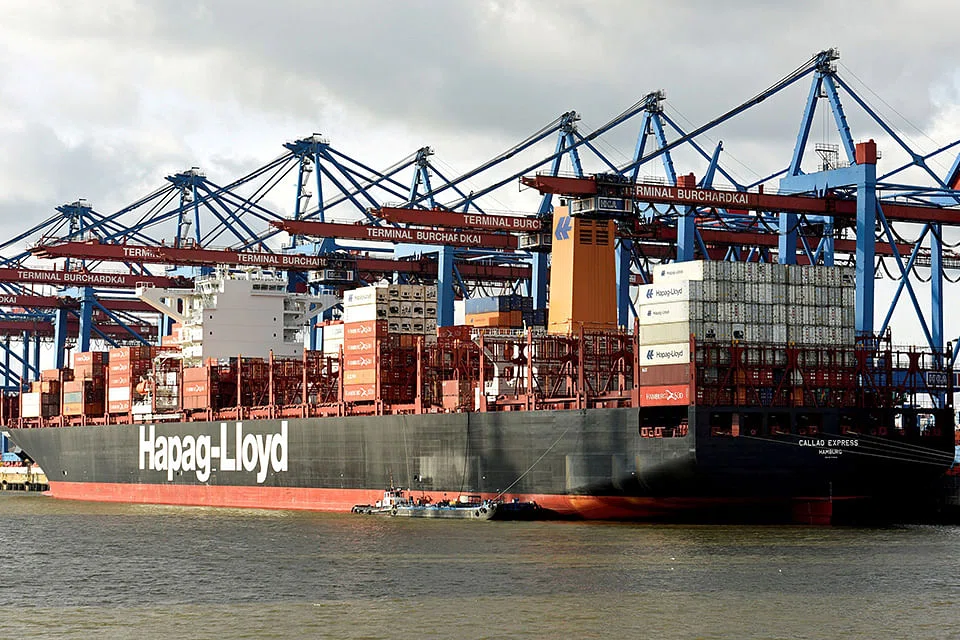
INDUSTRY 4.0 is far from a futuristic idea: in fact, it is already here and top of mind for businesses and governments. Also known as the Fourth Industrial Revolution, it refers to the marriage of production and operations techniques with advanced digital technologies - Internet of Things, artificial intelligence, cloud computing, and more - to enable the continuous flow of information between physical and digital worlds.
This cycle, known as the physical-digital-physical loop, is what makes it possible to collect and analyse real-time data from physical and digital sources to execute action in the physical world - and is the driving mechanism behind much of the hype that we hear about Industry 4.0 technologies today.
But as with all new technologies, novelty will soon turn into expectation. When these advanced Industry 4.0 technologies eventually become table stakes, the organisations that will succeed will be those that not only deploy them to reap incremental operational efficiencies, but also leverage them strategically as platforms for long-term, transformational innovation.
ENTER TRADE 4.0
One platform with promising potential is the concept of Trade 4.0, or the application of Industry 4.0 technologies to the cross-border movement of goods. Currently, fragmentation, inefficiency, and sustainability issues are among some of the largest hurdles confronting supply chains.
These challenges call for whole-of-system solutions, but the complexities of the modern supply chain and lack of connectivity across stakeholders make it challenging to coordinate such a response.
To overcome these roadblocks, global supply chains must fundamentally shift from traditional, linear ones to integrated, digital supply networks characterised by multi-directional, always-on communication.
This can be achieved by applying the digitalisation of how we make, transport, and sell under Industry 4.0 to goods crossing borders:
- Make: From factory to consumer, the physical-digital-physical loop involved in the production of goods is used to provide better customer experiences, implement instantaneous communication, and adapt manufacturing approaches for safer, better products.
- Transport: With the physical-digital-physical loop connecting every node of the supply chain, goods not only move faster and with a cleaner carbon footprint, but are also anticipated by ports of entry, and begin their journey even before a customer places an order.
- Sell: Apart from the ability to predict customer needs, Trade 4.0 applications also include order-to-cash capabilities - or the ability to leverage the physical-digital-physical loop to track an order from receipt through payment to enable a seamless ordering process.
3 PILLARS OF TRADE 4.0 ECOSYSTEM
While still in early stages, the foundations of a Trade 4.0 ecosystem are already actively forming. We envision three building blocks that will underpin the next-generation network and provide forward-thinkers with opportunities for differentiation:
Pillar 1: Connected communities
Addressing fragmentation through connected communities - that is, connecting and collaborating with partners for visibility across entire networks - is among the greatest challenges and opportunities facing supply chain players.
To understand what is possible, it may be useful to look at examples of integrated data platforms at ports in Hamburg and Rotterdam. Powered by cloud, these platforms enable the exchange of critical information between participating ports, shipping lines, and marine terminals to optimise ship course and speed, vessel berthing, and ship offloading.
Accompanying integrated platforms created by physical movers, technology players are also investing billions to mature the world of digital freight.
While interoperability issues continue to remain a challenge, the improved, real-time visibility into cargo enabled by digital freight might be what is needed to materially improve utilisation for logistics providers.
Pillar 2: Holistic decision-making
Most global movers are already data-driven. But they need to focus on compressing the time between data collection and meaningful action. Supply chains can be planned with immense precision, but dealing with unpredictable environments requires the agility to react to changing network conditions - and perhaps in the not-too-distant future, tailor micro-supply chains for each product or customer.
Early adopters are finding success from a mix of new data sources from connected assets, cargo, and warehouses. In some cases, they also are harmonising the data streams with transportation management, inventory management, and other supply chain functions.
These capabilities serve as early signals that traditional, linear supply chains are beginning to collapse into more dynamic digital supply networks, where once-isolated data sources are centred on a digital core providing real-time decision support.
Pillar 3: Intelligent automation
Evidence of maturing automation can be found at every step of the supply chain, and while still some way away, the foundations of a global, touchless supply chain have already formed. Autonomous cargo ships are in development, while some ports already feature an entirely robotic ship offloading process.
But capturing the concept's full potential will require a rethinking of entire logistics systems to move away from the fixed "collect in the evening and deliver during the morning" approach, and towards a fluid system of continuous movement.
For example, by combining autonomous warehouse technology with autonomous self-driving systems for long-haul transport, vehicles can begin hauling trips as soon as they receive cargo. These new freight transport vehicles could range in size - and seamlessly pass through automated warehouses and distribution centres.
REALISING TRUE POTENTIAL OF TRADE 4.0
When done in isolation, technology investments in Industry 4.0 often serve to optimise only a component of the global value chain, and not the whole. Under the Trade 4.0 model, however, organisational silos are broken down both internally and externally to include customers, suppliers, ports, government agencies, and other ecosystem players to enable end-to-end visibility and transparency.
But obtaining transparency into the extended supply chain is only the first step towards realising the true potential of Trade 4.0; the next step is for companies to act on the insights gained through this increased transparency.
Such actions could include, but are by no means limited to, leveraging visibility on carbon footprints and emissions hotspots to advance sustainability objectives, and gaining greater insight into suppliers and customers to increase agility and resiliency - and ultimately, contribute to the development of a more socially responsible global supply chain.
- The writers are from Deloitte South-east Asia. Terence Foo is supply chain and network operations leader, and Pua Wee Meng is consumer industry leader. This article is written in association with SwissCham Singapore's Digital Transformation Award 2021.
Decoding Asia newsletter: your guide to navigating Asia in a new global order. Sign up here to get Decoding Asia newsletter. Delivered to your inbox. Free.
Share with us your feedback on BT's products and services
TRENDING NOW

CSE Global independent director quits after clashes with chairman Eugene Lai over board refresh

‘I felt like dying’: Thai Singha beer scion speaks up after disclosure of alleged sexual abuse
Cat A COE rate exceeds Cat B for third time in 4 months; premiums largely down

What’s wrong with Orchard Road? Experts weigh in on the street’s cachet and its future

