Trade more, trade smarter – Lessons from Malaysia’s chicken ban for Singapore
THE news that Malaysia may allow the export of chickens after Aug 31 is certainly welcome, particularly in Singapore.
Food prices were rising in Singapore even before Malaysia’s ban on poultry exports after June 1, 2022, driven by Covid-19 pressures and Russia’s invasion of Ukraine. Food inflation in Singapore grew to 5.4 per cent in June 2022, the highest jump since 2009, while core inflation reached a 14-year high of 4.4 per cent.
Even as the dust settles, this episode was a sober reminder that Singapore, which imports more than 90 per cent of its food, is highly vulnerable to external disruptions to its food supply. Singapore must continue seeking improvements to its external food supply chain through import diversification, while promoting and upgrading trade agreements to strengthen trade. Trade is not a weakness of Singapore’s geo-economic position, but the answer to Singapore’s food security.
External pressures, internal limits
Malaysia is not alone in imposing an export ban on food. A rising tide of food nationalism undermines global food supply chains as countries ban exports to secure domestic supplies and stabilise prices at home. The International Food Policy Research Institute found that 17 per cent of food and fertiliser products traded worldwide were affected by export bans in June 2022. These included export curbs on sugar and wheat in India and a palm oil export ban in Indonesia.
While many of these bans were imposed after Russia’s invasion of Ukraine, there were other contributing factors. Vietnam, for example, banned new rice export contracts from March to May 2020 in response to domestic supply concerns early on in the Covid-19 pandemic. Extreme weather events, surging logistics costs, transportation bottlenecks, and labour shortages are also pressure points at each stage of the global food supply chain, either raising questions about how much food can be grown or how much can be transported.
The Singapore government is well aware of the country’s food challenges. In 2019, it expanded its initial strategy centred on import source diversification to include increasing domestic production and having local companies grow food overseas and export it back. In particular, its “30 by 30” goal aims to increase the proportion of its locally-produced nutritional needs from around 10 per cent to 30 per cent by 2030.
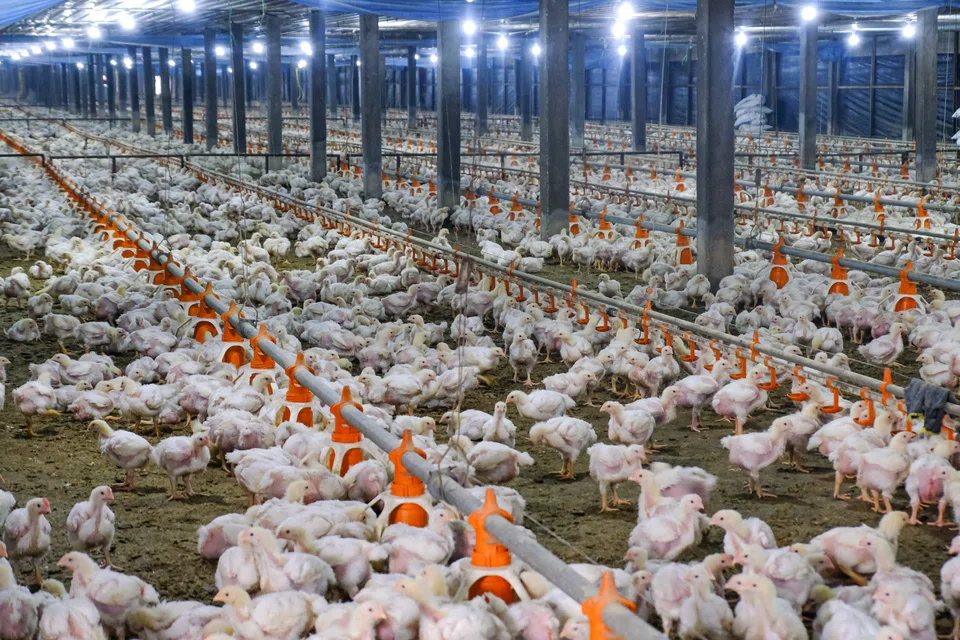
Yet, even in this scenario, Singapore would still rely on imports for 70 per cent of its food supply. Malaysia accounted for 99 per cent of Singapore’s live and chilled chicken imports and 34 per cent of its overall chicken supply in 2021, amounting to roughly 73,000 tonnes of chicken; it is not feasible, economically and environmentally, for Singapore farms to try and match this output. While growing more food locally can alleviate supply chain pressures, it is only part of the solution.
Trade is the answer, not the problem
Trade measures can help contain the fallout of export bans as governments feel pressure to impose or extend export bans in response to inflation and supply shortages. As a member of the Association of Southeast Asian Nations (Asean) and active trading partner with many fellow members, Singapore can capitalise on the grouping’s Trade in Goods Agreement (ATIGA) to promote trade and enhance risk management – if ATIGA’s provisions are strengthened, that is.
While ATIGA has found limited success in eliminating intra-Asean trade tariffs, it needs to take bolder moves on non-tariff measures (NTMs), such as finalising the proposed toolkit to assess and identify NTMs and the Asean Trade Repository which lists all NTMs in the region. Efforts to harmonise standards, such as adopting the United Nations-led Codex Alimentarius on food safety, should be expedited to create an applicable set of practices across the region.
These two mechanisms have complementary effects for Singapore’s food security. Progress on eliminating NTMs and harmonising a regionally-applicable set of standards would facilitate intra-regional trade, providing opportunities for Singapore to further diversify its food sources. Moreover, increasing the buy-in of Singapore’s neighbours in intra-regional trade networks may introduce new considerations that constrain the imposition of export bans.
Simultaneously, ATIGA should explore a system to monitor and report on intra-regional state interventions, including export restrictions. The European Union implemented one such scheme in early 2020 to track restrictions on protective personal equipment exports, helping to support internal market functionality even as shortages proliferated elsewhere. Asean should consider a system to monitor export restriction activity. Though the grouping’s ability to adjudicate these cases will be limited, shame can be a potent incentive to persuade countries to reconsider export bans.
Trade is the lifeblood of Singapore, and its promotion within Asean and beyond is necessary for the country’s security. While the forces that drive food export disruptions cannot be addressed directly, their implications can be addressed by upgrading ATIGA and trading more smartly, allowing Singapore to more effectively manage risks.
The writers are researchers with the Asia Competitiveness Institute at the Lee Kuan Yew School of Public Policy, National University of Singapore.