

Transparency and innovation are key in climate ambition
FOR the world to meet its goal to limit the average global temperature increase to 1.5 degrees Celsius, every country needs to play a role. Decarbonising energy systems, balancing population and economic growth with energy demand, rethinking and redefining “business as usual” – these challenges are not unique to Asia. Technology will be critical too, in every sector.
Last year, COP26 addressed some of these issues by finalising the rules for the Paris Agreement’s Article 6, which allows countries to partially meet their climate targets by buying offset credits representing emission cuts made in other nations. As one of the 194 nations that agreed to the deal, Singapore now has a foundation to build on as it seeks to establish itself as a global carbon trading hub. Singapore is playing host to some of the most exciting developments in the world’s carbon markets, bringing together the main efforts to drive emissions down in an efficient and transparent manner.
Ensuring the robust health of the carbon market
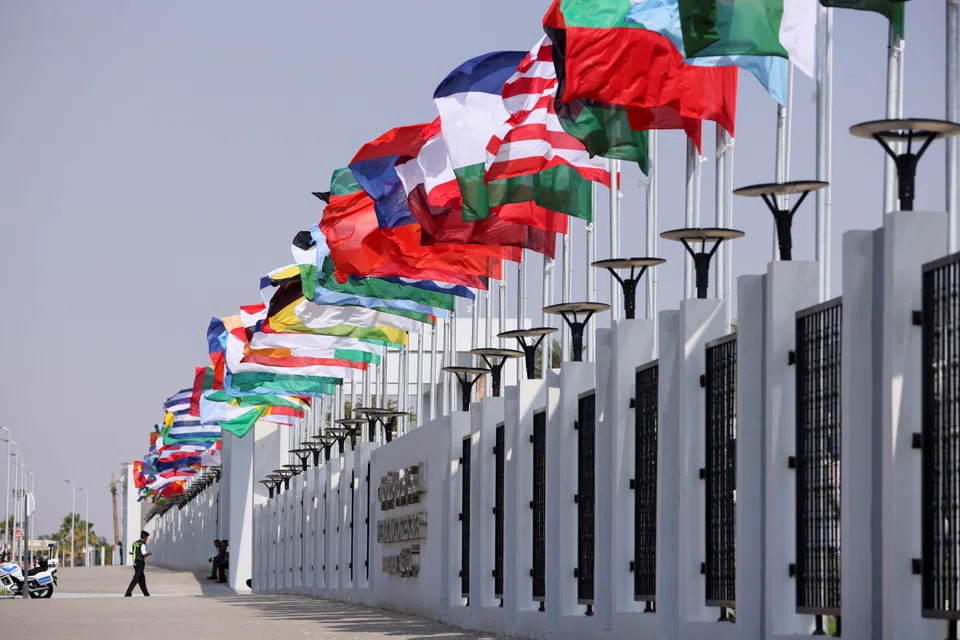
The current COP27 talks in Egypt are trying to build on last year’s progress and advance the Paris carbon markets.
According to MSCI, compliance carbon markets have grown to a market value of US$270 billion. The value of traded global markets for carbon dioxide permits is on an upward trend, growing by 164 per cent to a record US$851 billion in 2021.
The new markets being set up under the Paris Agreement offer the opportunity for all nations to cooperate to reduce greenhouse gas emissions, employing a market-based approach to capture the massive economies of scale that global action can achieve. This makes it extra critical that there is transparency around emissions reduction claims.
Offset credits are created by investment in technologies that reduce, avoid, or remove emissions. These reductions can be set against countries’ targets or companies’ own emissions, as part of their voluntary journey to achieve net zero. This fulfils the explicit goal of the Paris Agreement where emissions are first reduced as much as possible, and then the remaining unavoidable emissions are balanced by removals, and also to enable non-state actors to contribute to fulfilling its environmental objective.
A wholly open and transparent framework is vital to regulating international greenhouse gas emissions reduction or offset credit markets. This is especially true in the fragmented global carbon market, with its mosaic of different market mechanisms and trading schemes, both compliance and voluntary, leading to varied prices and confusion for buyers.
Achieving net zero requires cooperation on a massive scale to overcome concerns and challenges surrounding carbon markets, including low-quality carbon credits and double counting. Governments will have to be transparent and accountable to best gain trust from various stakeholders, to ensure the environmental integrity of credits.
To address this, the World Bank, the International Emissions Trading Association (IETA) and the Singapore government have come together to launch the Climate Action Data Trust. A new entity headquartered in Singapore, its role is to aggregate and harmonise data from all the major carbon market registries, creating a transparent database of emissions reductions that will help address the risk of reductions being counted twice.
Singapore as a launch pad for climate resilience
With new carbon markets being formed in countries from Japan to Vietnam to Indonesia, and existing markets in South Korea, China, Australia and New Zealand, Singapore is a natural regional and global centre. The country has a strong record of transparency – it is home to a sizeable proportion of the world’s financial markets’ value, hosts a significant volume of the world’s commodities trading and is an emerging leader in meeting the challenge of climate change.
Singapore has been fostering regional cooperation with countries such as Vietnam on carbon credit pilot projects that are aligned to Article 6 of the Paris Agreement.
Singapore is in a unique position to drive both development and sustainability in the region, becoming the go-to location in Asia for expertise in carbon services, while putting in place infrastructure, data and regulations to address problems of the currently fragmented carbon credit markets.
The country has established a target of reaching net zero by 2050 as part of its contribution to the global effort, and submitted an enhanced 2030 nationally determined contribution (NDC) ahead of this month’s climate talks in Egypt.
The Singapore government is consulting leading carbon services hubs in Europe and North America on best-in-class practices to employ carbon pricing, to speed up its transition away from emissions-intensive production and consumption.
Looking at the EU’s carbon market, which has helped drive emissions down by 30 per cent in 15 years, it is clear that well designed, ambitious carbon markets can successfully generate the economic signal to encourage investment in low-carbon alternatives.
As the world gathers in Egypt to continue work on implementing a global carbon market, we believe that hosting the Climate Action Data Trust in one of the most well-connected and ambitious countries in the world is a cause for optimism. And at COP27, with the negotiators guided by the conference’s motto – “Delivering for people and the planet” – we are hopeful that these two critical weeks will mark an important step on the journey to a greener planet.
The writer is president and chief executive officer of the International Emissions Trading Association (IETA).






