

The true danger of China's crash
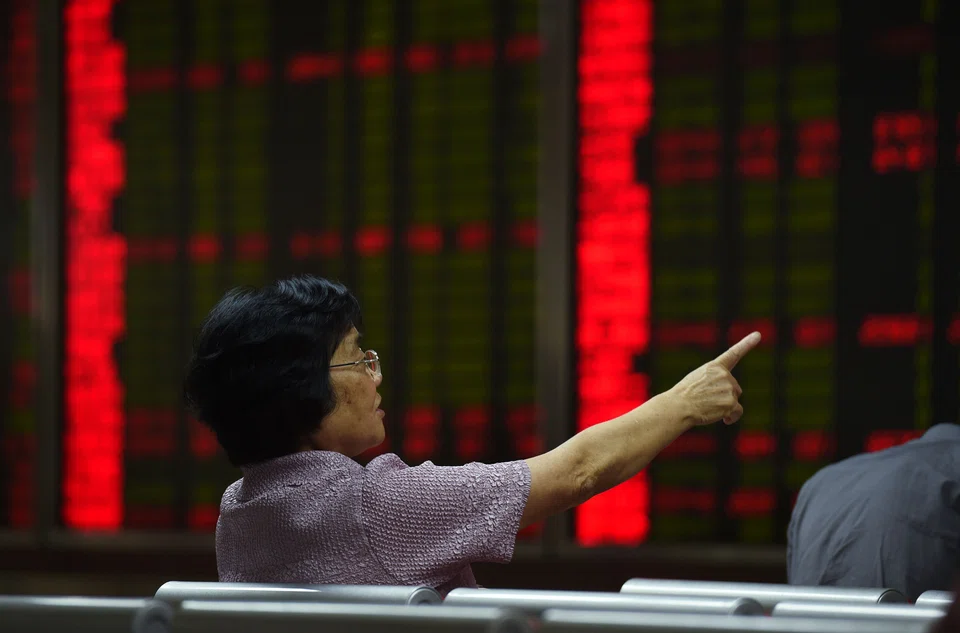
CHINA'S spectacular stock crash poses three questions. First, what caused it? Next, will it harm the "real" economy of spending and hiring, inside China and beyond? And, finally, how will it affect China's Communist Party and its economic strategy?
If you haven't paid attention, here are some basics about the crash. The Shanghai market hit its peak on June 12. By July 8, prices had dropped about a third. The smaller Shenzhen market, with more high-tech companies (it is often likened to America's Nasdaq), suffered steeper losses. Altogether, about US$3.5 trillion of paper wealth vanished.
The dramatic declines defied frantic efforts by Chinese officials to stop the sell-off. These included: pumping money into the market to prop up prices; preventing some big investors from selling shares; halting all stock IPOs - "initial public offerings" that drain funds from existing shares; allowing more than a thousand companies to suspend trading in their shares rather than record big declines. (Since July 8, prices have recovered somewhat. But the significance is unclear, because so much of the market is frozen.)
Superficially, the stock collapse seems a classic bubble, driven by crowd psychology and cheap credit. In the year before the peak, the Shanghai index rose 152 per cent. Shares were often purchased with borrowed money. Economists at UBS, the Swiss banking giant, estimated stock credit at about US$500 billion. Investors chased high prices and pushed them up further. But that's not the whole story.
At the rally's start, stocks seemed underpriced, possibly reflecting memories of an earlier crash between October 2007 and November 2008 - spanning the global financial crisis - when the Shanghai exchange lost 70 per cent of its value, says economist Todd Lee of IHS, a consulting company. In June 2014, the price-earnings ratio of the Shanghai market was about 10; by contrast, the historical PE ratio of Standard & Poor's index of 500 stocks since 1935 is 17. (The PE ratio compares stock prices with company earnings, aka profits.)
With China's economy growing faster than America's, Chinese stock prices seemed relatively cheap. China's economy, however, was also slowing, from annual growth rates of about 10 per cent to 7 per cent. "Investors were speculating on (added) government economic policies to spur growth," said one market analyst. Stocks ultimately became disconnected from the economy's performance. "Irrational exuberance" took charge.
The People's Bank of China underestimated the boom and encouraged it by loosening credit. By May of this year, the Shanghai market's PE ratio was 22; Shenzhen's PE was almost triple that. "The least sophisticated investors ... got in at the end. The smart money got out earlier," said this analyst. Two-thirds of new investors weren't high school graduates, wrote Ruchir Sharma of Morgan Stanley in The Wall Street Journal.
Economists disagree whether the crash will further slow China's economy. One way would be the "wealth effect": As people feel richer or poorer, they raise or lower their spending. Although this happened in the United States, many economists doubt it applies to China's crash. For one, stock ownership is smaller. About half of US households own stocks. In China, only about 9 per cent of urban households hold stock, reports a recent survey.
The long-term danger, argues economist Eswar Prasad of Cornell University, is that China's communist leaders will lose their appetite for overhauling the economy. They've decided to move away from export-led growth and investment in heavy industry (steel, cement) and infrastructure (roads, ports). Many heavy industries have surplus capacity, and China's export markets are increasingly saturated. Instead, the economy would rely on stronger consumer spending.
This would be better for China and everyone else. China would be more insulated from global instability, and China's exports would be less threatening to other countries. But getting from here to there isn't easy, as the stock collapse shows. The stock market is a crucial part of the strategy, says Mr Prasad. The idea is to give ordinary Chinese higher returns on their savings than the low rates paid on bank deposits. Higher returns would then support stronger consumer spending.
The stock crash is a setback. If there are more, China's leaders - depending on prosperity for their political legitimacy - might reassess. "They could go back to the old playbook" of export and investment-led growth, says Mr Prasad. "That would have huge consequences for the rest of the world." THE WASHINGTON POST WRITERS GROUP
TRENDING NOW

Singapore expects all parties to honour commitments, says PM Wong after Indonesia cuts gas exports

Gas Supply may pursue remedies if contract breached following Indonesia’s export cuts: Tan See Leng

SoftBank’s Son plans US$50 billion Malaysia tech outlay: Anwar Ibrahim

Is Manila Asia’s new dining hot spot?

