

Trump on trial - more than an 'ouch' for the president
Impeaching the president and putting him on trial will be a legal undertaking as well as a political action as the politicians will have to consider their interests and that of their parties.
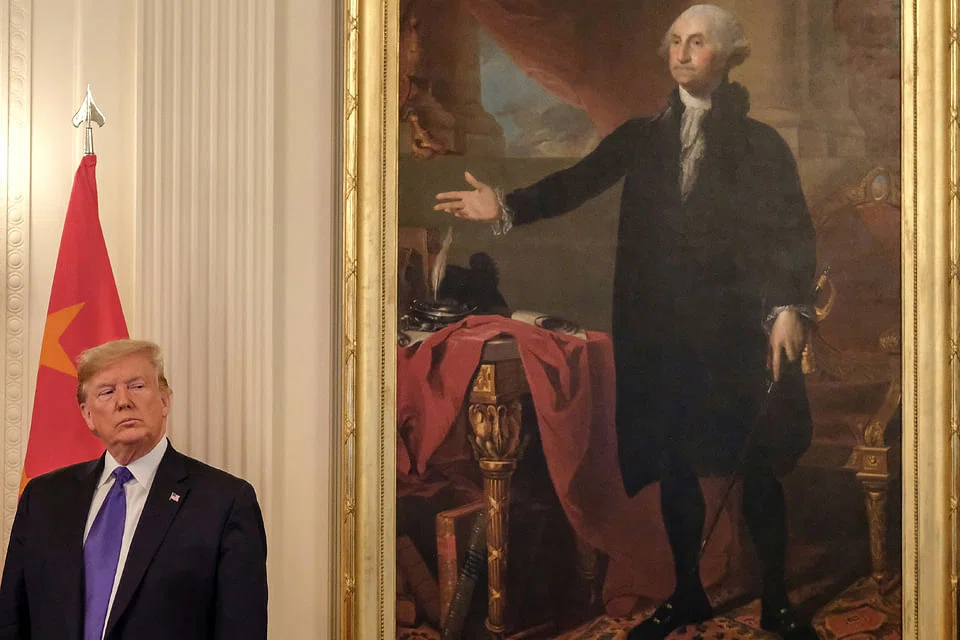
SO THIS would be the second impeachment trial of an American president that I am covering for The Business Times - which proves that time does fly in Washington (hey, where did those 20 years go?), but more important, that the system of checks and balances that underlies the constitutional system of the United States is working.
On one level, the impeachment trial of US President Donald Trump that opened on Tuesday this week in the US Senate can be compared to political theatre and - some would argue that in this case - a very boring play.
For the 100 Senators of the 116th Congress who serve as judges and juries in this trial, with US Chief Justice John Roberts presiding over the proceedings, the experience could prove to be quite distressing. They are being forced to watch the proceedings, led by the seven impeachment managers selected by the House of Representatives. This will commence every afternoon in the next weeks, and continue long into the night and even into early morning hours. As they did on Tuesday, when for more than 18 hours senators watched lawyers representing the two sides arguing over the rules of the trial.
The senators are not allowed to use their cell phones - which certainly amounts to a form of psychological punishment in this day and age. They are also ordered not to talk or even to whisper to each other "on the pain of imprisonment", as stipulated by the Congressional rules. However, magically many of them seemed to continue tweeting during the day, apparently via their aides.
But the current impeachment trial, like the one held in 1999 in response to the indictment of then-president Bill Clinton by a Republican-controlled House, is of course much more than political theatre.
As the framers of the Constitution believed, the process was supposed to provide a lesson to the American people and to the world that the US president was not a king, and that the role of Congress was to punish him and perhaps oust him from office if he "abused his power" and committed "high crimes and misdemeanours".
But impeaching the president and then putting him or her on trial is both a legal undertaking as well as a political action, since the politicians (in this case the 100 senators) will have to consider their interests and that of their parties before they decide whether the White House occupant "abused his power" - a charge that can be interpreted in many ways - and decide what "high crimes and misdemeanours" actually mean.
Twenty years ago, the Senate trial - which was presided over by US Chief Justice William Rehnquist - ended with Mr Clinton acquitted on the two articles of impeachment against him, as neither received the two-thirds majority that is necessary in order to convict and remove the president from office. It resulted in Mr Clinton remaining in office for the rest of his second term.
A few of the senators who had participated in the 1999 impeachment trial are also taking part in the current one, including Republican Senator Susan Collins from Maine, and Democratic Senator Patty Murray of Washington State.
Both of them had voted to acquit Mr Clinton in 1999, insisting that they made that decision after hearing the evidence. They have pledged to do the same now.
But highlighting the changes that have transformed American politics in the last two decades, it seems unlikely that when it comes to the 2020 impeachment trial, any evidence is going to sway senators in either direction.The exception is that the outcome of the trial in this era of political polarisation will reflect the balance of power between Republicans and Democrats in the Senate.
To be more specific, with the Republicans controlling the Senate, there is really no chance that the Democrats would be able to mobilise the support of 67 senators to convict the Republican president.
It is not the case that all the Republicans in the Senate are fervent supporters of Mr Trump or believe, as the White House lawyers put it, that the president's calls and actions in this case - including the infamous telephone call with his Ukrainian counterpart - were "constitutional, perfectly legal, completely appropriate and taken in furtherance of our national interest".
In fact, some of the more moderate Republican senators - such as Mitt Romney from Utah, the former Republican presidential candidate - detest the real estate tycoon from New York and disagree with his trade and foreign policies; and some like Senator Collins have made it clear that they are not on the list of his fans.
But Senators Romney and Collins, and some of their other Republican colleagues in the Senate have been reading the results of recent public opinion polls. They are aware that a clear majority of Republican voters are intensely opposed to impeaching and convicting their man in the White House. They also know that the action is also not popular among independent voters, and, indeed, among a slight majority of American voters.
Hence, a Republican lawmaker who decides to join the Democrats in voting in favour of ousting Mr Trump from office is expected to face harsh criticism from Republican voters in his state or district. They could face a strong challenge from a Trumpist candidate in the next primary, and end up being ousted from office.
But one should not dismiss the possibility that a televised trial that is expected to continue for several weeks could produce surprises. This could be in the form of new witnesses and documents that would strengthen the case against Mr Trump, affect public opinion and convince two or three Republican senators to vote in favour of the president's conviction.
But even if - as expected - Mr Trump will not be convicted by the Senate, being impeached by the House of Representatives will not only remain a big stain on his presidency, but could also provide political momentum for the anti-Trump forces in the country and help the Democrats win the White House in November.
TRENDING NOW

Indonesia’s coal tycoon Low Tuck Kwong replaced as Bayan Resources president-director

Nvidia reinstates Jensen Huang as CEO; Trump says move poses no national security risk

Six workers file employment claims against Crystal Jade Food Manufacturing

AI agents and stablecoins a ‘perfect match’ for payments, says MetaComp’s Tin Pei Ling

