As Truss enters Downing Street, her foreign policy will soon come to the fore
All eyes are on how she will maintain the UK’s traditionally strong links with Asean

Lee U-Wen
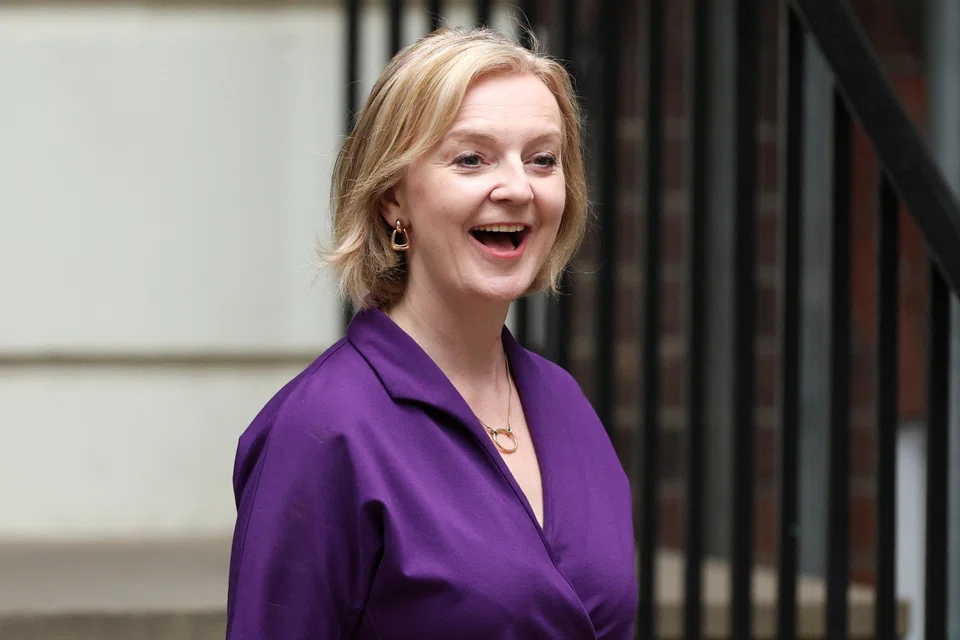
SIXTY-ONE days after Boris Johnson stunned the UK and the rest of the world by resigning in the wake of a mutiny within his own party that had spiralled out of control, Britain has a new leader at last in the form of Liz Truss. The 47-year-old Foreign Secretary – whose full name is Mary Elizabeth Truss – will become the newest occupant of 10 Downing Street on Tuesday (Sep 6), a day after she was formally announced as the next leader of the governing Conservative Party, and the next prime minister.
She won an internal leadership contest by pulling in 57.4 per cent of the votes, outlasting her rival, former finance minister Rishi Sunak.
It is a remarkable rise to the top job for this Oxford-educated mother-of-2, who has served in various ministerial positions under 3 different prime ministers over the last decade.
The former Remain supporter now turned Brexiter will become Britain’s 56th prime minister once she is sworn in at Balmoral Castle in Scotland, the 15th under the 70-year reign of Queen Elizabeth, and the third female leader after Margaret Thatcher and Theresa May.
While Truss has plenty on her plate to deal with in terms of domestic issues, all eyes will be on how she handles the UK’s foreign policy. She’s due to fly to New York later this month to address the United Nations general assembly, and she will also travel to Bali in November for meetings with her counterparts from the Group of 20.
Engaging the region
Over the past 8 weeks, as Truss campaigned and participated in numerous TV debates, she has not delved too deeply into her foreign policy preferences. This is understandable to a certain extent, given how the preoccupation has largely been on issues such as the rising cost of living, taxes, healthcare and housing, among others.
She has, of course, aired her views several times on the ongoing Russia-led war in Ukraine (she will ensure the UK continues to support Ukraine) and China (she has promised to classify China as a “threat” to national security). The UK’s relationship with the European Union promises to be a testy one amid an escalating diplomatic stand-off over the Irish border.
It will be interesting to see how high South-east Asia ranks on Truss’ list of priorities, although one gets the sense she will want to maintain the UK’s traditionally strong links to the region. Trade between the UK and Asean nations was worth almost £34 billion (S$54.9 billion) in 2020. In August last year, the UK officially became the 11th dialogue partner of the Association of Southeast Asian Nations (Asean), paving the way for closer cooperation on areas such as trade, investment and climate change.
Truss herself has made some high-profile trips to South-east Asia in the last couple of years. Last November, Truss visited Malaysia, Thailand and Indonesia in an effort to strengthen economic and security links. Indonesia is where the Asean Secretariat is based, and the country – the largest economy in South-east Asia – is also the host of this year’s G20 summit. In December 2020, Truss – then the Secretary of State for International Trade – was in Singapore and Vietnam to ink new continuity bilateral trade agreements in the post-Brexit era. The UK-Singapore free trade deal, in particular, covers trade worth £17.6 billion and is the second-largest that Britain has signed in the Asia-Pacific region.
At the time, Truss described the pact with Singapore as one that “secures certainty” for business, would result in “deeper future ties in digital and services trade”, and “further proof” that Britain could succeed as an independent trading nation.
”Engine of the global economy”
Perhaps the strongest sign yet that Truss will ensure the UK stays committed to Asean for the long haul was a statement she issued during her last trip to the region 10 months ago.
“I want to position Britain where the future growth is and to think about who our major partners will be in 2050 and beyond,” she said. “South-east Asia will be the engine of the global economy, and I want Britain to be part of that, upgrading our economic and security relations with the region to reflect its growing importance.”
As Truss prepares to begin life in the hot seat, the hope is she won’t get too distracted or overwhelmed by domestic challenges in order to advance the UK’s foreign policy. As it is, she doesn’t have that much time at the helm – a little over 2 years – until the UK’s next general election is due by January 2025. It’s a delicate balancing act that she will somehow have to overcome.