

Trust but verify: The future of information research in S'pore
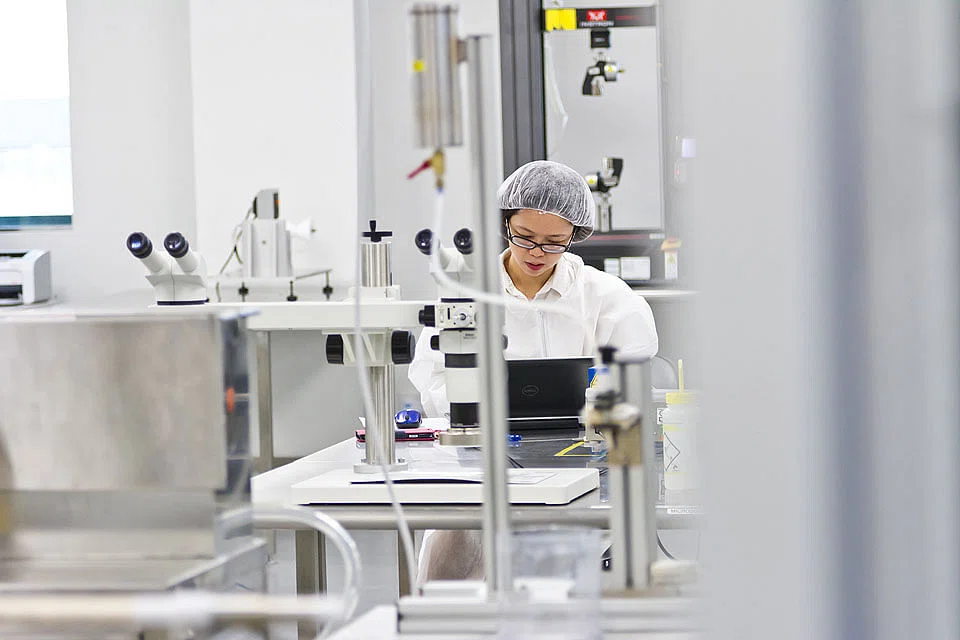
SINGAPORE has managed to build an enviable economic position, despite lacking natural resources, thanks to its greatest assets: knowledge and people. The Singaporean government realises this and has encouraged the knowledge economy by allocating S$16 billion in support of research, innovation and enterprise between 2011 and 2015. Coupled with the building and continual development of dedicated areas such as one-north for the purpose of research and development, the government's emphasis on research enablement is clear. These positive moves will have strong outcomes for the country's future.
However, Singapore's research landscape has also presented significant challenges. A shortage of qualified and experienced scientists means that the government has had to actively recruit researchers, highlighting the importance of boosting researcher numbers. Positively, we have seen some progress towards ensuring a steady supply of local and foreign talent that can fuel growth in engineering and the sciences, including the provision of scholarship funds for science students that provide financial assistance to promising undergraduates through to their doctorates.
However, undergraduate-focused efforts are apt to ignore a key fact: that the grooming of the nation's future researchers starts even in kindergarten. Children's habits for finding and manipulating information are developed early and honed through everyday encounters. The world's current media landscape thus proves to be both a threat and opportunity for development of skills. Over two trillion Google searches were conducted in 2014 alone (more than five billion per day), illustrating the increasing reliance on online sources for information and research.
This ease of access creates unique problems. With information and communication technologies blurring the line between producers and consumers, the barriers to development and publication of information on the Internet are significantly lowered. Individuals with little or no technical skills are now able to share content, ideas and even potentially dangerous theories online. Information literacy is therefore an important skill in both making sense of this information-rich world and also in arming Singapore's next generation with the skills that it needs for world-class researchers, scientists and innovators to emerge.
In my research, I constantly find myself using the skills of information literacy. At the same time, I admit that my early career took place in very different circumstances. Today's budding researchers live in a technologically-advanced era, while the most advanced technology at my disposal as a student was a mechanical calculator (it took so long to do division that it rang a bell once the process was complete). However, despite the differences in technologies, what hasn't changed is the importance of credibility, reproducibility and honesty. This - call it truth if you like - is a fundamental principle of all scientific work.
I have at often encountered colleagues who question new findings - particularly when big and potentially pioneering ideas are in play. Because of this, researchers must be entirely certain of themselves and the information around which they develop hypotheses. I often advise people to serve as their own harshest critics by being both curious and sceptical at all times. Questioning the accuracy of the information that we consume is the closest possible approach to reliable conclusions - and in the process leads to new and important discoveries, and refinement of the scientific problems that need to be addressed.
In light of this, I am comforted by the development of a national programme in Singapore that aims to educate and train the next generation in information literacy competencies. The National Library Board's S.U.R.E - or Source. Understand. Research. Evaluate - initiative was launched in 2013 as the primary education arm for the National Information Literacy Programme. It continues to evolve today, proving successful in its efforts to enable young Singaporeans to contribute to the country's future as a knowledge economy. It emphasises the vital skills of sourcing, understanding, researching and finally evaluating information.
Other than the direct outcomes of having a national programme of this nature, S.U.R.E. has indirect benefits too. By encouraging Singaporeans to dig deeper and not accept information at face value, S.U.R.E. can help to cultivate in people the innate trait of sceptical curiosity, allowing them to express themselves more clearly and to be more proactive in how they approach work and their surroundings. This helps to drive diversity of thinking and contributes to a rich, multifaceted cultural landscape from which everyone can benefit and enjoy.
The first step is to ensure grounding in research, reasoning and information literacy skills at the earliest stages of student development, and the S.U.R.E. programme represents a key measure in achieving this. I was lucky enough to interact with some of the country's budding scientists at the National Research Foundation's Global Young Scientists Summit in January, where I was reassured that the research and information skills of the next generation can indeed develop the local talent that Singapore needs. I look forward to seeing the results of the Republic's efforts in the years to come.
TRENDING NOW

He built the Vingroup empire. Now South-east Asia’s richest man is handing some key roles to his sons

Seatrium allocates S$200 million for new share buyback programme
32 companies, 6 individuals bag accolades at Singapore Corporate Awards 2026
Stocks to watch: Mapletree Logistics Trust, Seatrium, Keppel DC Reit, Food Empire

