

Ukraine accession is big call for EU
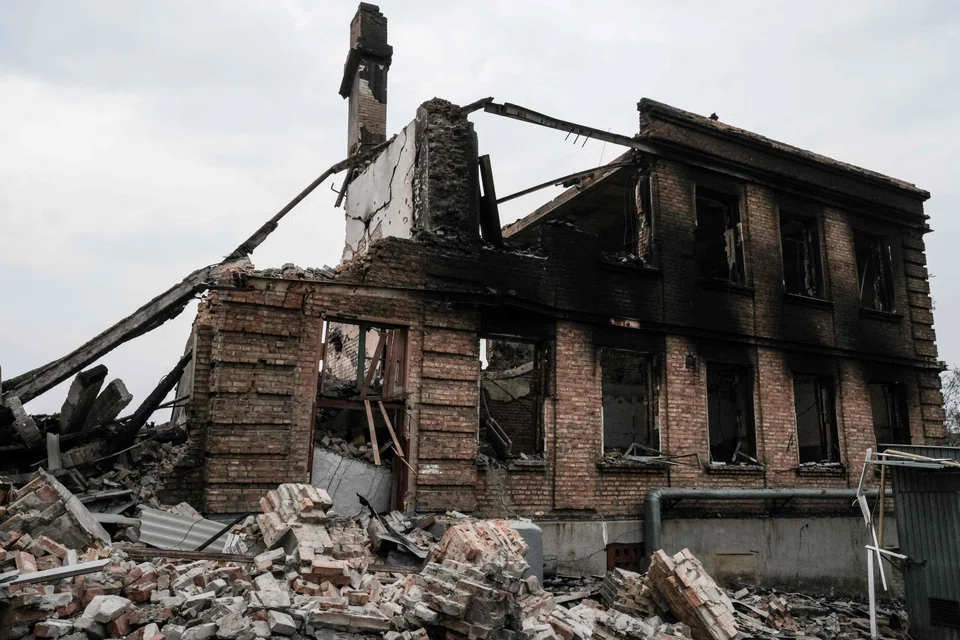
SINCE the Ukraine conflict began, the ‘hand of history’ has been hanging over key EU economic and political decisions.
Thursday and Friday will be no different with the European Council of presidents and prime ministers having big calls to make not just on the bloc’s approach to the war this summer. For there are also key decisions to take on the future of Europe, including the EU’s potential future enlargement, post-Russia’s invasion.
Since the European integration process began in the 1950s, the bloc has steadily expanded, Brexit aside. This included the accession in 2004 of 10 new member countries from formerly communist Central and Eastern Europe. The revival this year of the EU enlargement process, which had been largely sidelined for years, shows how much is changing in Europe, after the fatigue on this agenda in the last decade and a half. Following the accession of Romania and Bulgaria in 2007 and the Eurozone crisis of 2009-10, this led to Brussels setting stricter reform conditionality for accession states. Yet, despite the process stalling for years, the European Council is expected this week to give a positive formal opinion on Ukraine’s membership bid, and may give a judgement on Moldova and/ or Georgia too.
While there is much energy behind Kyiv’s bid, EU enlargement is a lengthy process and French President Emmanuel Macron has warned it could take several decades for Ukraine to become a full EU member. EU accession is open-ended and does not guarantee membership if application countries fail to meet the Acquis Communautaire (the body of European Community laws) and procedural expectations. This is despite the fact that Ukraine has adopted a fair amount of the EU’s legal framework since agreeing to its trade and political partnership with the Brussels-based club around a decade ago.
With this process to play out, Ukraine’s immediate-term future is still about survival and, when large scale fighting ends, the reconstruction process. While the war may last for a significant period longer, there is much preparation already underway about the reconstruction agenda. A wide range of international stakeholders are involved in this discussion, well beyond Europe, including the International Monetary Fund and World Bank.
While the EU’s enlargement process may appear unrelated to Ukraine’s rebuilding, the two are actually closely linked in the eyes of many stakeholders, for the EU accession procession is widely expected to occur in parallel with rebuilding. In part, this is because of the acknowledgment of the need for wider political and institutional change in Ukraine following criticism of prior to the war, including about corruption.
International discussions underway are centred around a three-stage rebuilding plan (that some have estimated will cost hundreds of billions of pounds) which has been mooted by the Ukraine government. The first stage is ongoing: the local authorities are cleaning up and restoring the destroyed facilities temporarily.
The second stage will be a recovery, probably immediately after the end of mass hostilities, including restoring supplies of water and electricity, as well as provide housing. The third stage, a full-fledged renewal of Ukrainian infrastructure and transport systems, will be the most costly, longest stage. This is why this week’s Council decision is so important. While Ukraine becoming a full EU member is a longer-term aspiration, the call will also be key too in shaping post-war reconstruction once large-scale fighting ends in the country.
TRENDING NOW

Singapore identifies 7 firms responsible for haze fires, notices issued urging action: Grace Fu

‘How many will survive?’: Bubble fears arise as China’s humanoid robotics face reality check
GIC-backed Bank Jago sees wealth management as next growth engine as Indonesian investor base grows

Ageing in Asia: Huge potential for the consumer economy

