

Ukraine war: The West needs also to consider interests of the rest
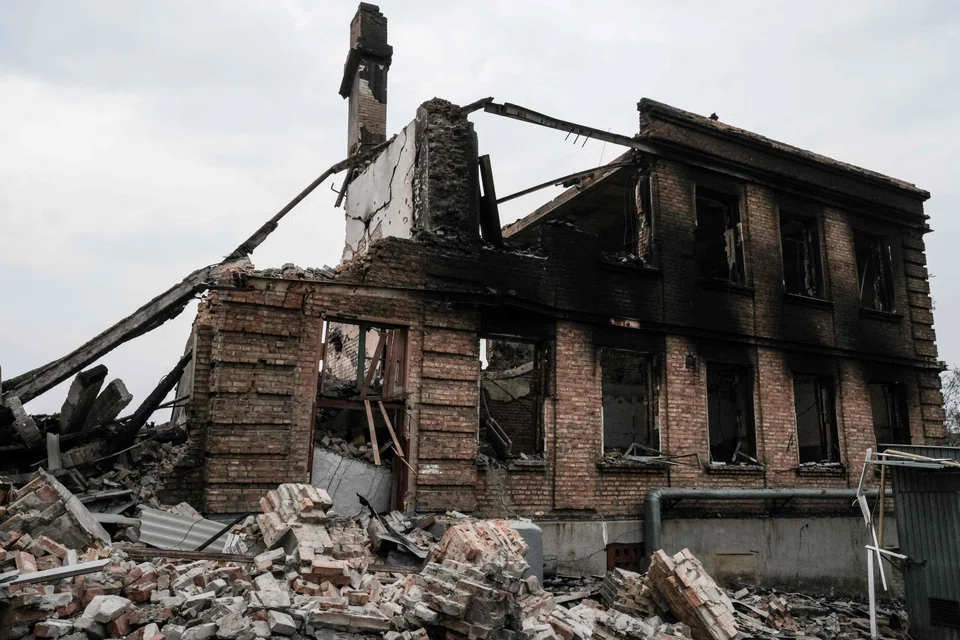
SINCE the Russian invasion of Ukraine, the United States and its allies have insisted that their response to President Vladimir Putin’s aggression, by imposing punishing economic measures on Russia and by providing diplomatic and military assistance to the beleaguered Ukrainians, has been backed by the “international community”, supposedly creating a sense of global unity in support of their policies.
But in fact that assumption now seems to be a reflection of wishful thinking on the part of Washington and its partners. While it’s true that most members of the United Nations have criticised the Russian invasion of Ukraine, the driving force behind the active military and economic support for Ukraine has been what’s widely referred to as “the West”. That coalition includes, in addition to the United States, all the members of the North Atlantic Treaty Organisation (NATO) and a few partners across the Pacific, like Australia and Japan. These governments and their publics regard Ukrainian President Volodymyr Zelensky as a freedom fighter who deserves their unwavering support in standing up to the autocratic leader in the Kremlin. That unified stand has been highlighted over the weekend during the summit of the Group of Seven (G7) leaders in Bavaria, Germany, where they issued a statement committing to providing indefinite support to Ukraine for its defence against Russia’s invasion.
But as far as the rest of the international community is concerned, many major powers (that include, in addition to Russia’s partner, China, also India, Indonesia, Brazil, and South Africa) have resisted American diplomatic pressure to join the West in its campaign against Russia, including by refusing to back the economic sanctions against Moscow. Hence when Indonesia hosts the summit of Group of 20 (G20) leaders in November, President Putin will be there despite US demand that he be expelled from the grouping. That reflects the international reality in which many governments, based on their diplomatic and economic interests, don’t share the Western position that Russia needs to be isolated in order to force it to end its aggression in Ukraine.
The Americans certainly aren’t helping their case by marketing their policies as part of a campaign led by a bloc of liberal democracies against an authoritarian Russia while trying to win support from governments that are blasted in the West as, well, authoritarian. Moreover, while regarding what is happening in Ukraine as a humanitarian tragedy, most of the governments in Africa, the Middle East and Latin America don’t believe that Russia’s policies pose an existential threat to them. In a way, most members of the international community, especially in the emerging markets, are experiencing the Ukraine war through higher food and energy prices. That poses a threat to their countries’ economic growth and political stability and explains why some of them are buying discounted Russian oil and grain.
The United States and its Western allies could respond to these growing economic anxieties in the rest of the world, by taking steps to boost food security, arrange debt restructurings, and to promote Covid vaccine production.
Such efforts aren’t necessarily going to lead “the other” nations to back Western policies vis-à-vis Russia and Ukraine. But they could help America and its allies to somewhat shift the balance of power in this conflict in their direction.
TRENDING NOW
First Resources blames El Nino, outside fires for Kalimantan hotspots amid haze scrutiny

High Court rules against Julius Baer’s Singapore trust arm in US$50 million family trust dispute
Singapore key exports jump by higher-than-expected 68.4% in September, led by non-electronics
MSCI proposes downgrading Indonesia to standalone market status

