US-Cambodia debt issue raises questions of morality and humaneness
The US is well advised to look at the Russian and Chinese models of dealing with Cambodian debt.
RUSSIA has made a gesture of goodwill to restructure its outstanding loans to Cambodia worth US$1.5 billion. The Russian example could serve as a model for the United States to settle its own outstanding debt worth US$500 million. Washington, ironically, gave the loan to Phnom Penh to feed Cambodian victims of widespread bombardment by American jets in the 1970s.
The debt issue raises the big questions of international relations: Questions of morality and humaneness, and of law.
Russia, during the Cold War, sought a foothold in South-east Asia and found an ally in Cambodia, to whom it loaned money. The funds enabled the Heng Samrin regime (precursor to the present Hun Sen government) to purchase weapons to fight the Khmer Rouge in the 1980s. Cambodia had requested Russia to cancel the debt in 2006 and 2008, but was unsuccessful both times.
There may be legal grounds for non-payment. "We do not need to pay back the loan because we borrowed the money from the ex-Soviet Union [which no longer exists]," said Son Chhay, a former lawmaker of the Sam Rainsy Party (which merged with the Human Rights Party in 2012).
Another reason for non-payment is that the funds were used to promote shared Soviet-Cambodian interests - to fight the China-backed Khmer Rouge. The loan financed a Cold War proxy war waged by the Soviets, a war that benefited both Moscow and Phnom Penh.
A Cambodian official has declared: "The loan was taken out when Cambodia was under economic sanctions from many countries, and the loans were used to prevent the return of the Khmer Rouge." Both the Soviet Union and Cambodia opposed the Khmer Rouge which, however, enjoyed the support of the US in the United Nations.
The US, likewise, had sought its own sphere of influence in the 1970s, when it extended a loan of US$274 million to the Lon Nol regime in Phnom Penh, a sum that has grown to about US$500 million at present due to accumulating interest charges. Cambodians are reluctant to repay because not only did the US-backed Lon Nol regime topple their beloved Prince Norodom Sihanouk from power, but the loan cynically aimed to alleviate large-scale human suffering that was caused by American bombing of Cambodia in the first place.
China, too, is expanding its influence by cancelling a US$90 million loan to Cambodia in 2015, and at the same time winning major business contracts in the Southeast Asian country whose economy is growing at almost seven per cent a year.
It is not surprising that Cambodia is becoming a tool of foreign powers that are using the outstanding debt as a lever to prise open its market for their companies.
The major world powers, Russia, the United States, and China are taking differing approaches towards settling their old outstanding loans.
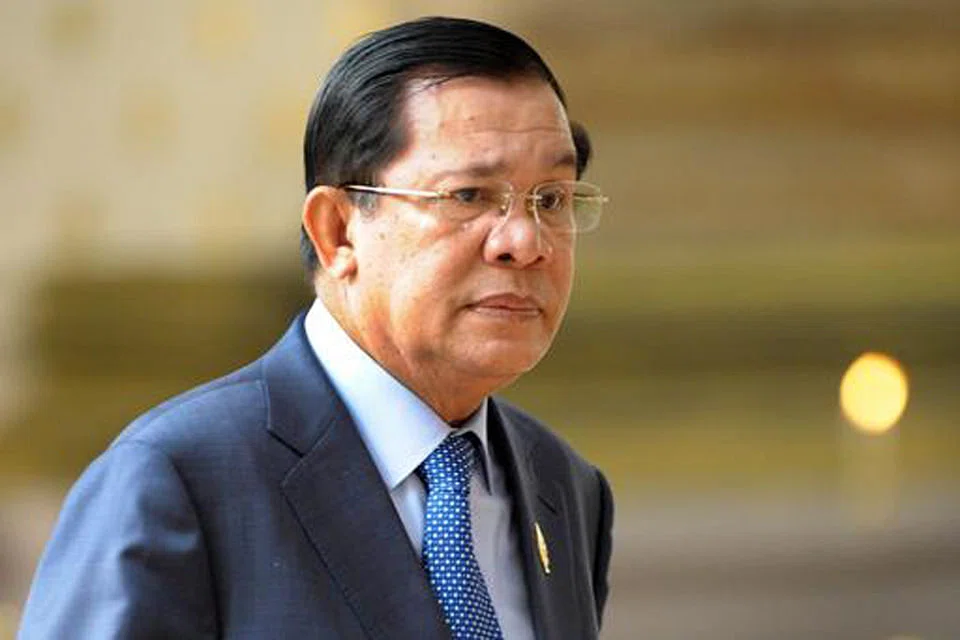
The government of Prime Minister Hun Sen has repeatedly asked Russia and the US to forgive the debt, while China has written off its loans.
Russia and the US, however, have refused to cancel the debt. Moscow is linking the unpaid loan with lucrative business contracts that it expects Cambodia to offer Russian firms.
Mr Hun Sen made a formal request for debt conversion when he met Russian Deputy Prime Minister Arkady Dvorkovich in March last year, under an arrangement that would encourage Russian firms to invest in Cambodia.
During a meeting between Russian President Vladimir Putin and Mr Hun Sen last year at Sochi, a city on Russia's Black Sea Coast, the latter offered to cover part of the debt with the supply of Cambodian products and convert another part into an arrangement that provides preferential treatment for Russian companies in Cambodia.
In his several interactions with Russian leaders, Mr Hun Sen has floated the idea that, first, Russia should reduce the debt, and secondly the repayments could be used by Russia to invest in Cambodian development projects and to purchase Cambodian agricultural exports.
As a result, Cambodia and Russia signed eight agreements in May last year to promote bilateral trade and investment until 2020. One of the agreements is between the Russian Ministry of Communications and Mass Media and the Cambodian Ministry of Posts and Telecommunications to cooperate in information technology.
Russian officials are counting on bright prospects of investing in energy, agriculture, telecommunications, and selling cargo lifting and drilling equipment, and starting direct flights to Cambodia. Several Russian companies have visited the country, such as the state-run JSC Russian Railways, and the energy firm Inter Rao.
There are two approaches that the US could take in resolving its outstanding debt: One is to follow the Russian example in restructuring, or the Chinese method of writing off.
From time to time, China keeps forgiving the debt: It cancelled more than US$4 million in debt back in 2010, and with the same stroke of the pen it signed 16 agreements to build roads, bridges, and railways. Between 2011 and 2015, Chinese companies invested about US$5 billion in loans and investment in Cambodia, equal to about 70 per cent of all investments in the industrial sector.
At the same time, trade between China and Cambodia grew to US$4.8 billion last year, up by about US$200 million from the year before. Mr Hun Sen praised China for its grants and loans. Trade, however, was unbalanced with Cambodia importing US$3.9 billion worth of Chinese goods, such as machinery and electronics, and exporting about US$830 million in rice and rubber.
The debt forgiveness, coupled with fresh investments, grants, and loans, has paved the way for a China-Cambodia strategic alliance. Mr Hun Sen repeatedly praises Beijing's development aid which is offered without any rebukes and lectures over human rights, as Western aid donors often do.
Cambodians, however, are astonished at American demands to repay. They remember that between 1965 and 1973, the US dropped about 500,000 tonnes of bombs in eastern Cambodia. They wonder why the US has not offered reparations for the extensive damage. The US is well advised to look at the Russian and Chinese models of dealing with Cambodian debt.