

US-China trade: truce, not peace
Trump Administration's 25% tariffs on US$250 billion of Chinese imports and Beijing's retaliatory tariffs on US goods still remain in place
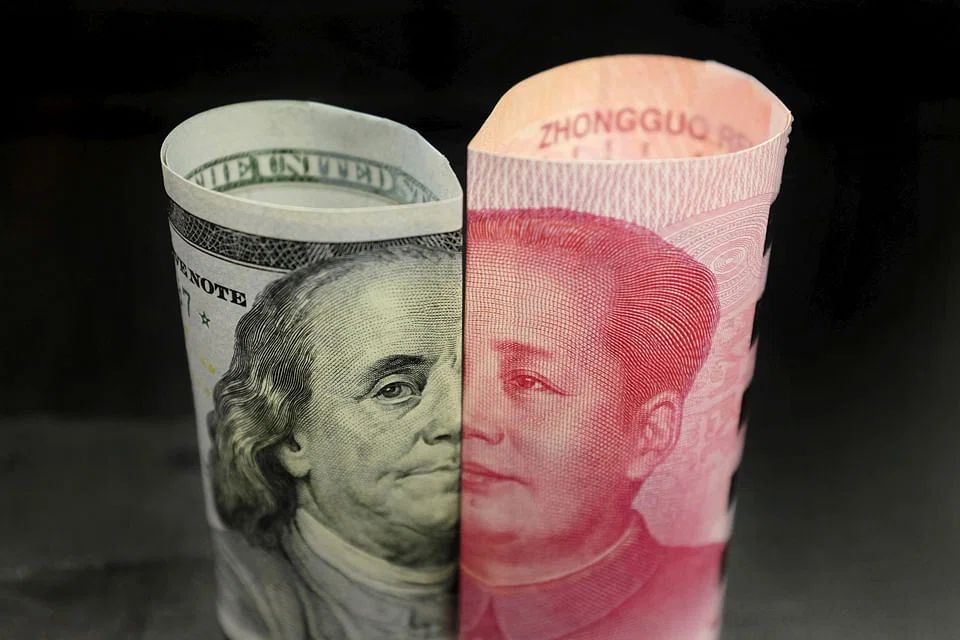
US PRESIDENT Donald Trump entered the White House in 2017 pledging to reverse traditional American trade policies, and to place China at the centre of his new mercantilist agenda. That delighted his supporters in the de-industrialised areas on the country who had helped elect him as president but also sent shockwaves among free traders in Washington, including members of his own party, as well as the financial markets.
Three years later, following a 19-month-long trade war between the United States and China, and on the eve of another presidential campaign, the self-proclaimed economic nationalist is expected to run for a second term insisting that he has delivered on his promises to the "forgotten American men and women" while refraining from destabilising the global economy.
Hence Mr Trump can proclaim that the "historic" and "big, beautiful monster" of a trade deal with Beijing amounted to a major victory over a country that he had accused of "stealing" American jobs. The agreement, he will contend, would benefit blue-collar workers in Pennsylvania, Michigan and Ohio, as well as American farmers, demonstrating that his aggressive protectionist approach works, not to mention highlighting the negotiating skills of the master of the Art of the Deal.
At the same time, the conclusion of the so-called Phase 1 in trade negotiations with China would be welcomed with a sigh of relief by corporate America and financial investors and would probably ensure that the stock markets, in which many American voters invest their pensions, will continue to rally until November.
But in practical terms the agreement can be compared to a temporary truce in what many worry will be a long trade war with the Chinese that is expected to continue after the 2020 election, whether or not Mr Trump will be re-elected for a second term; and especially if the Democrats nominate an economic populist as their presidential candidate.
It is difficult to figure out whether the interim agreement that the two sides are signing will make a major difference for the unemployed blue-collar workers who have lost their manufacturing jobs thanks to global competition from low-wage economies like that of China, and to the accelerated automation driven by the new technologies.
Even Mr Trump's fans admit that their man had never expected to "bring back" the jobs that were supposedly lost to China. In fact, manufacturing employment has declined in recent months, in part as a result of the growing trade tensions and there are no signs that the US global deficit has been narrowing, which was a major declared goal of the Trump administration.
Nevertheless, there is a sense of economic revival in Pennsylvania and other industrialised states where businesses and labour have been adjusting to the changing economy, with new industries attracting skilled workers and with some of the benefits trickling down to those blue-collar workers. They might have lost their jobs, but can now try to find new opportunities in a booming services sector.
There is also no doubt that the apparent Chinese commitment to increase its purchases of American farm products to US$50 billion, as part of a deal to raise its purchase of US products by US$200 billion in the next two years, is going to cheer up farmers in the major agricultural states. They have seen their access to Chinese markets closed down during three years of trade battles.
In exchange for these and other Chinese concessions, the Trump administration agreed to cancel the 15-per cent tariffs that had been scheduled to take effect on Dec 15 on US$160 billion worth of Chinese goods; halve an earlier set of tariffs on another US$120 billion worth of goods; and to formally remove China's designation as a currency manipulator.
The major player in the negotiations on the American side has been US Trade Representative Robert Lighthizer, who recognised early on that it would be impossible to resolve the real contentious issues that separate the two countries. He also took into consideration the political calendar and the concerns that continuing trade warfare would raise anxieties among investors, so a temporary ceasefire would be the least costly outcome at this stage of a very long game.
Mr Trump's 25 per cent tariffs on US$250 billion of Chinese imports and China's retaliatory tariffs on US goods still remain in place, and there has been very little progress in the negotiations over what the China hawks in Washington believe should be the strategic central goal of the US approach: To force the Chinese to reform their state-controlled economy, to widen market access to foreign products and investments, and to cease to violate intellectual property rules.
The Chinese insist that they have taken major steps in the direction of lifting foreign ownership restrictions in many industries, including in the financial sector, and that when it comes to intellectual property, China has been tightening rules and enforcement in a major way, measuring up to international standards.
In fact, these and other Chinese steps should create an environment conducive to making more deals with Beijing in Phase 2 of the negotiations, in ways that could benefit the world's two largest economies and accelerate global economic growth.
But that is not the way that the anti-China political players in Washington see it. From their perspective, China is a global enemy in a new Cold War where the lines between geo-strategic and geo-economic interests are blurred, and should be treated as such.
In that context, preventing China from becoming a leader in the high-tech area becomes an American national interest. That will require restricting exports of high-technology products, like micro-chips, to China; banning Chinese investment in certain American companies; pressuring third-country governments not to purchase high-tech equipment from China; and insisting that the Chinese government end its industrial policies aimed at encouraging its companies to catch up and compete with the United States. Those are the kinds of moves that the leaders in Beijing are not likely to take.
There were some signs during the last three years that Mr Trump and his advisers were in the process of embracing that kind of grand strategy that inevitably would lead to a rupture or "de-coupling" between the two economies.
Mr Trump (or the Democrat who will replace him in office) will have to decide that "decoupling" is indeed the direction they would want to take the relationship, which could make the trade battles of Mr Trump's first term of office look like a walk in the park, or whether they are interested in managing the economic and political relationship between the two countries in a more pragmatic way.
READ MORE:
TRENDING NOW

He built the Vingroup empire. Now South-east Asia’s richest man is handing some key roles to his sons

32 companies, 6 individuals bag accolades at Singapore Corporate Awards 2026

Can a first-time homebuyer couple earning S$18,000 a month afford a new EC unit?

Floods compound Philippine growth woes from public-works scandal

