

Value could be emerging for some S-Reits after the sell-off

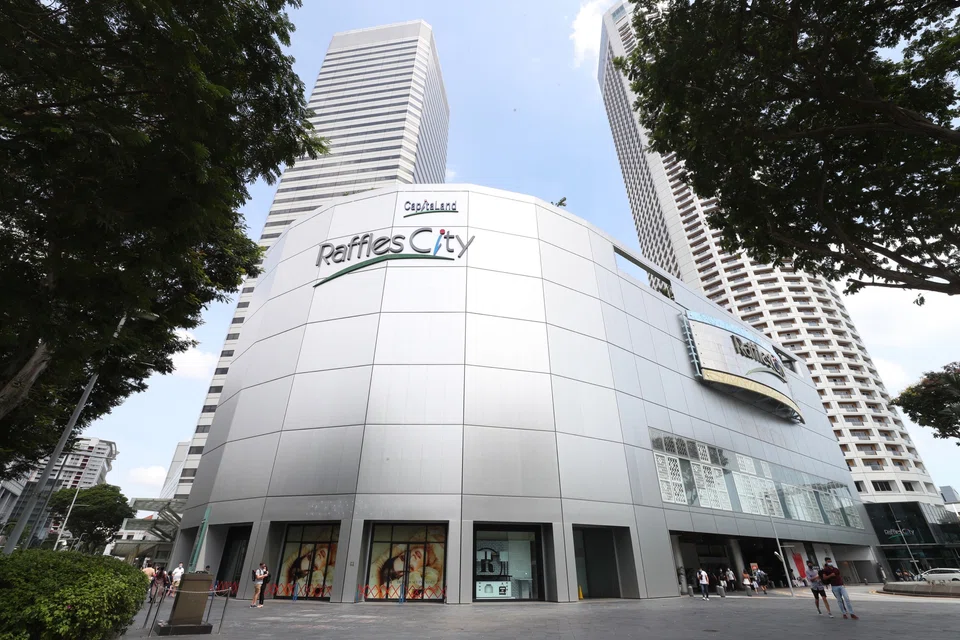
AT least half of the 42 actively traded Singapore-listed real estate investment trusts (S-Reits) are trading at or extremely close to their 52-week lows, following a massive sell-off that is shaping up to be one of the worst in the 20-year history of S-Reits.
Going into the long Deepavali holiday weekend, a dozen S-Reits hit their 52-week lows last Friday (Oct 21), with another nine coming within 1 per cent of their 12-month troughs.
All but four of the S-Reits – Elite Commercial Trust , Dasin Retail Trust , EC World Reit , and BHG Retail Reit – closed within 10 per cent of their 52-week lows.
This comes as the benchmark Straits Times Index (STI) on Oct 21 tumbled below 3,000 points for the first time since March 2021.
Commonly seen as a safe haven in periods of volatility and uncertainty, the S-Reits have struggled to stand up against the spectre of a potential recession and persistent aggressive interest rate hikes by various central banks to combat decades-high inflation rates.
Even some of the biggest S-Reits have not been spared the collapse in investor sentiment, with CapitaLand Integrated Commercial Trust (CICT), Mapletree Pan Asia Commercial Trust (MPACT), Mapletree Industrial Trust (Mint) and Frasers Centrepoint Trust (FCT) trading at 52-week lows.
The sell-off also appears to be broad based, across a variety of S-Reit sub-sectors.
Other S-Reits that fell to their 52-week lows include data centre-focused Digital Core Reit and Keppel DC Reit , industrial Reits Daiwa House Logistics Trust (DHLT) and ESR-Logos Reit , US-focused Keppel Pacific Oak US Reit (Kore) and Ara US Hospitality Reit , as well as retail-focused SPH Reit and the diversified OUE Commercial Reit .
Most of the 12 S-Reits bounced back as the market reopened on Tuesday (Oct 25). Kore led the rebound, closing 8.2 per cent higher, followed by CICT and Keppel DC Reit, which gained 4.6 per cent and 3.8 per cent, respectively.
OUE Commercial Reit remained at its 52-week low as it closed flat; Digital Core Reit and DHLT – the two newest S-Reits which made their trading debuts near the end of 2021 – fell to new all-time lows as they lost 2.6 per cent and 1.9 per cent, respectively.
As more S-Reits fall to new lows, so too the number of market watchers that question whether it’s time to “buy the dip”.
It might be premature – and indeed, foolish – to venture that the worst is over for the wider market and that S-Reits have bottomed out.
But with the results reporting season currently underway, there should be some indications on the S-Reits that are worth a closer look.
Beyond wider economic and sectoral trends, investors will want to study the operational performance of the individual Reits, as well as the strength of their balance sheets.
A case in point is CICT, which announced its business updates for Q3 on Oct 21.
The Reit manager reported that gross revenue rose 13.7 per cent to S$374.1 million in Q3, while net property income (NPI) was 12.7 per cent higher at S$273.3 million.
Portfolio committed occupancy climbed 1.3 percentage points quarter-on-quarter to 95.1 per cent.
In addition, rental reversions for its retail and office portfolios were both in positive territory in the nine months ended September, at 0.6 per cent and 7.9 per cent, respectively.
As at end September, CICT’s aggregate leverage stood at 41.2 per cent, with an average cost of debt at 2.5 per cent and an average term to maturity of 4.1 years.
Some 80 per cent of its borrowings are hedged to fixed interest rates, with an interest coverage ratio of 3.9 times.
CICT’s Q3 results earned it an upgrade to “buy” from RHB, from “neutral” previously, as a result of emerging value amid the market sell-off.
“(CICT’s Q3) business update indicates that positive levers from reopening continue to outweigh cost and rising rate pressures,” RHB analyst Vijay Natarajan said in a report on Tuesday.
As the other Reits provide their quarterly updates in the weeks to come, a clearer picture of the bargains should emerge.
TRENDING NOW

First Resources blames El Nino, outside fires for Kalimantan hotspots amid haze scrutiny

High Court rules against Julius Baer’s Singapore trust arm in US$50 million family trust dispute

Singapore key exports jump by higher-than-expected 68.4% in September, led by non-electronics
MSCI proposes downgrading Indonesia to standalone market status

