VTL travel: Taking a gamble for rediscovered joys
Associated costs and risks still suggest that there will be no return to the ubiquity of leisure travel

Singapore
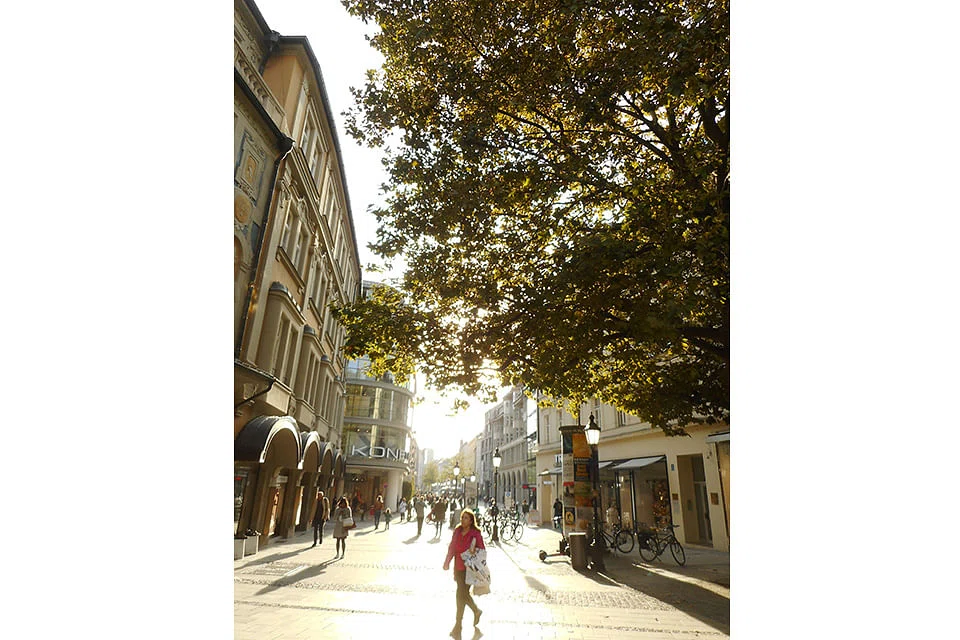
FAMILIES strolled along the river, smiles visible on their unmasked faces. Groups of students sprawled upon the grass. The autumn air was bracingly cold against my skin.
It felt like a scene from pre-Covid life. But this was just last week in Munich, which I was visiting thanks to one of Singapore's first two Vaccinated Travel Lanes (VTLs).
Eight more VTLs have since taken effect, with another opening up with South Korea from Nov 15, and the possibility of more on the horizon.
Apart from facilitating business trips and family reunions, the VTLs represent the first real chance for tourism since the pandemic began.
For those of us privileged enough to have keenly felt the absence of leisure travel in the past two years, this chance seems well worth taking.
Yet the associated costs and risks still suggest that there will be no return to the ubiquity of leisure travel.
Assuming one can afford it financially - and for many, this is a large assumption - the first hurdle is securing permission. Not all employers currently allow staff to travel for leisure.
I was fortunate enough to merely have to attend a nervy meeting with HR, in which I was informed that if I were to be stranded overseas, I would have to use up more leave instead of being able to work remotely.
The risk of an unexpected trip extension is perhaps the main obstacle for VTL travel; but more of that later.
While pre-trip planning was more complex than before, I was able to rely on handy infographics and tables from travel blogs and media reports.
Making an online booking for the required pre-departure test in Germany was also a breeze, not much different from the train or concert ticket purchases I had made for past trips.
And departing from Changi Airport was as efficient as before, if slightly surreal due to PPE-clad staff.
Then came the flight: the first of several reminders of how Covid-19 has rewired our danger signals. Despite the health precautions, there was a lingering sense of unease about being in an enclosed space in close proximity to vaccinated but untested fellow travellers for a full 12 hours.
Wearing a mask does not improve the comfort of economy-class travel, either - though the red-eye timing allows most of this to pass in sleep.
Growing sense of wonder
Once I was on the ground and safely through immigration, though, Covid-related paranoia took a backseat to a growing sense of joy and wonder at being overseas once more.
In Germany, at least, restrictions do remain. Masks are mandatory on public transport, and have to be at least surgical grade. Proof of vaccination - or recovery, or a recent negative test - is required to enter restaurants, museums and so on.
Outdoors, however, groups of unmasked people casually throng the streets. And while Oktoberfest was cancelled, public festivals have been recently approved, clearing the way for Christmas markets later this year.
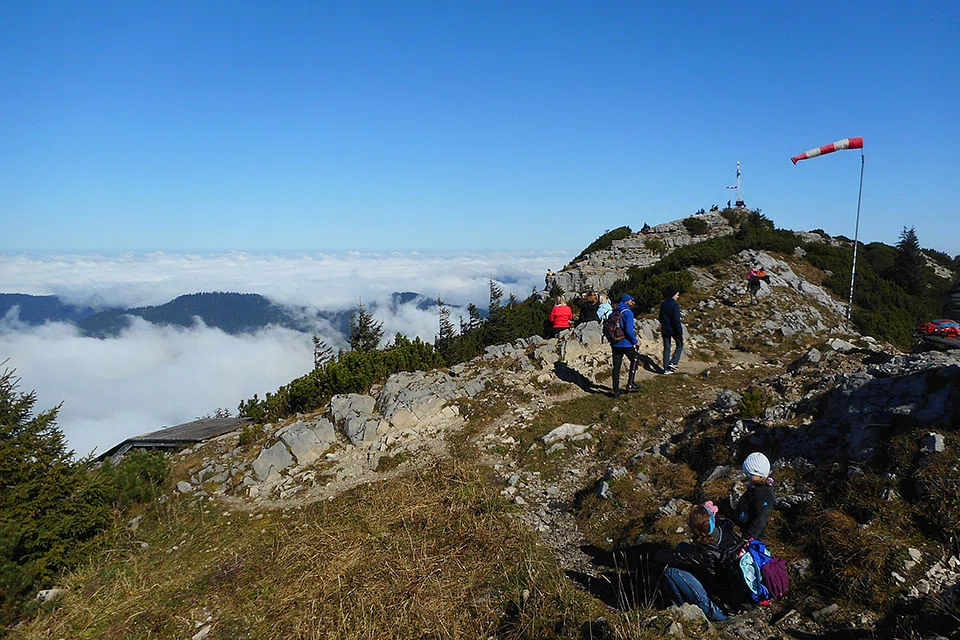
You can, of course, choose to keep your mask on. Yet there is something to be said for feeling the wind on one's face, particularly in a city park or when admiring a mountain view.
In short, it felt very much like a preview of what it means to live with Covid-19, and not live in thrall to it.
Granted, there are minor logistical concerns. The first few times I entered a restaurant, I felt a niggling doubt over whether they would accept my low-tech vaccination certificate print-out, instead of the phone-based proof furnished by locals.
But this fear waned as the trip wore on, and I faced no difficulties - not even in the little alpine lake town of Rottach-Egern where non-domestic tourists seemed uncommon.
This may not be the case in all VTL countries. France, for instance, requires non-European foreigners to apply online for a vaccine "certificate of equivalence". Still, once you get one, there will be even less need to worry.
Source of disquiet
The only real source of disquiet, perhaps, is the aforementioned risk of getting Covid-19 - and thus being unable to return to Singapore for at least another 14 days after diagnosis.
Ironically, a vaccinated traveller with no underlying conditions might be more anxious about that danger than the health risk from infection.
Covid-19 travel insurance, including the option offered when booking Singapore Airlines flights, can defray the costs of overseas hotel stays following a positive test result.
But it cannot do anything about an employer's disapproval or the sudden disappearance of one's remaining annual leave.
Thus the need for a pre-departure test before flying back to Singapore turns the traditionally least-anticipated part of a holiday - going home - into something to be grateful for.
The actual process of getting swabbed was unremarkable. I turned up with my passport and appointment QR code, was ushered to a utilitarian swabbing facility in a department store basement, and swiftly processed by a bored healthcare worker.
The wait for the results, in contrast, is far more gruelling. Some 24 hours later, roughly when my results were meant to be available, my dinner of hipster alpine dumplings was flavoured with a faint dread, as I wondered if this was to be my last supper before everything went awry.
Fortunately, I tested negative. But despite the balance of probabilities - Bavaria's relatively low Covid-19 case count, the fact that I spent most of my time in nature and not in crowds - the trip felt like one massive gamble. This is a gamble many travel-deprived people seem willing to make, judging by the rush for tickets after the VTLs were announced. How often they will want to make this gamble is another question.
It is possible that after the initial burst of pent-up demand, interest will cool. Having sated their longings for the first time in 2 years, once-avid travellers may adopt a less-frequent trip schedule.
Travel is a luxury; travel amid a global pandemic, even more so. As long as the risk of being stranded overseas persists, carefree travel remains a nostalgic dream. And as long as VTLs are restricted to pricier, more distant destinations, mass tourism will not return. That having been said, VTLs quite literally mean the world to those of us privileged enough to have cultivated a love for travel.
Yes, there is something grotesque about enjoying oneself abroad when lives and livelihoods are threatened back home, and the bulk of migrant workers remain confined to dorms.
But elsewhere, the world does go on. And it was good to be reminded of that simple fact; of the beauty, the variety, the possibilities that lie beyond this island's confines.
READ MORE: Upcoming Australia-Singapore quarantine-free travel plan excites businesses, airlines
TRENDING NOW
He built the Vingroup empire. Now South-east Asia’s richest man is handing some key roles to his sons
Grab executives buy back shares after stock hits 3-year low on Atome deal
US dollar falters after Iran’s offer to reopen Hormuz sends oil lower
Martin Modern, Wallich Residences properties linked to money laundering case sell for S$16.3 million at auction