

What’s next for IT built for Covid tracing?
Han Chon
WHILE there may be ongoing conversations about how organisations can best adjust to a post-Covid environment, there’s one question no one seems to be asking: What are they going to do with all the infrastructure that was deployed to support contact tracing and other unexpected requisites that emerged during the pandemic?
Across the globe, thousands of companies made significant investments during the pandemic to launch and support tools that would enable them to adhere to their respective government’s contact tracing requirements and support remote working en masse. With many employees expected to continue to work remotely, the wide-scale virtual desktop infrastructure (VDI) that was implemented during Covid-19 continues to make sense in a post-pandemic workplace. However, the contact tracing tools – from mobile applications; tracking software; backend systems that review, manage, and even predict movements and behaviour; to sophisticated analytics engines that interpret all the data collected – may now seem redundant in a post-Covid world. But with a little bit of tweaking and some out-of-the-box thinking, organisations should be able to repurpose most, if not all, of these tools.
A new lease of life
While demand for contact tracing services is on the decline in some places, organisations can still derive value from these investments. Given contact tracing requirements vary between different countries and organisations, there’s no one-size-fits-all approach when it comes to repurposing the infrastructure. However, broadly speaking, certain types of tracing tech could be easily adapted to help improve business functionality.
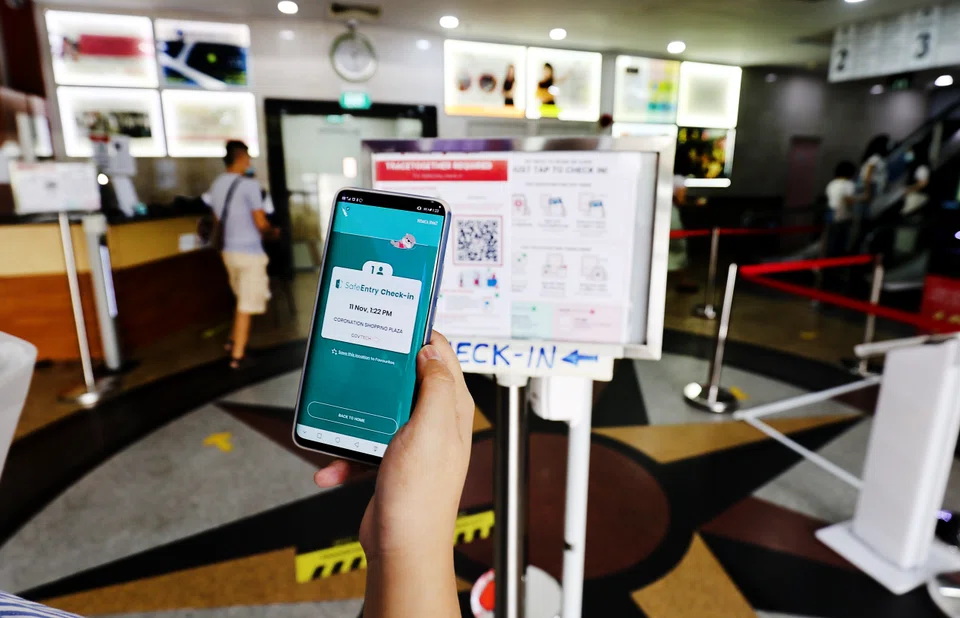
For example, organisations that invested in dongle devices that allowed them to detect an employee’s locations, via Bluetooth, could repurpose such infrastructure to improve remote connectivity and hybrid working experiences. Check-in applications for office spaces could be reshaped to provide a pulse check on employee wellbeing, delivering an anonymous, 10-second survey via push notification on employees’ personal devices. In the backend, systems that were built for data analytics originally could be adjusted to support or enhance solutions such as AI or machine learning.
In today’s climate, allowing large technology investments to go to waste simply isn’t prudent. Instead, organisations should see this as an opportunity to use their existing investments to expand their hybrid multicloud capabilities and skillsets. Solutions that had been developed in haste during the pandemic can now be thought through in more detail, and redeveloped into more robust, strategic solutions that will help organisations achieve their goals.
Compliance, of course, will be an issue that organisations need to address as part of the process. Whether the contact tracing data collected needs to be stored securely for a minimum length of time, or whether systems that were hastily built on public cloud need to be migrated to private cloud, or a hybrid environment each organisation will have their own set of considerations and policies to work through. Just because the infrastructure was built a certain way, with a specific purpose in mind, it doesn’t need to remain so. That’s what being agile is all about.
Agility as a necessity
Agility has been an IT buzzword for years, thrown around so often it began to lose its meaning. Then Covid-19 turned the world upside down and it soon became clear that only the most flexible, agile businesses that could easily adapt to the changing landscape would survive. Agility stopped being a buzzword and fast became a necessity.
The need for agility isn’t going anywhere. As organisations look to the future, and adjust their systems to enable a more flexible and remote workforce, agility must remain at the heart of business strategy and planning. This includes the adoption of cloud-based operating models and modernising on-premises infrastructure. It also means adopting hybrid multi-cloud and investing in hyperconverged infrastructure (HCI) solutions to simplify data centre modernisation efforts.
Practically speaking, an agile organisation is one that can adapt and change their infrastructure so that it’s fit for purpose. They can turn their systems around to run databases or apps on it when it needs to do so. They can repurpose infrastructure designed for surveillance into solutions that enhance remote working and productivity. When it comes to agility, organisations are only limited by their imagination. Once they can start to view technology as something that is elastic and flexible, rather than something that is rigid and purpose-built, then will these organisations be truly agile. Only then will they be fully prepared to respond in real time to the ever-changing operational landscape.
The writer is managing director, Asean, at Nutanix
TRENDING NOW

Simba admits exceeding spectrum limits amid failed M1 deal; full-year profits surge 277%

Temasek’s Wan Chee Foong to helm PIL, Lars Kastrup to be board adviser

He built the Vingroup empire. Now South-east Asia’s richest man is handing some key roles to his sons

One-third of Singapore-listed firms at risk in severe AI downturn: MAS

