

When PayNow is down but not out, pending payments should be aborted

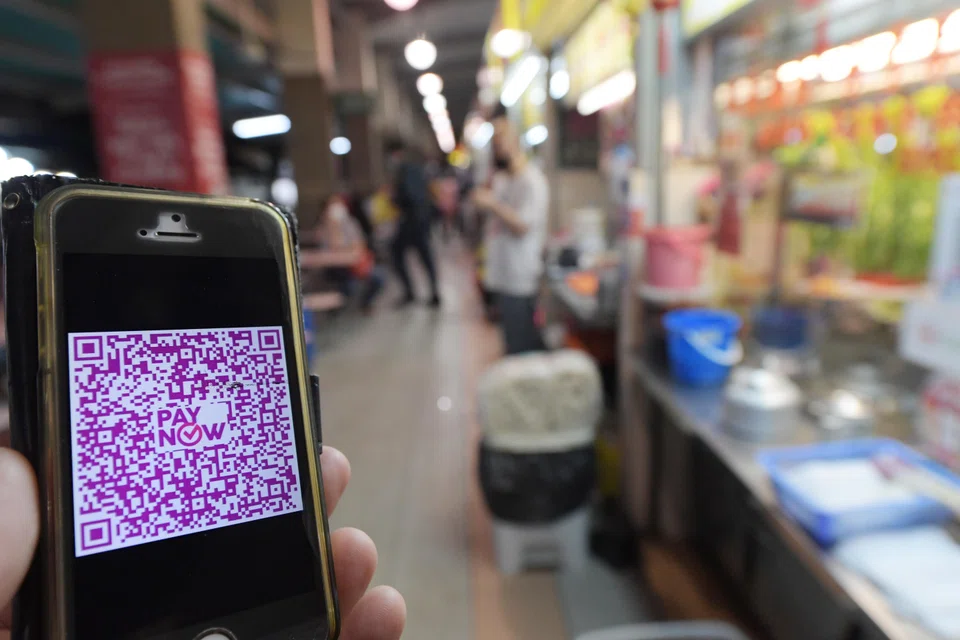
ESTABLISHMENTS in Singapore that do not accept digital payments are becoming increasingly rare.
Even retailers that do not want the expense of credit card fees and terminals have the option of accepting payments via PayNow.
But given DBS’ PayNow disruption last month, the few that do not want this option may justifiably point out that digital payment services do not always work as intended.
When now doesn’t mean now
PayNow’s potential to break down in unexpected ways threatens its integrity as a payments platform because transactions on the network do not fail gracefully.
On the afternoon of Sep 26, DBS customers found they were unable to make payments using the Fast and Secure Transfers (Fast) and PayNow services.
These services were fully restored by 7.40 pm, but many transactions made during the period of disruption remained “pending” for several days.
At least up to Sep 29, affected customers continued to see pending statuses while the bank progressively processed and updated their transaction histories.
Some customers saw their payments go through, but others reported failures. A test transaction executed by The Business Times on Sep 26 eventually failed on Sep 28.
To be clear, customers of DBS and other banks were still able to receive payments from other banks promptly during the disruption.
This suggests that Nets’ subsidiary Banking Computer Services, which manages and operates the clearing and payments infrastructure behind Fast and PayNow, was still processing transactions initiated from other banks at the time – just not from DBS.
This is not the first time that banks have experienced disruptions to their PayNow services.
In June 2022, OCBC customers also faced a short disruption to online payment services. There was a similarly inconsistent result for merchants and consumers.
At the time, one merchant told The Straits Times that he had made six PayNow payments; but only one party received his payments. He only received refunds for the other payments hours later.
Such inconsistencies are worrisome for all involved.
Consider this scenario: A customer orders food from a hawker, and attempts payment via PayNow. The payment is not processed immediately, and its status on the customer’s bank app is “pending”.
The hawker may not have faith that he will eventually receive the payment. He will ask for money to be paid via a different means. The customer could do so in cash, or via PayNow with another bank.
If the PayNow payment later fails, all is well. If it doesn’t, however, the customer ends up paying twice. Unlike with card transactions, there is no established mechanism to dispute or reverse a PayNow transaction.
Failing to fail
Technical difficulties are par for the course in any system. It is important, however, to establish a protocol when such difficulties occur.
When it comes to PayNow transactions, it would probably be best if these transactions are made to fail instantly when difficulties occur.
This is especially the case since PayNow transactions are made with the expectation that they are completed almost immediately. Any deviation from this should lead to payment failure.
If transactions are allowed to fail quickly, customers will then be able to pay with another payment method with the assurance that they will not be paying twice.
And merchants will not be stuck in limbo wondering if they have received payments, with no way to claw back funds if customers leave.
Those who use credit cards might have encountered point-of-sale machines with finicky connections.
When these machines face issues, they are programmed to time out and cancel transactions quickly so that the customer can pay with another payment method.
DBS customers who have issues initiating transactions can call the bank’s hotline, but whom can merchants call if they fail to receive payments? How should any bank go about assessing who is telling the truth?
In response to queries about how long banks are allowed to hold transactions in a pending status, the Monetary Authority of Singapore said it “expects banks to have the ability to recover quickly from any system disruption, and to address and resolve the impact to customers swiftly and transparently”.
It added that it is following up with DBS on the root cause of the incident as well as its handling of the affected customers and transactions.
Introduced by the Association of Banks in Singapore in June 2017, PayNow builds on Fast, allowing transfers to be made to participating banks’ customers through their mobile numbers, identity card numbers and business unique entity numbers.
It has been identified as a crucial “digital utility” as part of the Ministry of Communications and Information and the Infocomm Media Development Authority’s Digital Connectivity Blueprint, which was released in June.
If more businesses and even countries are to plug into PayNow, more should be done to safeguard the integrity of transactions made over the network.
Aside from setting robust standards for how quickly payments should be made, participating banks should consider how payments can be allowed to fail.
TRENDING NOW

OCBC mobile, online banking services restored after Friday afternoon disruption

SGX CEO Loh Boon Chye to step down; succession planning under way
Waymo founder predicts ‘landslide’ robotaxi adoption in Singapore, driven by high car costs

Vietnam’s northern provinces, not Hanoi or Ho Chi Minh City, are powering near 10% GDP growth

