When school's out, but class may go on
1. What was the most noteworthy thing that happenedthis week?
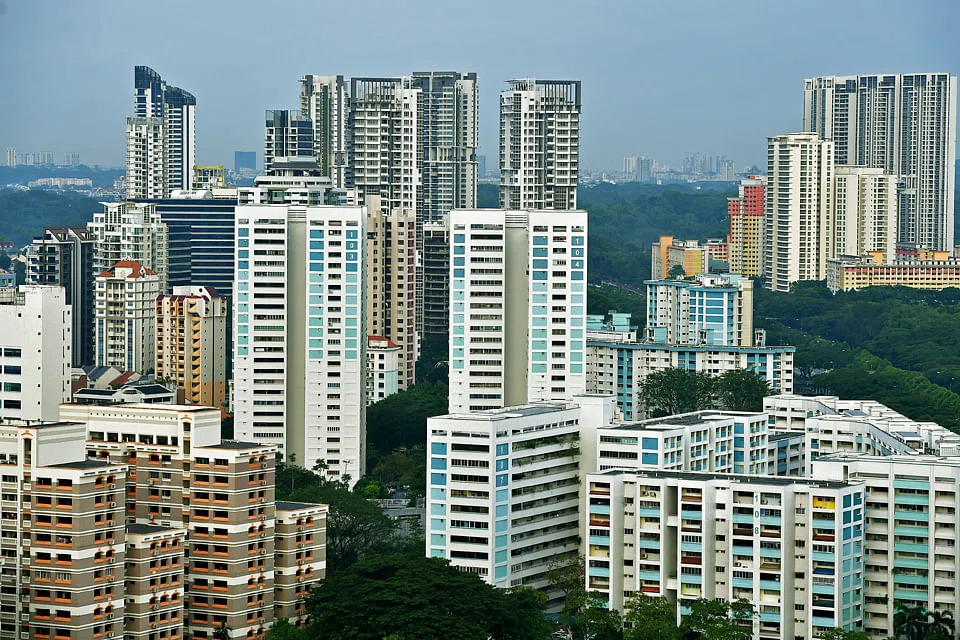
The Institute of Policy Studies (IPS) this week published a study that is likely to prompt questions of a class divide in Singapore. The study examined network diversity, and in measuring social capital, it sought to understand the nature of respondents' social-support networks, by asking who they discussed important matters - such as those related to money, emotional and mental health - with.
IPS found that respondents were not likely to have named a diverse network across two particular types of social backgrounds: educational status and housing.
"If the researchers were to collapse the categories of school backgrounds and dwelling type of respondents' social contacts into just two broad categories - one comprising people from what the respondents believe to be from 'elite' and 'non-elite' school backgrounds and another, public and private housing - the in-group solidarity within each is much stronger than across the categories," the study said.
2. Why is this a big deal?
Class divide and its catty couture cousin, privilege, threaten to narrow the perspectives of people living in a small dense city that is also a sovereign nation.
IPS noted that network diversity is positively correlated with a range of collective sentiments such as national identity, national pride, social trust, and trust toward other racial, religious, and nationality groups. A diverse network "increases the variety and richness of one's experiences and knowledge beyond one's own group", the report said.
3. Did you see it coming?
The study does not surprise, and comes as Singapore policymakers have already been looking into the extent of social mobility here.
A 2015 paper published by the Ministry of Finance (MOF) on mobility trends found strong social mobility for Singaporeans across different generations, when compared to other countries.
But the report stated that the relatively high mobility estimates for Singapore "likely reflect the rapid economic transformation that occurred during the period when these cohorts grew up". It added: "As the pace of Singapore's development slows, it will be an increasing challenge to sustain such mobility in the future."
4. Should anyone be worried?
In 2014, the Singapore government made it compulsory for all primary schools to reserve 40 places for children with no affiliations with the school. But that may not be enough.
National University of Singapore sociologist Vincent Chua - who had worked on the IPS study - told The Straits Times that another idea may be to limit the number of places allotted to children of alumni members.
5. What happens now?
The New York Times columnist David Brooks included a stark anecdote in a column in July to show how class divide can manifest in innocuous but painful ways. He had taken a friend with a high school degree to lunch at a gourmet sandwich shop, but was ashamed of his insensitivity as his friend froze at sandwiches constructed with ingredients like soppressata and capicollo.
"American upper-middle-class culture (where the opportunities are) is now laced with cultural signifiers that are completely illegible unless you happen to have grown up in this class," he wrote."They play on the normal human fear of humiliation and exclusion. Their chief message is: 'You are not welcome here'."
They had Mexican food instead.
Mr Brooks found himself in the meat grinder as some readers criticised him for excluding his friend from the gourmet sandwich shop. Why not teach his friend about various forms of dry salami? But that in itself may be an elitist and patronising mentality, where the notion of inclusion is to insist that a gourmet sandwich is progress over guacamole.
Against that backdrop, there is some relief that Singaporeans have been spotted on the streets in a parody T-shirt of French brand Balmain. The T-shirt proudly prints "Banmian", a nod to Singapore's humble noodle dish. Singaporeans have always found humour in navigating social divisions. Perhaps we are already aware that diversity and inclusion are about finding common ground, and being conscious of status symbols that divide instead.
The sensitivities behind managing the complex swirl of privilege, elitism, income gap, and meritocracy will be something to chew on in Singapore in the days ahead.