

Who loves and hates the FBI now?
The party of Law and Order and the party of Political Change appear to have changed places
Washington
ONCE upon a time in America, there was a political party that held with high esteem the nation's security institutions that were protecting the American people against adversaries at home and abroad: The US military, the country's police forces, the intelligence gathering agencies and the federal law enforcement bodies. Let us call that political party the Republicans, also known as the Grand Old Party (GOP).
Indeed, if you would travel in a time machine to mid-20th century America, and ask an average citizen what is the first thing that he or she associated with the GOP, you would not need to wait a long time for an answer. The Republicans were the party of Law and Order.
During the politically and socially turbulent era of the 1950s and the 1960s, of civil rights marches, student protests, and anti-Vietnam-War demonstrations, Republicans in general tended to side not with the protesters but with the policemen trying to squelch the protests. They were seen as providing the last defence against the political and social upheaval that led to chaos and anarchy.
Moreover, during much of the Cold War and then during the war against terrorism, the conventional wisdom among Republicans and conservatives was that while the army's four-star generals, the agents of the Federal Bureau of Investigation (FBI) and the spies of the Central Intelligence Agency (CIA) may not be perfect, when push comes to shove, the American people and their representatives in Washington are required to give the benefit of the doubt to these men and women who are willing to give up their lives in defending the country against foreign and domestic enemies.
ON THE OTHER HAND
And then there was the Democratic Party that seemed to be aligned with the forces of political change in America, with those marching in support of racial desegregation, protesting against the war in Vietnam, or demonstrating in support of social and economic equality.
From their perspective, the army generals, FBI agents and CIA spies were trying to obstruct reform and were, in the name of national security, abusing power, privacy and civil rights, which should therefore require Congress and the media to scrutinise them and ensure a stricter system of oversight over their actions.
So it was not surprising that Democratic lawmakers led the efforts to investigate alleged illegal actions by the FBI and the CIA or that the liberal media published reports critical of the roles of these and other federal law enforcement agencies. And it was an open secret that the majority of military personnel and FBI workforce vote for Republican candidates who were expected to stand up to defend their reputation and interests.
It would not be an exaggeration to say that for a long time, the man whom most Democrats and liberals loved to hate - and who most Republicans and conservatives regarded as a great patriot - was J Edgar Hoover, the first director of the FBI.
Director Hoover, who was instrumental in founding the FBI in 1935, served in the job until his death in 1972. This legendary figure was known for using the FBI to pursue political dissenters and activists and to amass secret files on key politicians, including by using illegal methods.
So it is a bit mind-boggling to discover that in 2018 the man whom most Republicans and conservatives love to hate - and who most Democrats and liberal regard as a great American patriot - is James Comey, another controversial FBI director. Together with other officials in the agency he is now being accused by the current Republican White House occupant and his GOP allies on Capitol Hill of conducting a political and illegal "witch hunt" against them.
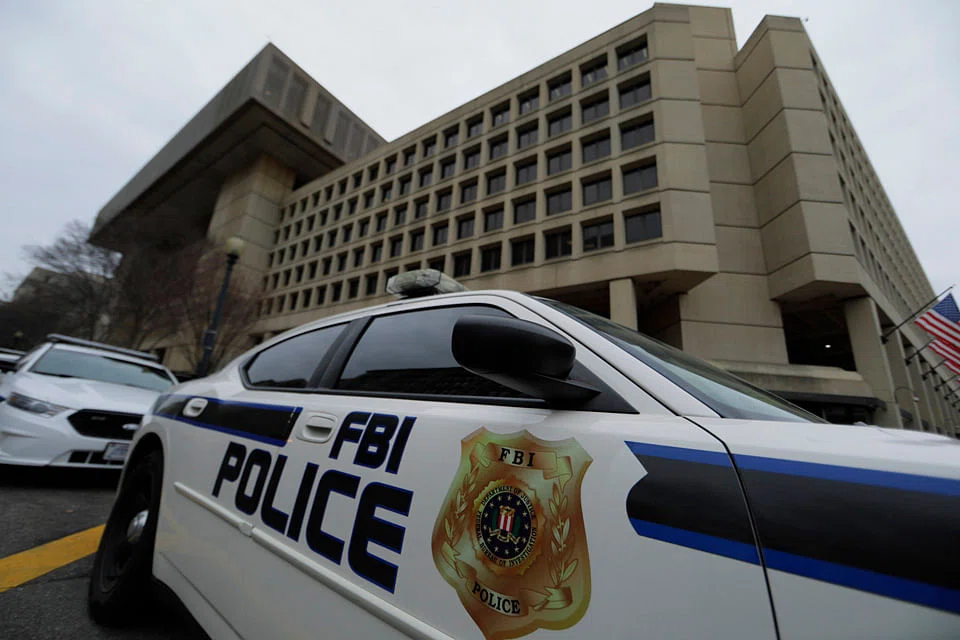
Hence the irony in what is happening in Washington these days, when the political party that once revered the nation's law enforcement institutions and worshipped Hoover, is now turning on the FBI and its top officials, while the political party that not so long ago suspected the agency of wrongdoings and went out of its way to set legal constraints on its operations, seems now insistent on defending its independence.
That the FBI is now under fire by conservatives while hailed by liberals, became obvious in recent weeks with the White House and leading Republicans alleging that the FBI and other government agencies have orchestrated a wide disinformation operation against Candidate - and later President - Donald Trump, depicting him and his presidential campaign as agents of the Russian government.
The allegations of coordination between the Trump presidential campaign and the Kremlin, the so-called "collusion" aimed at denying Democratic candidate Hillary Clinton an election victory, is now being investigated by Special Counsel Robert Mueller, himself a respected former FBI director who has become the matinee idol of many liberals.
That investigation was launched after Mr Trump fired Mr Comey from his job as FBI director just as he was beginning to probe the Russia-collusion allegations. That move was seen by Democrats as part of an effort by the White House to impede the investigation by the highly professional Mr Comey of the charges against the president that were based, they said, on serious evidence collected by the FBI and the media.
PARTISAN POLITICS
Not so, countered Mr Trump and his supporters. In their narrative, he has fallen victim to machinations by pro-Hillary bureaucrats in the FBI and higher-up officials in the Justice Department, who abused their power to spy on the Trump campaign, say the Republicans.
More specifically, according to a memo released by Republicans in the House of Representatives, the FBI investigation into the ties between the Trump election campaign and Russian agents was launched after law enforcement officials applied for a warrant to wiretap former Trump campaign official, Carter Page.
The problem is that the application was driven by partisan political considerations, according to the memo, written by Republican Representative Devin Nunes of California, the chairman of the House Intelligence Committee.
Mr Nunes has suggested that the law enforcement officials relied in their application on a dossier prepared by Christopher Steele, a former British spy who was actually working for the Democratic presidential campaign at the time. Or to put it differently, without this shady and partisan process, there would not have been any basis for the Russia-collusion allegations and the ensuing investigation by Mr Mueller.
But the Democrats, defending the professional integrity of the FBI, argue that Mr Steele's dossier and the charges against Mr Page, were only one of many pieces of evidence that had triggered the investigation. Their contention seems to be backed by current FBI director Christopher Wray, who was appointed to his position by Mr Trump.
And there is a lot of concern in the FBI that the campaign that Mr Trump is conducting is part of an effort to smear those in the agency and the Justice Department who initiated the Russia-collusion investigation and eventually, to fire Mr Mueller himself. The Republicans have denied the reports while the Democrats have pledged that they would not allow that to happen.
READ MORE: Smart regulation of cryptocurrencies needed in Hong Kong and Singapore






