

Who will be Singapore's 'formidable entrepreneurs'?
The country should change strategy to produce an entrepreneur in the league of Elon Musk or Jack Ma.
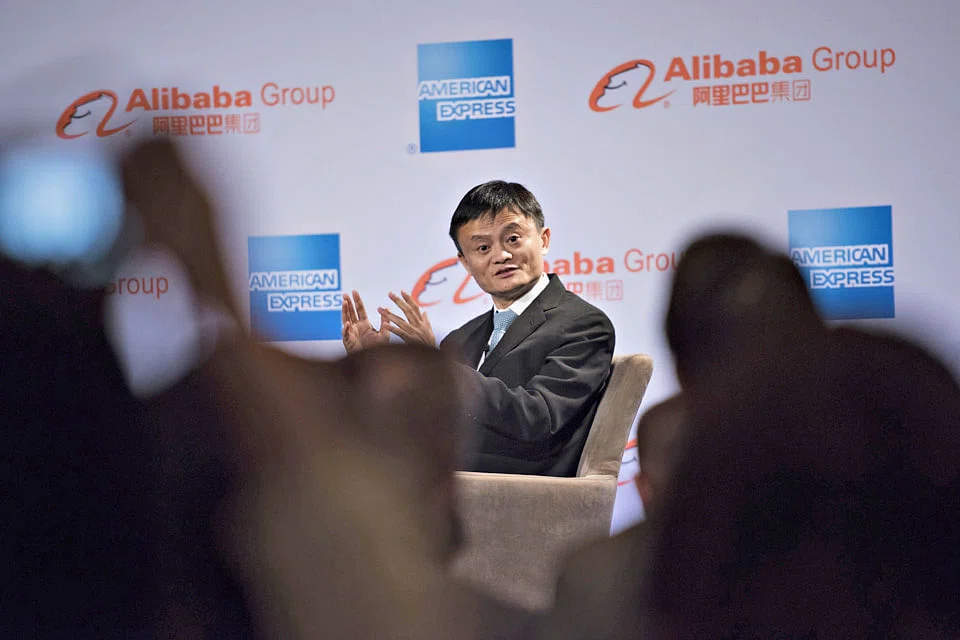
WHAT factors must we look at in order to evaluate a country's performance and future potential? As an investor and innovation driver, I put my eye on how many "formidable entrepreneurs" a country can claim to its name.
But what does formidable mean in this context?
Some of the criteria I use include having a global presence or recognition (which highlights their ability to communicate effectively); the number of people directly or indirectly using their products and services on a daily basis; the scope of their vision (eyeing a global market beyond their local region and their generation); and their level of influence in inspiring people to move forward.
This is juxtaposed with super rich, though undeniably successful, businessmen who do not traditionally behold the future with the same visionary outlook and concern for mankind.
Under this definition, formidable entrepreneurs are measured against a standard of greatness - being good isn't good enough. I like to cite US-specific examples of Elon Musk (Tesla/SpaceX founder), Mark Zuckerberg (Facebook founder), Bill Gates (Microsoft founder), Larry Page and Sergey Brin (Google founders), Steve Jobs (Apple founder) and Jeff Bezos (Amazon founder).
In the UK, I look to people such as Richard Branson (Virgin Group founder), while in China my vote goes to Jack Ma (Alibaba founder). In Japan, Masayoshi Son (Softbank founder) takes the top spot. All of these are linked by incredible vision and tales of entrepreneurial struggle overcoming the odds.
Who, then, is Singapore's formidable entrepreneur?
Though there are many great businessmen in Singapore, I don't think there is any formidable-level entrepreneur in the league of Mr Musk or Mr Ma. In order to be recognised as a true startup nation, Singapore will eventually have to produce at least one such a titan. I have faith that it will - and in the not-too-distant future.
For the other Asian tigers such as South Korea, Taiwan and Hong Kong, the challenge posed is similar.
In South Korea, after the first generation of founders behind the likes of Samsung, LG and Hyundai, there are no outstanding entrepreneurs that come to mind. Of course, there are some founders from technology startup success stories such as LINE and Kakao, the country's hugely popular chat apps.
But these are still far away from formidable, largely existing in the bubble of their home market. In terms of global recognition, K-pop star Psy, the hit artist behind Gangnam Style, could be argued as being more formidable than the founders of the two aforementioned chat apps.
In Taiwan, there are IT giants such as Foxconn, Acer, Asus and others. But, again, these are old businesses that do not qualify as having produced a single, globally-renowned formidable entrepreneur in the past decade.
The Taiwanese market suffers from three main barriers to entrepreneurship: fundraising, market expansion and talent recruitment, according to the Taiwan Startup Ecosystem Report (2016) by Taipei-based Business Next Media Group.
For China, other than Mr Ma, smartphone maker Xiaomi's founder Lei Jun could be a potential candidate. What about WeChat or Huawei? Unfortunately, these two founders have never been truly recognised beyond China in the way Mr Ma has. Whereas I, as a technology venture capitalist, may know the founders' names, I'd be surprised if the man on the street did.
I am convinced that the scene will be totally different in three to five years' time. Since many high-potential candidates are rising in almost every country and region, including Singapore, the race to be a truly formidable entrepreneur is making for lively debate.
The benefits of a formidable entrepreneur are not just limited to the economy. Its influence encompasses culture, society, education and more.
Other obvious benefits include soft factors such as enhancing the national brand, encouraging youth entrepreneurship and innovation, delivering breakthrough technologies for permanent change, and boosting Singapore's expansion into global markets.
Mr Ma recently became digital economy adviser to the Malaysian government, a clear sign of his value on the international stage beyond that of the founder of a private enterprise.
In the US, we see that while not everyone is in favour of US President Donald Trump, almost everyone loves Mr Musk. In the case of the US, its entrepreneurs' positive influence is far beyond figures in other sectors.
It's my belief that Singapore's promising future resides in successfully nurturing one such formidable entrepreneur - who is surely already among us, somewhere. In the years to come, we will observe that the top-ranking economies in the world share one key capability: cultivating such formidable entrepreneurs.
To date, the backbone of Singapore's strategy as an economy has been to establish itself as a global business hub - with financial appeal and metrics as key performance indicators. Singapore was recently ranked 12th as a global startup ecosystem, according to Startup Genome's 2017 edition. Silicon Valley, New York and London took the top three spots.
Now, with this wonderful infrastructure in place, it's time to change our strategy into one focused on producing truly formidable entrepreneurs to go forth into the world.
TRENDING NOW
32 companies, 6 individuals bag accolades at Singapore Corporate Awards 2026

He built the Vingroup empire. Now South-east Asia’s richest man is handing some key roles to his sons
URA to review guidelines on floor space to give developers more design flexibility: Chee Hong Tat
Chagee, Mixue and Luckin won the market. Sustaining their edge is the harder part

