

Why 2016 is proving to be a wild year
There are also opportunities for greater stability too; the success of US in helping manage global affairs will depend upon cooperation of both competitors and allies.
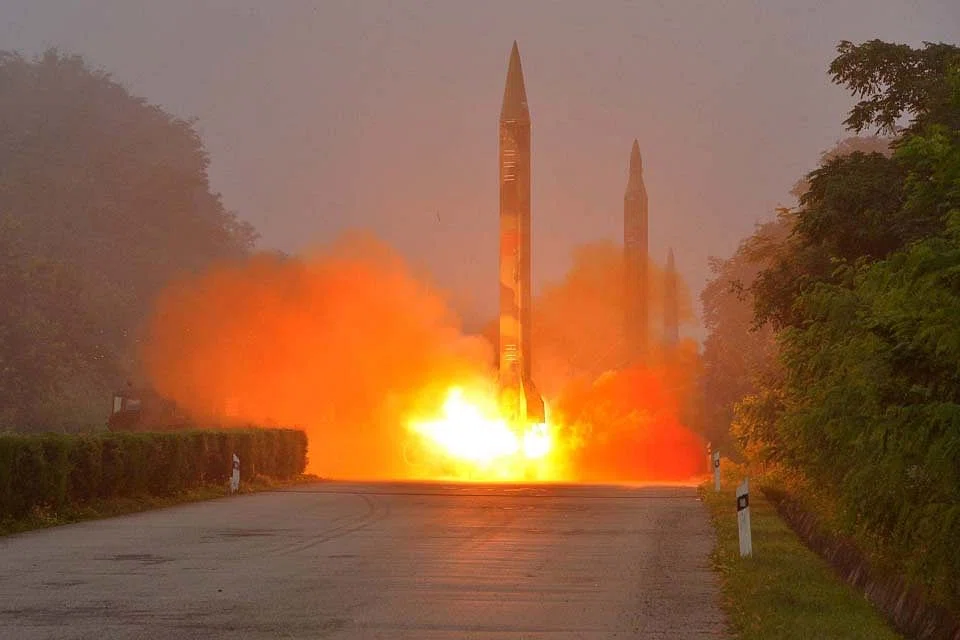
WASHINGTON and Seoul are making final preparations for their annual joint military drills in South Korea later this month. The forthcoming events, which have been widely condemned by the North Korean regime, come at a time of escalating tension in the region following Pyongyang's decision last week to test fire a missile into Japanese-controlled waters for the first time.
The stand-off, in which North Korea has threatened a "vicious" showdown if the military drills proceed, is only the latest example of international political strain in 2016. In the last month alone there has been a failed military coup in Turkey; US missile strikes against so-called Islamic State (IS) militants in Libya; and a spate of significant terrorist attacks in Europe.
What this, collectively, underscores are the warnings that geopolitical risks are currently at their highest level since the dissolution of the Soviet Union. For instance, a recent research report from Citi asserts that the world is facing the "most fluid global political environment in decades", while John Drzik, president of Marsh Global Risk and Specialties, has asserted that "events such as Europe's refugee crisis and terrorist attacks have raised global political instability to its highest level since the Cold War".
The multiple challenges confronting the US-led international order include not just the nuclear diplomacy on the Korean peninsula, and the threat from international terrorism, including IS. Other geopolitical fault lines include the continuing instability in Iraq, Syria and Afghanistan; Russia's annexation of Crimea, and the fact that Washington's relations with Moscow are perhaps now more strained than at any time since the collapse of Soviet Communism; and the fact that the Israeli-Palestinian peace process appears moribund, despite recent Egyptian efforts to rejuvenate it.
This landscape underlines that many of the most optimistic hopes and expectations of how the post-Cold War world might look have also been dashed. For instance, the vision of a universal order of liberal, capitalist, democratic states living in peace and contentment - as painted by Francis Fukuyama and others - has been replaced by a reality in which authoritarian states such as Russia appear to many to be in the ascendancy, so-called Islamic terrorism remains a significant international concern a decade and a half after 9/11, and several unstable countries, including North Korea have acquired nuclear weaponry.
Some critics of the Obama administration, including Republican presidential nominee Donald Trump, see this international picture as being the result of weak leadership in Washington over the last seven and a half years. However, the expectations sometimes placed upon the Obama team from its most trenchant critics are often unrealistically high.
To be sure, just as at the end of the Cold War, the United States remains the most powerful country in the world - certainly in a military sense. It can still project and deploy overwhelming force relative to any probable enemy. However, Washington is not, to use a term of art in international relations, an all-powerful hegemonic power. And this core fact has been demonstrated repeatedly throughout the post-Cold War period, from Somalia in 1993, Iraq and Afghanistan since 9/11, and also most recently in Ukraine and Syria.
Mr Trump and other unalloyed critics of the Obama administration also often fail to acknowledge that, while 2016 may be a year of high political uncertainty, the current international landscape also contains multiple areas of opportunity for greater stability.
One example is last year's nuclear deal with Iran and six world powers - the United States, China, Russia, United Kingdom, France, and Germany. The deal opens up the possibility of a wider warming in ties between Tehran and the West, and also enhancing global nuclear security.
A lasting nuclear settlement with Iran will constitute an important win for long-standing efforts to combat nuclear non-proliferation. And this at a crucial time when, according to the International Atomic Energy Agency, over 40 countries have expressed interest in joining the "club" of 30 states with nuclear energy.
Another positive is the global climate change deal agreed in Paris last year. While the agreement is by no means perfect, it represents a welcome shot in the arm for attempts to tackle global warming and, crucially, a new post-Kyoto framework has been put in place.
Moreover, the once-every-five-years review framework means that countries can toughen their response to climate change in the future, especially if the political and public will to tackle the problem increases with time. So, Paris is a potentially very important stepping stone and what is now needed are well-informed lawmakers from across the political spectrum to help ensure effective implementation and hold governments to account so that it truly delivers.
Meanwhile, the rise of China, which has now surpassed the United States as the world's largest economy on purchasing parity terms, is one of the biggest game changers in global affairs since the collapse of the Soviet Union. This development has potential to be either a growing source of tension with Washington or develop into a fruitful partnership.
Growing bilateral cooperation is possible if the two powers can increasingly cooperate on soft issues like climate change, and find effective ways of resolving harder power disagreements between them, including over territorial claims in the South China Sea. By contrast, bilateral rivalry could also ensue if Beijing's military power continues to grow rapidly and the country embraces a more assertive foreign policy stance toward its neighbours in Asia.
Taken overall, while 2016 has so far been a year of heightened political strains, there are also opportunities for greater stability too. Going forward, the success of Washington in helping manage the complexity of global affairs will increasingly depend upon cooperation of others, both competitors and allies. A key uncertainty here is the direction of bilateral relations with China which could be a force for greater global tension, or deeper strategic partnership.
TRENDING NOW

Indonesia’s coal tycoon Low Tuck Kwong replaced as Bayan Resources president-director

OCBC names Ang Eng Siong as global corporate banking head in rejig of wholesale banking business

Consider lowering homeownership barriers for some non-resident foreigners

DBS opens flagship investment strategy to retail investors with new fund

