Why 9/11 matters to Singapore
In countering the terrorist threat, civil society has an important role to play in strengthening inter-faith engagement and understanding.
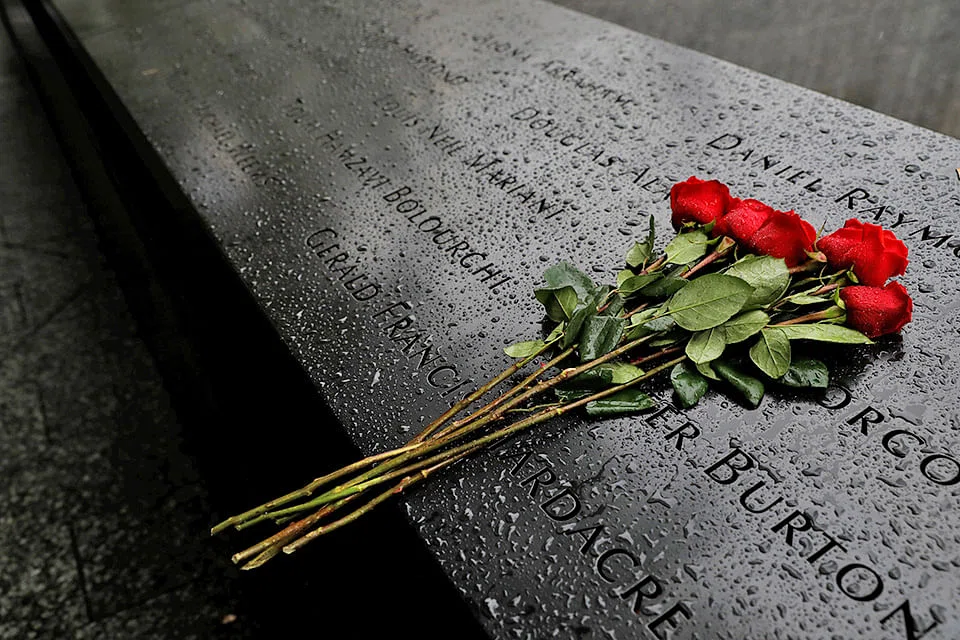
THE United States military involvement in Afghanistan has come full circle. Its messy withdrawal, bookended by the Taliban being in control, has brought terrorism back into public consciousness 20 years after the Sept 11, 2001 terrorist attacks on American soil.
In Singapore, 9/11 prompted much soul searching and has led to a better understanding of the Muslim community in Singapore. There is a keener focus on inter-faith relations as well as the imperative to build trust and confidence between the government leaders and religious leaders and among religious elites. But such a state of affairs did not just happen.
In December 2001, the Internal Security Department arrested 13 members of the radical regional Islamist group known as Jemaah Islamiyah (JI), which had links to the Al-Qaeda. Another 19 members were arrested in August 2002. Most of them were Singaporeans.
The arrests foiled the JI's plans to attack certain targets in Singapore, including American military personnel and assets. This was the most serious direct national security threat since the Malayan Emergency (1948-60).
The January 2003 parliamentary debate on the "The Jemaah Islamiyah Arrests and the Threat of Terrorism" White Paper was notable for the articulation of a subtle moral panic which obliquely linked increased religiosity and perceived Malay-Muslim separateness with increased susceptibility towards violent extremism.
Coming under intense scrutiny inside and outside Parliament were Muslims' supposed exclusionary practices and self-segregation, and the formation of an isolated "micro-community" accompanied by the unilateral closing of the common space.
In particular, the re-Islamisation in daily life - not only outward behaviour but also inward attitudes and values - led to the government's primary concern of the potential formation of a closed Malay-Muslim community.
The initial state response was exhortations to the Muslim community to practise their faith in the context of a multiracial society, with "moderation" as the defining attribute.
Better inter-ethnic understanding
Unsurprisingly, Muslim Singaporeans' increased religiosity, their perception of being under siege, as well as the non-Muslim apprehension, fears and misunderstanding of Islam contributed to the overall state of uneasiness and latent tension.
The Muslims were themselves confronted by self-doubt and ambivalence even as the community's self-perception that its increased religiosity stemmed from a spiritual self-renewal rather than the insistence of a particularised Islamic system of rituals, values and ethics, or of a vulnerability towards a militant, violent brand of jihadism.
The government had initially adopted a privatised approach in the wake of the arrests of JI suspects. The Muslim community was, to all intents and purposes, held accountable for the radicalisation of a small minority of Muslims, and for any subsequent fallout.
Unfortunately, this was accompanied by unrelenting and uninformed public scrutiny over the tenability of Islamic practices and increased religiosity in Singapore.
Although the government had intended to rally the Muslim community into action, this approach may have had the unintended effect of isolating the mainstream Muslims, while also undermining ethnic relations.
To its credit, the government quickly realised that such an approach would neither isolate the terrorists nor ensure that the terrorist ideology did not acquire wider support.
Given the nature of the terrorist threat and its dependence on a sympathetic constituency to draw support and recruits to the cause, the non-discriminating, clamping down strategy risks marginalising, if not alienating, the very bedrock of the community that is depended upon to form the bulwark against creeping radicalisation.
The stark realisation that inter-ethnic ties were not as healthy as they should be prompted the government to chart new directions to engender better inter-ethnic understanding. In the heightened post-9/11 environment, the government was concerned that the social fabric may not withstand the impact of a terrorist attack in Singapore.
At its core, Singapore's long-standing approach to terrorism is weighted in favour of enabling the government to deal swiftly and pre-emptively with any threat to public order and national security.
It has put in place the relevant legislative framework to enable it to fight terrorism. This legislative framework, anchored in the Internal Security Act primarily to deal with the communist insurgency of the 1950s and 1960s, was established more than 70 years ago.
In the face of the terrorism threat, the prudent and better approach is to ensure that the citizens' religious identities remain strong and secure. A multi-stakeholder approach is essential in ensuring that the state and religion are both secure.
Similarly, there is the political will to promote and protect religious freedom. The Singapore case strongly suggests that religious freedom and its continual growth and development are integral to the wellbeing of the state, government, and society.
"Whole-of-society" approach
Recognising that social cohesion is about the masses and not just the elites, the government became more conscious and responsive to civil society's role in strengthening inter-faith engagement and understanding.
In countering the terrorist threat, the approach has evolved rapidly from a "whole-of-government" to a "whole-of-society" approach. This is a tacit but important acknowledgement that the security of the state, government, society, and individual are intimately interlinked.
The terrorism threat requires not just a security response but also a holistic one that aligns the hearts and minds of the faith communities to the societal objectives of harmony and peace.
While uncompromising legislation remains the mainstay against extremists and radicals, the mobilisation of codes of conduct, aspirational norms and values are consciously woven into the state's endeavours to enhance society's resilience and cohesion.
This can be seen in the formation of the Inter-Racial and Religious Confidence Circles (IRCCs) in January 2002, the unveiling of the Declaration on Religious Harmony in June 2003, and the Community Engagement Programme in 2006 (now known as SGSecure).
In 2019, the Commitment to Safeguard Religious Harmony was launched to affirm the shared values to safeguard religious harmony, and the norms of social interaction across religions to foster a cohesive society.
Similarly, inter-faith dialogue and understanding received a boost. When an issue involving religion arises, trust and confidence enables the religious leaders to communicate with each other directly. The government and the religious communities maintain regular dialogue to keep open communication lines.
Self-radicalisation remains a source of deep concern. The use of radical propaganda to make Singaporeans, regardless of their religious affiliation, receptive to violent extremism are key prongs of the incessant radicalisation effort.
The harsh reality is that misguided religious precepts have the capacity to motivate, mobilise, and maim. Hence, there is a need to recognise the agency of violent extremists and de-legitimise their claims to represent their community.
The terrorist threat will persist, and with it the imperative to manage with panache the demands of growing counter-terrorism measures.
The terrorism threat is ultimately a national one. What happens after a terrorist attack could severely undercut social cohesion and inflict greater damage than the attack itself. The bottom-line is this: governments do not defeat terrorism. Instead, it is the people who will determine whether a society is resilient and cohesive enough to withstand the forces that seek to divide and destroy.
- The writer is is associate professor of law at the Yong Pung How School of Law, Singapore Management University