Why China and Russia are transforming Nato's fortunes
The crisis in Eastern Europe has underlined the continuing relevance of the Western alliance of countries.
 Add BT as a preferred source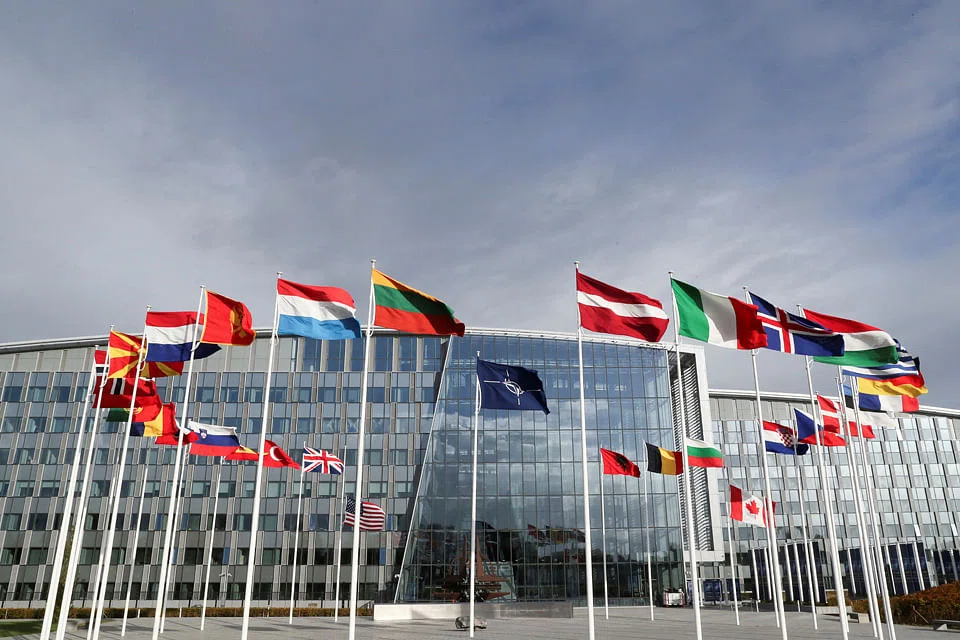
DeeperDive is a beta AI feature. Refer to full articles for the facts.
WHILE Nato was described as "brain dead" by French President Emmanuel Macron as recently as 2019, it has assumed a new lease of life with Russia's invasion of Ukraine, in a remarkable turnaround of fortunes that could continue for years if concerns grow about China too.
The crisis in Eastern Europe has underlined the continuing relevance of the Western alliance of countries, which have a collective population of around 1 billion. For all its remaining weaknesses, Nato remains one of the world's most successful military organisations, and has helped underpin the longest period of sustained peace in the West's modern history.
This massive, positive shift in sentiment towards the military alliance since February which, with its defence ministers meeting on Wednesday (Mar 16), has now enabled it to turn the corner on the worst strains in its 70-year history, which coincided with Donald Trump's presidency from 2017 to 2021. Former US officials then, including ex-National Security Adviser John Bolton, have confirmed that Trump came close to announcing US' withdrawal from the body, co-created by Washington in the post-war era.
This would have been a body blow to its future credibility. Indeed, it is chilling to think what a re-elected Trump, who has described Putin's invasion of Ukraine as "genius", would have meant for the future of the Western alliance during one of its gravest threats.
Yet, the challenges within Nato during the Trump era were by no means only of his making. One of his critiques of the alliance - that more than half of its members still do not yet spend the prescribed 2 per cent of gross domestic product on defence - is a long-standing sore point that other US presidents dating back to at least Bill Clinton have highlighted. It is important therefore to see more nations in Europe now commit, post-Ukraine, to this 2 per cent target in recent weeks. Most symbolically, this includes Germany under the new chancellorship of Olaf Scholz, which may now witness a decisive break in several other areas of its post-war political settlement.
Ironically healing
Navigate Asia in
a new global order
Get the insights delivered to your inbox.
Moreover, while Trump supported Brexit, that dimension of the fracturing of the Western alliance owed more to long-standing UK political issues which he exacerbated, rather than created himself. Ironically, the Ukraine crisis may now help heal some of the schisms as London and continental European capitals work together in their response to Russia's revanchism.
Foes such as Russia aside, possibly the biggest medium-term threat to the alliance is now the remaining prospect of a new US president in 2025 or after, possibly even Trump himself, coming into power again with a Nato-sceptic agenda, which draws on the remaining concerns about whether the alliance is fit for purpose into its 8th decade. It was Macron's exasperation at the diminished commitment of the United States to the West under the Trump presidency that drove his astonishing outburst about the alliance's "brain death".
Washington's waning commitment irked Macron, including the Trump White House's failure to consult Western allies before pulling US forces out of Syria in 2019. This development reverberated inside the organisation as the move opened the way for a much-criticised move by Turkey - itself a Nato member which had just decided to buy the Russian S-400 anti-aircraft missile system - to push into Syria and create what it calls a security zone along its border. Meanwhile, Kurdish forces, who had been helping Western forces fight the so-called Islamic State group, were expelled from the area.
Macron was even forced to declare that he "didn't know" if, under Trump, the United States could still be relied on to defend the alliance under the terms of its founding charter, which states that an attack on any one member will trigger a collective response. His comments, while clearly heartfelt, were slapped down at the time by other leading European leaders, including then German chancellor Angela Merkel.
Their preferred approach was to keep a diplomatic silence and try to "last out" the Trump era, hoping that it would last only 1 term, which proved the case. Merkel and others highlighted the broader, bipartisan support that Nato enjoys in Washington, as showcased in 2019, when Secretary-General Jens Stoltenberg got several standing ovations when he addressed Congress.
Inevitably, it is Russia that will be the key topic on Wednesday. Following Moscow's annexation of Crimea, and the wider destabilisation of Ukraine over several years now, the bilateral relationship has for years been at one of its lowest points since the end of the Cold War.
Neutralising the burden sharing issue
And despite recently announced increases in defence spending, there remains unease in certain quarters about the West's capability to respond to what is perceived as a significantly enhanced Russian security threat. Whereas Moscow is estimated to have increased defence spending by some 80 per cent in the years after 2008, the counterpart figure for Nato countries overall was a decrease, although the picture is mixed across Nato with numerous European states, Canada and the US raising spending.
One bonus issue for intra-alliance harmony is that military spending increases could potentially neutralise the long-standing Nato burden sharing issue, perhaps Trump's chief gripe, given that the US accounts for around two-thirds of total alliance defence spending. Here, it is a combination of not just Russian military assertiveness, but also instability in the Middle East and Africa and the legacy of Trump's uncertain commitment to Europe's security, that is turning this picture around.
In the longer term, it is plausible that this new, higher defence spending will be locked in by Nato concerns about wider shifts in the global security environment, including threats from China. US officials have claimed Russia has asked China for military assistance in its invasion of Ukraine, although Beijing and Moscow have denied the reports.
Whatever the truth of the matter, China has refused to condemn Russia over the invasion, and remains one of Vladimir Putin's key allies. So what is perceived as Beijing's growing global assertiveness - including its missile systems - is a rising concern, and this will become especially marked if it doubles down on its alliance with Moscow under Putin, and Xi Jinping.
The writer is an associate at LSE IDEAS at the London School of Economics.
READ MORE: Too early to speculate about secondary sanctions on China: economists
Decoding Asia newsletter: your guide to navigating Asia in a new global order. Sign up here to get Decoding Asia newsletter. Delivered to your inbox. Free.
Share with us your feedback on BT's products and services